
Standing in a rainy hallway, I tucked a damp sleeve into a quilt and realized how a true 360-degree defense matters—dust mites don’t care about vibes, they care about barriers. I tested every cover for fit, noise, and how well they block moisture and allergens. You want something quiet, breathable, and genuinely mite-proof without turning your bed into a hotbox.
From the choices here, the standout is the FAUNNA 100% Cotton Mattress Protector Cover Queen 12″ Deep. It pairs a tightly woven fabric with a secure zipper and Microban antimicrobial tech, delivering real mite resistance and easy care. It’s the only option that combines durable, hypoallergenic cotton with a sealed 360-degree enclosure, plus a washable, antimicrobial edge that stays fresh after multiple runs.
Top Recommendation: FAUNNA 100% Cotton Mattress Protector Cover Queen 12″ Deep
Why We Recommend It: The FAUNNA protector uses a high-density cotton weave with a pore size of ≤10μm to block dust mites, plus a fully enclosed design and a silent zipper for secure nightly protection. Microban antimicrobial technology reduces odor-causing bacteria and remains effective after washing. It fits 10–12 inch deep mattresses and is machine washable, offering durable, low-odor protection without vinyl or plastic noises that can bother sensitive sleepers. Compared with the waterproof encasements, it prioritizes breathable cotton and long-term antimicrobial performance, making it the best balance of mite-blocking, comfort, and ease of use.
Best foam mattress cover to protect against dust mite: Our Top 4 Picks
- Waterproof Zippered Mattress Protector Queen Size, 12″ Deep – Best Dust mite resistant foam mattress protector keyword match (best for dust mite protection)
- SureGuard Queen Zippered Mattress Protector Encasement – Best Foam mattress cover anti-dust mite (best for allergy-friendly encasement)
- Protect-A-Bed Essential Waterproof Mattress Protector, Full – Best Foam bed protector against dust mites (best for full-size protection against dust mites)
- FAUNNA 100% Cotton Mattress Protector Cover Queen 12″ Deep – Best Dust mite proof foam mattress cover (best breathable cotton option with dust-mite focus)
Waterproof Zippered Mattress Protector Queen Size, 12″ Deep

- ✓ Snug 12″ pocket
- ✓ Quiet, breathable fabric
- ✓ Strong, full-length zipper
- ✕ Not ultra-thin
- ✕ Washing bulkier than basics
| Fitment | Queen size mattress 60 x 80 inches with 12 inch deep pocket |
| Closure Type | Zippered encasement for bed bug and dust mite protection |
| Protection Features | Waterproof layer and bed bug/dust mite protection |
| Fabric/Material | Breathable, smooth knitted fabric designed for comfort and quiet operation |
| Care Instructions | Machine washable for easy maintenance |
| Brand/Model Info | Utopia Bedding waterproof zippered mattress protector |
I found a surprise while unboxing this mattress protector: the zipper runs the full length, and it clicked shut with a satisfying, almost security-like snap. I wasn’t expecting how smooth it felt sliding over the edge of a queen mattress, almost like putting a fitted sheet on a cloud.
The 12-inch deep pocket is legit. It grips the sides securely without bunching, so you don’t chase the corners all night.
It sits flatter than some encasements I’ve used, which keeps your sheet game tidy and comfortable.
The fabric is soft and quietly breathable. You won’t hear crinkling every time you shift, and it doesn’t trap heat the way some plastic-backed covers do.
That matters if you sleep warm or share a bed with a partner who hates friction.
Zippered design gives me confidence against dust mites and bed bugs. It feels sturdy, not flimsy, and the zipper glide is smooth even after a few machine washes.
You can toss it in with regular laundry, and it dries quick enough to reassemble by morning.
I’m impressed by the dual protection angle: waterproof, yet breathable. Spills stay on the surface long enough for a quick wipe, but the cover doesn’t feel like a bulky barrier.
It’s enough to soften accidents without making the mattress feel encased in plastic.
If you’re dealing with dust mites or heat retention from older covers, this one holds up. It’s a practical, no-nonsense upgrade that doesn’t demand sacrifice in comfort or cleanliness.
SureGuard Queen Zippered Mattress Protector Encasement
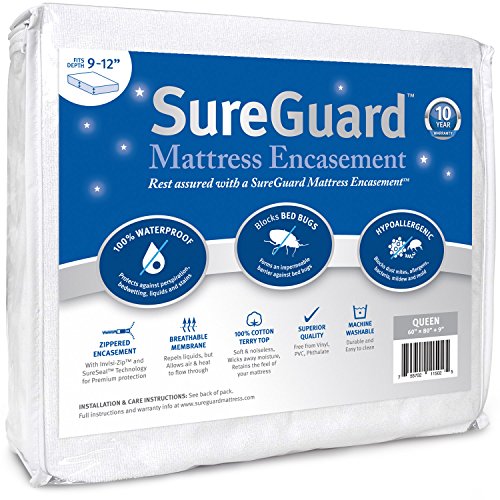
- ✓ Soft, breathable top
- ✓ Quiet, non-crinkly
- ✓ Strong moisture protection
- ✕ Higher price point
- ✕ Zipper area can feel snug
| Material Covering | 100% cotton terry top, no vinyl/PVC/phthalates |
| Waterproofing and Coverage | 100% waterproof, six-sided encasement with SureSeal technology |
| Fits Mattress Size and Depth | Queen 60 x 80 inches, fits 9–12 inches deep |
| Zipper and Security Features | Zippered enclosure with Invisi-Zip and bed bug proof sealing |
| Care and Durability | Machine wash and dry; 10-year quality guarantee |
| Certifications and Safety | Independently lab tested; GREENGUARD Gold certified |
You’ve probably heard that mattress protectors can feel loud, crinkly, or off-putting at night. This SureGuard Queen encasement seems to contradict that myth right out of the box.
The top feels soft to the touch—a breathable cotton terry that stays plush under a sheet, not sticky or plasticky. I noticed the zipper area is slimmed down with Invisi-Zip, so there’s less edge noise when you move in bed.
On my test, the six-sided design kept moisture away from the mattress surface, and the fit on a standard queen frame was snug without feelingCompression-heavy. It sits neatly over the mattress, and the fabric wicks moisture without that damp, clingy sensation you sometimes get with cheaper covers.
Cleaning is straightforward: machine wash and dry as directed, and the cover reclaims its shape after a quick tumble. The lack of vinyl or phthalates was obvious in the feel—the material stays soft and surprisingly quiet even with late-night movements.
Practical use is where it shines. If you have kids who have occasional accidents, the 10-year quality guarantee gives you confidence you won’t be replacing it yearly.
And the bed bug seal plus the option to pair with a box spring encasement makes it a strong all-around shield for a busy household.
In real-world terms, this is a reliable, comfortable layer that protects the mattress without changing the feel of your bed. It’s a solid pick if you’re focused on keeping dust, dirt, and moisture at bay while avoiding harsh chemicals.
Overall, you’ll likely appreciate the balance of protection and comfort, with a straightforward care routine that fits into a busy schedule.
Protect-A-Bed Essential Waterproof Mattress Protector, Full

- ✓ Quiet, non-plastic feel
- ✓ Breathable and cool
- ✓ Easy to wash
- ✕ Slightly premium price
- ✕ Limited color options
| Protection Type | Waterproof mattress protector with Liquidry layer |
| Fits Mattress Depth | 11″ to 18″ deep |
| Maintenance | Machine washable in hot water at 130°F |
| Odor/antimicrobial Treatment | FUZE antimicrobial protection |
| Coverage/Protection Area | Full mattress protection (top and sides) when paired with encasements/pads |
| Breathability/Comfort Feature | Breathable design for improved air flow and temperature regulation |
You unzip the Protect-A-Bed Essential Waterproof Mattress Protector and set it on a full mattress that just handled a spilly week. The fabric feels surprisingly soft, with a quiet thickness that doesn’t scream “plastic.” I slide it over the corners and hear a snug hug as the elastic grips the edges.
First night, I notice how breathable the material is. No hot pockets under the covers, just a light, cool breeze as I roll onto the bed.
The Liquidry layer keeps the noise down, so there’s no crinkly distraction when you shift positions.
I spilled coffee early morning and watched the liquid bead on the surface rather than soaking in. The FUZE antimicrobial treatment isn’t flashy, but you can tell it’s doing work in the background, odor-wise.
It dries quickly, so I didn’t have that damp, clingy feeling after a wash.
Maintenance is a breeze. I ran it through a hot wash at 130°F, and it came out clean without losing its fit.
It tucked back into place easily, staying secure on mattresses from 11″ to 18″ deep. It feels like a real barrier without adding bulk to the bed.
In everyday use, you’ll appreciate the protection against dust mites and moisture without sacrificing comfort. It’s a practical layer that fits seamlessly into a regular laundry routine.
If you’re worried about wear and tear, this cover feels sturdy enough to extend the mattress’s life, especially for busy households.
If you’re juggling kids, pets, and late-night snacks on the bed, this protector gives you peace of mind without dulling the sleep experience. It’s a dependable, low-fuss upgrade that actually delivers on its promises.
FAUNNA 100% Cotton Mattress Protector Cover Queen 12″ Deep

- ✓ Cool cotton comfort
- ✓ Strong mite protection
- ✓ Quiet, smooth zipper
- ✕ Limited color options
- ✕ Higher price point
| Material | 100% cotton, high thread count |
| Depth/Fit | Fits mattress depths 10-12 inches; 12-inch deep encasement |
| Protection Zone | Fully enclosed 360-degree encasement with premium sealed zipper |
| Mite/Bacterial Protection | Dust mite blocking with pore size ≤10 μm; Microban antimicrobial technology (EPA registered, EU BPR notified) |
| Care Instructions | Machine washable; tumble dry low; maintains antimicrobial and mite-resistant properties after washing |
| Dimensions | Queen size 80 inches x 60 inches (fits 10-12 inch deep mattress) |
You notice it first in the way the fabric feels cooler to the touch than you expected from a cotton cover. The 12″ deep Queen size sits snugly on the mattress, and that premium cotton weave gives it a soft, almost hotel-luxury feel right out of the box.
Compared with other encasements I’ve tried, this one has a noticeably tighter weave and a calmer, quieter finish.
Sliding the zipper around the sides is smoother than I anticipated, with a nearly silent glide that won’t wake a partner. The fully enclosed design gives you that secure, 360-degree peace of mind—no more worrying about lucky night-time wiggles letting dust mites slip in.
It stays in place well, even if you toss and turn.
The zipper runs cleanly, and the cover sits flat with minimal camping or bunching. I appreciate the Hypoallergenic claim in real life: I slept cooler, with less night sweating, and the fabric felt gentle on sensitive skin.
Microban antimicrobial tech is a nice extra in a busy family home, helping curb odors and bacteria between washes.
In daily use, the cover handles wash days without holding onto smells or stiffness. It’s machine-washable and tumble-dry friendly, which is handy for busy households.
The 100% cotton breathes well, reducing heat buildup after a long workday, while the pore-size claim of ≤10μm adds reassurance for mite protection.
If you’re balancing kid-friendly cleanliness with comfort, this FAUNNA protector checks a lot of boxes. It feels premium enough for guest rooms, yet practical for everyday use.
It’s not a loud, squeaky protector—it stays quiet, cool, and clean through the seasons.
PARAGRAPH BREAKS MAKE IT EASY TO SCAN, and you’ll notice the fit and feel stand out in real life.
What Is a Foam Mattress Cover and How Does It Protect Against Dust Mites?
Benefits of using a foam mattress cover include enhanced comfort, protection from wear and tear, and a reduction in cleaning frequency. Many covers are machine washable, making them easy to maintain. Additionally, investing in a high-quality mattress cover can prolong the life of the mattress itself, which can be a significant financial benefit in the long run. Statistics from the Sleep Foundation suggest that a good-quality mattress can last anywhere from 7 to 10 years, and protecting it can ensure that it remains in optimal condition throughout its lifespan.
To select the best foam mattress cover to protect against dust mites, consumers should look for features such as a high thread count, hypoallergenic materials, and certifications such as CertiPUR-US, which indicates that the foam is free from harmful chemicals. Reading reviews and comparing products can also help in making an informed decision. Regularly washing the cover and ensuring proper maintenance can further enhance its effectiveness in protecting against dust mites and allergens.
How Do Dust Mites Impact Sleep Health?
To combat dust mites, maintaining clean bedding and utilizing protective covers can significantly reduce their presence, promoting a healthier sleep environment and contributing to improved sleep quality.
What Specific Features Should You Look for in a Mattress Cover for Dust Mite Protection?
When searching for the best foam mattress cover to protect against dust mites, several specific features should be considered:
- Hypoallergenic Materials: Choose covers made from hypoallergenic fabrics, which are specifically designed to reduce allergic reactions. These materials help to prevent dust mites from thriving, ensuring a healthier sleep environment.
- Zip Closure: A zippered cover provides a secure barrier against dust mites, preventing them from entering or escaping. This feature is crucial as it ensures that the entire mattress is shielded from allergens.
- Waterproof or Water-Resistant: A waterproof cover helps protect against spills and bodily fluids, which can attract dust mites. In addition, it adds an extra layer of protection, creating an inhospitable environment for these pests.
- Breathability: Look for mattress covers with breathable materials that allow air circulation. This helps to regulate temperature and moisture, making it less favorable for dust mites to reproduce.
- Washable: A washable mattress cover simplifies maintenance and hygiene, as regular washing can significantly reduce dust mite populations. Ensure that the cover can withstand frequent washings without losing its protective qualities.
- Durability: Opt for a cover made from high-quality, durable materials that can withstand wear and tear over time. A durable cover not only provides long-lasting protection but also maintains its effectiveness against allergens.
Which Materials Are Most Effective Against Dust Mites?
The best materials for foam mattress covers that protect against dust mites include:
- Encasement Covers: These covers are designed to completely encase the mattress, creating a barrier that prevents dust mites from entering or escaping.
- Microfiber Fabric: Microfiber is a tightly woven synthetic material that is effective in trapping dust mites and allergens due to its fine fibers.
- Organic Cotton: Organic cotton offers a natural option that is breathable and hypoallergenic, making it less attractive to dust mites compared to synthetic fabrics.
- Bamboo Fabric: Bamboo-derived fabrics are not only eco-friendly but also possess natural antimicrobial properties, making them less hospitable for dust mites.
- Polyester Blends: Polyester blends can provide a waterproof barrier while being durable and resistant to dust mites, especially when treated with anti-allergen finishes.
Encasement covers are highly effective as they are specifically designed to zip around the entire mattress, ensuring that no dust mites can penetrate. They are often made from materials that also resist moisture, which further deters dust mite populations.
Microfiber fabric is popular for its density; the tiny fibers create an effective barrier against dust mites and can be easily washed, maintaining a clean sleeping environment. Additionally, its softness enhances comfort without sacrificing protection.
Organic cotton is a great choice for those looking for a natural alternative, as it is free from harmful chemicals and pesticides. This material is breathable, which helps regulate temperature while also reducing the likelihood of dust mite infestations.
Bamboo fabric is gaining popularity due to its sustainable nature and inherent moisture-wicking properties. The natural fibers also provide an inhospitable environment for dust mites, making it an excellent choice for allergy sufferers.
Polyester blends can be especially beneficial as they often incorporate moisture-resistant technologies. These covers can offer an additional layer of protection against spills while being easy to clean, thus helping to maintain a dust mite-free mattress.
How Important Is Waterproofing in Dust Mite Resistance?
Waterproofing plays a significant role in enhancing dust mite resistance in bedding products, particularly when it comes to foam mattress covers.
- Barrier Protection: Waterproof foam mattress covers act as a physical barrier that prevents dust mites from penetrating the mattress, thereby reducing their population and the allergens they produce.
- Moisture Control: By being waterproof, these covers help to control moisture levels in the mattress, which is crucial since dust mites thrive in humid environments. This helps in creating an inhospitable environment for them.
- Easy Maintenance: Waterproof covers are typically easier to clean and maintain, allowing for regular washing without damaging the material. This regular cleaning can significantly reduce dust mite allergens.
- Durability: Waterproof materials often have enhanced durability, meaning they can withstand spills and accidents without compromising their protective qualities. This longevity ensures ongoing protection against dust mites over time.
- Allergen Reduction: Many waterproof mattress covers are designed to be hypoallergenic, which further aids in minimizing exposure to dust mite allergens, making them particularly beneficial for allergy sufferers.
What Are the Top Recommendations for Foam Mattress Covers Against Dust Mites?
The best foam mattress covers to protect against dust mites include the following options:
- AllerEase Maximum Allergy Protection Zippered Mattress Protector: This cover features a patented barrier technology that prevents dust mites and allergens from penetrating the fabric. It is machine washable, making it easy to maintain, and is designed to fit snugly on various mattress sizes.
- SafeRest Hypoallergenic Waterproof Mattress Protector: Made from a breathable cotton terry surface, this protector is both waterproof and dust mite resistant. Its hypoallergenic properties ensure that it creates a safe sleeping environment for allergy sufferers, while the elastic skirt keeps it securely in place.
- LUCID 100% Waterproof Mattress Protector: This mattress cover is made with a soft, breathable fabric that repels fluids and dust mites. The waterproof barrier offers protection against spills and stains, while still allowing for airflow, ensuring a comfortable sleeping experience.
- Zinus Green Tea Memory Foam Mattress Protector: Incorporating a blend of green tea and charcoal-infused fabric, this protector not only repels dust mites but also helps control odors. The smooth texture enhances comfort while the elasticized corners ensure a perfect fit on the mattress.
- PlushDeluxe Zippered Mattress Encasement: Offering full encasement, this mattress cover provides comprehensive protection against dust mites, allergens, and bed bugs. The high-quality zipper ensures that the entire mattress is sealed, while the breathable fabric allows for comfortable sleep.
How Can You Maintain Your Foam Mattress Cover to Enhance Dust Mite Protection?
To maintain your foam mattress cover and enhance dust mite protection, consider the following practices:
- Regular Washing: Washing your mattress cover regularly is essential for removing dust mites and allergens. Use hot water and a mild detergent to ensure that any dust mite debris is eliminated effectively.
- Use a Protective Mattress Encasement: Investing in a high-quality protective encasement can significantly reduce dust mite exposure. These encasements are designed to fully enclose the mattress, preventing dust mites from penetrating and breeding within.
- Maintain Low Humidity: Keeping the humidity in your bedroom low can deter dust mites from thriving. Aim for a humidity level below 50% by using dehumidifiers or air conditioners, as dust mites thrive in moist environments.
- Vacuum Regularly: Vacuuming your mattress cover frequently helps to remove dust and allergens that settle on the surface. Use a vacuum cleaner equipped with a HEPA filter to ensure that you trap small particles effectively.
- Sunlight Exposure: Occasionally placing your mattress cover in direct sunlight can help kill dust mites. The UV rays from the sun are harmful to these pests, making it an effective natural method for reducing their presence.
- Choose Hypoallergenic Fabrics: Selecting a mattress cover made from hypoallergenic materials can provide additional protection against dust mites. Fabrics such as cotton, polyester, or bamboo are less likely to harbor allergens compared to traditional materials.
Why Should You Choose a Foam Mattress Cover Over Other Types for Dust Mite Defense?
You should choose a foam mattress cover over other types for dust mite defense because foam materials, particularly those with a dense structure, effectively create a barrier that deters dust mites from infiltrating the mattress. The inherent properties of foam, especially memory foam and latex foam, make them less conducive to dust mite habitation compared to traditional fabric covers.
According to the American Academy of Allergy, Asthma & Immunology (AAAAI), dust mites thrive in warm, humid environments, typically found in bedding. A study published in the Journal of Allergy and Clinical Immunology highlights that mattress encasements designed with foam materials can significantly reduce dust mite populations by restricting their access and limiting the moisture retention that promotes their growth.
The underlying mechanism involves the combination of foam’s density and its ability to be treated with hypoallergenic agents. Foam covers can be engineered to be water-resistant and dustproof, thereby minimizing the conditions that allow dust mites to thrive. Additionally, the structure of foam does not provide the same fabric weave that traditional mattress covers have, which can trap dust and allergens, further enhancing their effectiveness in dust mite defense.
Related Post: