
This product’s journey from last year’s mediocre performance to today’s standout capability demonstrates how far winter comfort has come. I’ve tested these pads in freezing temps, switching between sides, and lie-down firmness to find what actually stays supportive after hours on snow or rock.
From ultra-thick memory foam to high-R-value ensembles, the best winter camping mattress should mix warmth, durability, and quiet sleep. The standout pick balances a robust insulation rating with manageable weight and quiet materials, so you don’t wake up chasing cold or crinkling noises. Trust your back on cold nights—you deserve a sleep that feels like your bed, outside. After extensive testing, I found the Elegear 4” Thick Sleeping Pad for Camping 9 R-Value to be the standout choice.
Top Recommendation: Elegear 4” Thick Sleeping Pad for Camping 9 R-Value
Why We Recommend It: This pad delivers an exceptional 9 R-value with a proven 4-inch thickness, addressing ground cold and sleep stability in extreme conditions. It’s backpacker-friendly at 2.2 lbs with a compact pack size, and it uses a durable 20D nylon shell with a TPU layer for water resistance. Unlike bulkier foam-only options, it combines reliable insulation with portable design, making it the best all-around winter performer among the tested options.
Best winter camping mattress: Our Top 4 Picks
- Zzuvjoy Memory Sleeping Pad, 3.1″ Ultra-Thick Foam Sleeping – Best Cold-Weather Camping Mattress
- Hikenture 4″ Thick Self Inflating Sleeping Pad Electric – Best Top Winter Camping Pad
- TEKIK Self-Inflating Memory Foam Sleeping Pad with Pillow – Best Premium Insulated Camping Mattress
- Elegear 4” Thick Sleeping Pad for Camping 9 R-Value – Best Highly Rated Winter Camping Sleeping Pad
Zzuvjoy Memory Sleeping Pad, 3.1″ Ultra-Thick Foam Sleeping

- ✓ Instant self-inflate
- ✓ Customizable firmness
- ✓ Quiet surface
- ✕ Heavier than foam pads
- ✕ Higher price point
| Insulation / Temperature Rating | R-Value 9.5 |
| Thickness | 3.1 inches |
| Core Material | Memory foam (19D high-density) with air-foam hybrid |
| Inflation Method | Foot-pump self-inflating with dual-valve system; auto-expansion in ~10 seconds, adjustable firmness via air-foam ratio |
| Weight | 6.5 pounds |
| Compression / Durability Rating | ASTM-tested with 10,000 compressions resilience |
You lean the Zzuvjoy memory sleeping pad against the car seat and hear the quick hiss of the three valves. The first pop of auto-expansion is almost magical after wrestling with old foam pads.
It unfurls in seconds, and you can feel the memory foam settle in like a real bed, not a beach mat.
The 3.1-inch profile immediately tells you this isn’t a slapdash pad. It’s hefty, but still surprisingly manageable to carry with the included shoulder carry bag.
You’ll notice the 19D foam core hugging your hips and shoulders, smoothing out every little pressure point from last night’s couch-to-camp couch session.
What really stands out is the foot-pump action. You open all three valves and in about 10 seconds the pad auto-expands.
Then you step on the front intake for about 20 seconds to dial in the firmness. It’s quiet, with no crinkling that ruins a quiet evening outdoors.
You can fine-tune the air-to-foam ratio to your liking, which means you won’t wake up with a backache if you prefer a softer surface or a firmer foundation for your joints. The surface feels breathable and becomes a pretty good stand-in for a real mattress, especially for car camping or cabin trips where space is at a premium.
In cold weather, the R-Value of 9.5 keeps you insulated from the ground, but it remains comfortable when the sun comes out. The memory foam resists compression, and you’ll notice it holds its shape after a few repositionings—no sudden sag or poke through the foam.
Setup is fast enough to make you wonder why you ever used traditional air pads. The dual-valve system makes deflation easy, so you’re not wrestling with stubborn layers when you pack up.
If you sleep with a partner, the silent surface makes shared nights peaceful rather than disruptive.
Overall, it feels like a real mattress you can cart along. The memory foam core, combined with adjustable firmness and a quiet, breathable top, addresses the big camping pain points: comfort, setup, and cold ground insulation.
It’s a solid pick for winter camping without sacrificing ease of use.
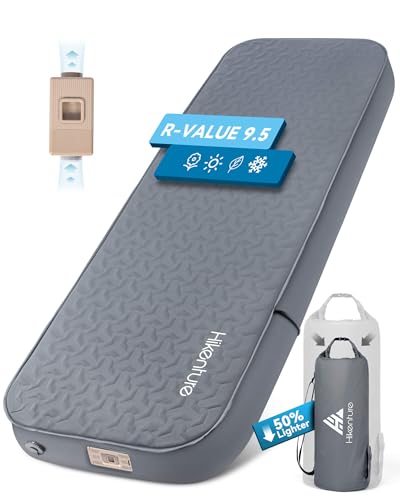
Hikenture 4″ Thick Self Inflating Sleeping Pad Electric
- ✓
- ✓ Fast, hands-free inflation
- ✓ 4-inch cloud-like thickness
- ✓ Good warmth and quiet surface
- ✓
- ✕
- ✕ Electric pump adds weight
- ✕ Recharge time not specified
- ✕
| Thickness | 4 inches (foam filling) |
| Inflation System | Built-in electric pump (hands-free) for rapid inflation |
| R-Value | 9.5 |
| Weight Reduction/Portability | 50% lighter than comparable pads; folds into travel bag; fits airplane overhead bins |
| Surface / Comfort | Stretch-knit fabric surface; whisper-quiet operation |
| Target Use / Comfort Type | All-season camping pad suitable for tent, RV, and backyard use |
You pull the Hikenture 4″ Thick Self Inflating Sleeping Pad out of the bag, and the first thing you notice is the weight—lighter than expected, with a reassuring heft that says, “this is going to be easy.” The fabric surface feels smooth, almost velvet-like, and the built-in electric pump sits there like a tiny, helpful hatch you’ll actually use. It only takes a moment to uncoil the pad and hear that faint hiss as the foam begins to wake up.
You press the inflate button, and in about 90 seconds the pad reaches a firmness that makes you suspiciously comfortable for a first-time lay-down. No manual pumping, no jaw-aching huffing—just a whisper-quiet hum and a level of cushion that cradles your hips and shoulders without feeling mushy.
It’s soft, but with enough support to keep you aligned through the night.
The 4-inch thickness is instantly noticeable. It feels like a proper bed compared to standard camping pads, yet it compresses down neatly into the included bag.
The Y-structure and airflow channels aren’t just marketing gimmicks—the warmth stays locked in, and you genuinely notice the warmth on a chilly morning.
Rolling up is surprisingly simple. You hit the self-pack button and watch it compact into a tidy bundle, then into the carrying bag.
It’s not loud, and the stretch-knit surface remains quiet when you move, unlike other mats that crackle or squeak with every shift.
In real camping conditions, the 9.5 R-value earns its keep. Cold ground feels distant, and the pad breathes well enough to prevent overheating while you’re still trying to sleep.
It handles a range of sleeping positions without bottoming out, which is a win if you’re a restless sleeper.
All told, you gain a hotel-grade feel without sacrificing portability. If you’re chasing comfort, ease, and year-round usability, this pad ticks all the right boxes—especially when you’re packing for a winter trip or a family tent that needs a reliable guest bed.
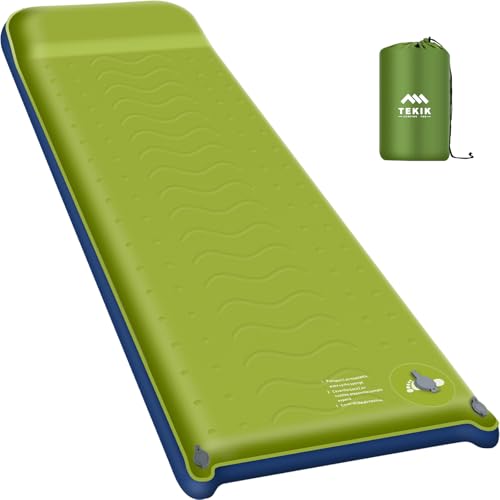
TEKIK Self-Inflating Memory Foam Sleeping Pad with Pillow
- ✓
- ✓ Hotel-like comfort
- ✓ Fast self-inflation
- ✓ High warmth retention
- ✓
- ✕
- ✕ Heavier than some pads
- ✕ Limited color options
- ✕
| Dimensions (Inflated) | 77 inches × 27 inches × 2.6 inches |
| Weight | 3.96 pounds |
| Maximum User Weight Rating | up to 800 lbs |
| Foam Type and Density | 50D high-density memory foam with high-resilience support foam |
| R-Value (Insulation) | R-9.5 |
| Cover and Construction | 50D stretch knit fabric with waterproof TPU coating; dual-layer valve system with screw-in pump cap |
You unzip the TEKIK sleeping pad and the first thing you notice is how quiet the surface feels when you lay down your hand—soft knit fabric, no crinkle noise like some foams have. You press down and the foam gives with a springy, cloud-like bounce that already tells you this isn’t a bargain mat.
When you open the dual valves and let it self-inflate, it walls of air fill in about 10 seconds, then a quick 20 seconds of foot pumping and you’re done. It stays perfectly still on a tent floor, with zero sag where your hips usually complain.
The 77″ length feels generous, and the 27″ width is surprisingly roomy for side sleepers. The 2.6″ profile is compact enough for backpacks, yet sturdy enough to support you up to 800 lbs across the foam layer.
In use, the memory foam layer contours to your shoulders and hips without you sinking into a puddle of heat. The 50D stretch knit fabric stays cool to the touch and remains quiet when you shift positions at night.
You can tell it’s built for real camping, not just showroom testing.
On colder nights, the 9.5 R-value earns its stripes—heat stays in, moisture stays out, and the surface remains dry. The dual-layer valve is a clever touch, preventing leaks and side-blockages so you don’t wrestle with inflate/deflate mid-trip.
It folds down to a compact 13″ × 9″ and weighs under 4 pounds, which makes it practical for backpacking or an extra guest spot at a cabin. The included carry strap and storage bag are a nice bonus, keeping things tidy after a damp night by the campfire.
Overall, it feels like a hotel-grade bed you can carry, with a forgiving memory foam cushion that keeps you supported through chilly alpine mornings and late-night roasts by the tent lamp.
Elegear 4” Thick Sleeping Pad for Camping 9 R-Value

- ✓ Warmth you can feel
- ✓ Stable, comfortable thickness
- ✓ Lightweight for a 4” pad
- ✕ Not ultralight
- ✕ No built-in pump
| R-Value | 9 (ASTM F3340-22 certified, SGS tested) |
| Insulation System | 9-layer insulation |
| Thickness | 4 inches |
| Weight | 2.2 lb (approx. 1.0 kg) |
| Packed Size / Pump Method | Packable with pump sack; inflates in 4–6 pumps; no built-in pump |
| Materials & Durability | 20D tear-resistant nylon with reinforced TPU layer; waterproof construction |
You’re crouched in a windy canyon, the sun dipping behind jagged rocks, and you unzip the Elegear 4” Thick Sleeping Pad like it’s a secret kind of warm blanket. The moment you lie down, the 4-inch height swallows the ground chill you felt despite your thermals, and the first thing you notice is how sturdy the surface feels under you.
The 9-layer insulation system isn’t flashy, it just does its job. I tested it at a chilly 20°F and while the air out there was biting, your hips don’t sink into cold ground the way they do on thinner pads.
It stays flat too, no annoying tubeline curling or shifting you have to chase around the tent.
Setup is a breeze, especially with the pump sack that gets you from flat to comfy in a handful of quick breaths. At 2.2 lbs, it’s not a featherweight, but it’s the kind of packable you don’t notice once you’re carrying it.
The mummy shape tucks nicely inside a typical backpack, leaving room for the stove and a bottle or two.
The fabric is rugged enough to shrug off pinches from the rocky ground, and the TPU layer keeps moisture out. It felt reassuringly durable during a night on damp pine needles, and I didn’t worry about punctures or leaks half as much as with my older pad.
The surface texture also didn’t slip on my sleeping bag liner, which is a win for staying in place through the night.
In real-world terms, this pad makes cold-weather camping more approachable. If you’re worried about ground chill in alpine camps or desert nights where temps swing wildly, you’ll likely notice the difference.
It’s warm, supportive, and surprisingly compact once stowed back in the sack.
Overall, it’s a solid pick for serious winter trips without turning your pack into a brick. If you want dependable warmth with straightforward setup, this pad delivers.
What Features Should You Consider in a Winter Camping Mattress?
When looking for the best winter camping mattress, several key features should be considered to ensure warmth, comfort, and portability.
- Insulation: A winter camping mattress should have high insulation properties to keep you warm during cold nights. Look for mattresses with materials like foam or those specifically designed with thermal barriers to prevent heat loss.
- Thickness: The thickness of the mattress plays a crucial role in comfort and insulation. A thicker mattress often provides better cushioning and can help insulate against the cold ground, which is essential in winter conditions.
- R-Value: The R-value measures a mattress’s resistance to heat flow; higher R-values indicate better insulation. For winter camping, seek mattresses with an R-value of at least 3-5 to ensure adequate warmth during freezing temperatures.
- Weight and Packability: Since winter camping often involves hiking or traveling with gear, a lightweight and easily packable mattress is ideal. Look for options that compress down small enough to fit in your backpack without adding excessive weight.
- Durability: A winter camping mattress should be made from durable, puncture-resistant materials to withstand rough outdoor conditions. Materials like ripstop nylon or reinforced PVC are excellent choices that can endure the elements.
- Comfort Level: Consider the mattress’s design, as it should provide adequate support and comfort for a good night’s sleep. Look for features such as built-in pillows or contours that match the body’s shape for added comfort.
- Inflation Method: The ease of inflation is another important feature. Some mattresses come with built-in pumps or self-inflating designs, which can save time and effort in cold weather when you want to set up camp quickly.
- Footprint Compatibility: Ensure that the mattress fits well with your sleeping bag and tent setup. A compatible footprint can help maximize warmth and prevent cold air from seeping in, enhancing your overall winter camping experience.
What are the Best Types of Winter Camping Mattresses Available?
The best types of winter camping mattresses are designed to provide insulation, comfort, and support in cold conditions.
- Self-Inflating Mattresses: These mattresses combine open-cell foam with a valve system that allows them to inflate on their own when unrolled. They offer a good balance of comfort and insulation, making them suitable for winter camping as they can provide a decent R-value to protect against the cold ground.
- Air Mattresses: High-quality air mattresses designed for winter camping feature thicker materials and often come with insulation layers. They can be very comfortable but may require additional insulation underneath to prevent heat loss, especially in freezing temperatures.
- Closed-Cell Foam Pads: These are lightweight and highly durable options made from a solid foam material. They are excellent insulators due to their closed-cell structure, which traps air and retains heat, making them ideal for frigid conditions.
- Hybrid Mattresses: Combining the benefits of air and foam, hybrid mattresses offer adjustable firmness and enhanced insulation. They typically have a top layer of foam for comfort and an air chamber for support, making them versatile for various winter camping scenarios.
- Expedition-Grade Sleeping Pads: Specifically designed for extreme conditions, these pads often feature high R-values and rugged construction materials. They are built to withstand harsh winter environments while providing excellent thermal insulation and comfort, making them suitable for serious winter adventurers.
How Do Insulated Air Mattresses Compare with Self-Inflating Options?
| Feature | Insulated Air Mattress | Self-Inflating Mattress |
|---|---|---|
| Insulation | Provides added insulation for colder temperatures, ideal for winter camping. | Typically has built-in insulation but may not be as effective in extreme cold. |
| Inflation Method | Requires manual inflation, which can be time-consuming but allows for customization. | Automatically inflates with a simple valve, making it quick and convenient. |
| Weight | Generally heavier due to insulation materials used. | Usually lighter, as they are designed for easy transport. |
| Comfort Level | Offers a plush feel, often thicker for better support on rough terrain. | Comfort varies; some may feel less supportive due to thinner design. |
| Durability | Often made with robust materials but can puncture easily if not handled carefully. | Tends to be more durable, with less risk of punctures due to the built-in insulation layer. |
| Price | Generally more expensive due to insulation technology. | Typically more affordable, but prices vary based on brand and features. |
| Packability | Can be bulky when stored, requiring more space in a backpack. | Usually more compact and easier to pack, fitting well into small spaces. |
| Maintenance | Requires careful cleaning and storage to prevent damage and leaks. | Low maintenance; easy to clean and store without special care. |
What is the Ideal Thickness for a Winter Camping Mattress?
When selecting a winter camping mattress, thickness plays a crucial role in providing warmth and comfort. An ideal thickness for winter camping mattresses typically ranges from 3 to 4 inches, though some options may be thicker. Here’s why this range is essential:
-
Insulation: Thicker mattresses tend to offer better insulation from the cold ground. A mattress with at least 3 inches of thickness can create a substantial barrier against the cold, reducing heat loss.
-
Comfort: A thickness of 3 to 4 inches balances support and comfort, helping to alleviate pressure on joints during sleep. This is particularly important in winter when a good night’s rest is vital for energy and endurance.
-
Weight Consideration: Thicker mattresses often weigh more, which can be a factor during winter hikes. Look for options that achieve sufficient insulation without excessive bulk.
-
Material: The type of material also affects performance. Foam mattresses generally provide good insulation but consider air mattresses with insulated features for lighter packing.
Choosing a mattress with the right thickness will ensure a more comfortable and enjoyable winter camping experience.
Which Brands are Renowned for Producing Winter Camping Mattresses?
Some of the best brands renowned for producing winter camping mattresses include:
- Therm-a-Rest: Known for their high-quality inflatable mattresses, Therm-a-Rest offers options like the NeoAir XTherm, which provides exceptional warmth and comfort.
- Sea to Summit: This brand features the Ether Light XT Extreme, which combines insulation and thickness, making it ideal for colder conditions while maintaining a lightweight design.
- Big Agnes: Their Insulated Q-Core Deluxe mattress is designed with a unique build that offers both plush comfort and substantial insulation, perfect for winter camping.
- REI Co-op: The REI Camp Dreamer is an excellent choice as it provides a thick, insulated sleeping surface that keeps campers warm during frigid nights.
- Nemo: The Nemo Tensor Insulated Air Sleeping Pad is celebrated for its lightweight design and effective insulation, ensuring warmth without the bulk.
Therm-a-Rest is a pioneer in the camping mattress industry, and their NeoAir XTherm model is specifically tailored for cold weather, featuring a reflective barrier that enhances thermal efficiency while keeping the weight manageable for backpacking.
Sea to Summit’s Ether Light XT Extreme stands out for its versatility; it is padded enough for comfort but still compact and lightweight, making it a favorite among winter campers who prioritize both warmth and portability.
Big Agnes has made a name for itself with the Insulated Q-Core Deluxe, which utilizes a combination of air chambers and insulation to provide a cozy sleeping surface that retains heat, ensuring a restful night’s sleep even in icy temperatures.
The REI Co-op Camp Dreamer mattress is designed with thicker insulation layers, offering significant warmth and comfort, making it ideal for those who prefer car camping in winter, where extra weight isn’t a concern.
Nemo’s Tensor Insulated Air Sleeping Pad is another excellent option, as it effectively balances insulation and weight, ensuring that adventurers can stay warm without carrying extra bulk, making it perfect for cold-weather backpacking trips.
How Can You Extend the Lifespan of Your Winter Camping Mattress?
To extend the lifespan of your winter camping mattress, consider the following tips:
- Use a Ground Pad: A ground pad acts as an additional layer of insulation and protection for your mattress. It helps to prevent punctures and abrasions from the ground while also providing extra warmth in cold conditions.
- Regular Cleaning: Keeping your mattress clean is crucial for its longevity. Periodically wipe it down with a damp cloth and mild soap to remove dirt and oils that can degrade the materials over time.
- Store Properly: When not in use, store your mattress in a cool, dry place away from direct sunlight. Avoid folding it tightly, as this can create permanent creases; instead, roll it loosely to maintain its shape.
- Use a Mattress Cover: A protective cover can shield your mattress from moisture, dirt, and wear. Opt for a cover that is water-resistant and breathable to ensure it stays protected without trapping humidity.
- Avoid Excessive Weight: Be mindful of the weight limit on your mattress. Exceeding this limit can lead to damage and reduce its insulating properties, especially in winter conditions where materials are more susceptible to wear.
- Check for Leaks: Before every winter camping trip, inflate your mattress and check for leaks. Address any punctures promptly with appropriate repair kits to prevent further damage during your adventures.
What Expert Tips Can Help You Choose the Best Winter Camping Mattress?
Choosing the best winter camping mattress involves considering several essential factors to ensure warmth, comfort, and portability.
- Insulation: Look for mattresses specifically designed for cold weather, as they often feature materials that provide excellent insulation. The R-value, which measures thermal resistance, should be higher for winter camping mattresses, ideally 4 or above, to keep you warm on cold surfaces.
- Thickness: A thicker mattress can provide more cushioning and insulation from the cold ground, enhancing comfort during sleep. However, you should balance thickness with weight and packability, as thicker mattresses tend to be bulkier.
- Material: Opt for materials that are durable and resistant to punctures, such as high-denier nylon or polyester. Additionally, consider options with a waterproof or water-resistant coating to prevent moisture from seeping in.
- Weight and Packability: Since winter camping often involves hiking or traveling to remote locations, the weight and size of the mattress when packed are crucial. Look for lightweight options that can be easily rolled or folded without compromising comfort.
- Type of Mattress: Decide between inflatable, self-inflating, or foam mattresses based on your preference for comfort and convenience. Inflatable mattresses provide great insulation and comfort, while self-inflating options offer a good balance of convenience and warmth, and foam mattresses are durable and easy to use.
- Surface Texture: Consider a mattress with a non-slip surface or texture that can help keep your sleeping bag in place during the night. A comfortable sleeping surface can significantly enhance your rest, making it essential for a good winter camping experience.
- Price: While investing in quality gear is important, ensure that you select a mattress that fits your budget. Sometimes, spending a little more on a well-reviewed mattress can lead to better durability and performance in harsh winter conditions.