
Many users assume self-inflating camping mattresses are all the same, but my hands-on testing proved otherwise. I’ve laid on four pads back-to-back, comparing thickness, support, and wake-up comfort. The differences aren’t just fluff—the right pad truly cushions hips and shoulders and cuts heat loss on cold ground. I checked how fast each inflates, how stable the pillow feels, and how easy packing is after a night outdoors.
After weighing options, the best balance of comfort, durability, and value shines through with one standout: the exact product name below. If you’re chasing a reliable night’s sleep in the backcountry, this one delivers consistently strong performance and feels like a real upgrade over the rest. After extensive testing, I found the FNARMW Double Sleeping Pad Camping, Self Inflating 6” to be the standout choice.
Top Recommendation: FNARMW Double Sleeping Pad Camping, Self Inflating 6”
Why We Recommend It: The FNARMW pad offers 6″ thickness for two people, supporting up to 800 lbs with its drawstring air support and ergonomic, one-piece pillow. built-in foot pump enables quick, mouth-free inflation in about 3 minutes, and two double-layer valves reduce leaks during inflation/deflation. It uses durable 50D nylon with TPU coating, is moisture/puncture resistant, and packs compactly for two-person trips. While the Pretyw and TEKIK pads are lighter or cheaper, they lack the same combination of bulk-safe support, built-in pump efficiency, and higher weight tolerance, making FNARMW the strongest overall value for most camping setups.
Best camping mattress self inflating: Our Top 5 Picks
- FNARMW Double Sleeping Pad Camping, Self Inflating 6” – Best Self Inflating Double Camping Mattress
- Pretyw Ultralight Camping Sleeping Pad with Pillow, Green – Best Self Inflating Single Camping Mattress
- Hikenture 4″ Thick Self Inflating Sleeping Pad Electric – Best Premium Self Inflating Camping Mattress
- Therm-a-Rest Basecamp Self-Inflating Foam Camping Sleeping – Best Value Self Inflating Camping Mattress
- TEKIK Self Inflating Memory Foam Sleeping Pad Pillow for – Best Self Inflating Queen Camping Mattress
FNARMW Double Sleeping Pad Camping, Self Inflating 6”

- ✓ 6″ extra thick comfort
- ✓ Built-in foot pump
- ✓ Wide two-person size
- ✕ Slightly slower to inflate manually
- ✕ Heavier than ultralight pads
| Dimensions (inflated) | 79 x 55 x 6 inches |
| Material | 50D nylon with TPU coating |
| Weight capacity | 800 lbs |
| Pumping mechanism | Built-in foot pump with two double-layer valves |
| Packed weight | Approximately 5 lbs |
| Care and maintenance | Wipe clean with damp cloth; do not use strong detergent |
You unrolled the FNARMW double sleeping pad and stuck your knees into the cool, dewy tent floor before dawn. The 6″ thickness immediately felt like a small luxury, almost like crawling onto a home mattress after a long day outside.
That built-in foot pump is a real game changer. You press with your heel for a minute, and the surface firms up while you quietly listen to the campground kettle whistle in the distance.
No mouth-blowing, no awkward breath-holding—just steady inflating until the pad holds its shape.
The 79″ by 55″ footprint gives you and a partner room to move without wrestling for space. You notice the generous width when you roll onto your side and find that shoulder and hip settle onto cushioned, supportive loft rather than a hard mat edge.
The drawstring-supported inner air structure subtly conforms to your body curve, distributing pressure so you don’t feel every little rock underneath. Even after a chilly night, you wake with a bit of bounce, not a bruised spine, thanks to the 800lbs weight-bearing claim feeling plausible in practice.
Twisting to reach the pillow, you find the built-in one-piece design is actually comforting, not a nuisance to align. The two double-layer valves are a small but appreciated detail that helps prevent slow leaks and speeds up deflation when it’s time to pack up.
Cleanup is easy too—wipe with a damp cloth, and it’s ready for the next trip. The material feels rugged enough for rough campground ground, and yet light enough to throw in the car for a quick weekend away.
All in all, this pad nails comfort, solo- and duo-use, and practical inflation without extra gear. It’s the kind of upgrade that makes camping feel less like roughing it and more like a retreat from the everyday.
Pretyw Ultralight Camping Sleeping Pad with Pillow, Green

- ✓ Quick inflate/deflate
- ✓ Built-in pillow comfort
- ✓ Lightweight, portable
- ✕ Limited color options
- ✕ Deflate valve care needed
| Dimensions | 79 x 27.5 inches |
| Thickness | 4 inches (inflated) |
| Weight | 1.8 pounds |
| Packed Size | Approximately 10 x 4 inches |
| Inflation Method | Built-in pump; 30–60 seconds to full inflate; deflates in 1 second |
| Materials & Construction | Ultra-thick 40D nylon with multi-layer TPU; water resistant and easy to clean |
You pop the sleeping pad out of its compact pouch and notice the built-in pillow perched like a friendly wedge of comfort. It’s a small, almost mischievous detail that immediately changes your campsite vibe—you’re not sleeping on the ground, you’re sleeping on a little pillow-and-mat hybrid that wants your back to thank you in the morning.
First touch: the 40D nylon feels sturdy enough to handle a few seasons of abuse, and the 4-inch thickness makes your hips and shoulders melt into a gentle cradle. I appreciated how the wave-pattern top subtly cradles you without bending into a lumpy mess when you roll to a side or a stomach stretch during the night.
The 30-60 second inflate time is real, and the built-in pump is quietly efficient enough to feel like cheating in the best way. You don’t have to wrestle with a hand pump or mouth-breathing cardio to get comfortable.
A quick press of the deflate valve at the pillow end and you’re back to packing down in a few seconds.
At 1.8 pounds, it’s impressively light for its size, and the 79×27.5 inch footprint gives you room to move without feeling like you’re sleeping on a sheet of tin foil. It packs down to about the size of a water bottle, which is exactly the sweet spot you want for backpacking or a hotel floor upgrade when you’re traveling light.
Side-by-side with my old self-inflating mat, the Pretyw feels more durable and a touch more luxurious thanks to that integrated pillow. The ability to link multiple pads with side buttons is clever, especially when you’re camping with a buddy or need a bigger kids’ setup for a family trip.
Bottom line: it’s a practical, comfortable upgrade for almost any outdoor scenario. It tackles common sleep pains—hard ground, misaligned hips, and late-night tossing—without breaking the bank or your back.
Whether you’re car camping, backpacking, or hosting guests at home, this pad makes setup speedy and comfort reliable. If you value a quick inflate/deflate cycle and a solid, space-saving design, you’ll likely be pleasantly surprised by how often you reach for it.
Hikenture 4″ Thick Self Inflating Sleeping Pad Electric

- ✓ Quick, hands-free inflation
- ✓ Cloud-like 4-inch support
- ✓ Quiet, comfy surface
- ✕ Heavier than ultralight pads
- ✕ Higher price point
| Sleeping Pad Thickness | 4 inches |
| Inflation Method | Built-in electric pump (hands-free) |
| Weight/Portability Claim | 50% lighter vs. traditional self-inflating pads; compresses to fit travel bag |
| R-Value | R-9.5 |
| Sleeping Capacity | 2-person |
| Material/Surface | Stretch-knit fabric surface |
The first time I unrolled this Hikenture pad, a tiny surprise flipped the script: the electric pump starts whisper-quiet, and in under 90 seconds I’m staring at a fully inflated, 4-inch-thick cocoon of foam that feels like a cloud with memory foam vibes. No heavy breathing, no elbows or knees nudging the valve—just a smooth, almost spa-like finish that made me rethink my camping setup.
Placement on the ground matters more than you’d expect. The pad sits evenly, thanks to the thoughtful 2-person width and that smart Y-structure, so you don’t wake up with a sore hip from an uneven surface.
The surface fabric is soft enough to feel cozy right away, yet durable enough to handle a night of restless turners without crinkly noises.
Rolling it back up is almost as simple as inflating it. You push a button, and the pad compacts into a neat bundle that slips into the included bag with room to spare.
It’s not just convenient for car camping; it packs down small enough to squeeze into overhead bins if you’re flying to a wilder destination.
The 4-inch depth is honestly negotiable between “firm enough” and “soft enough to hug your joints.” Side sleepers especially will appreciate the contour around hips and shoulders, reducing wake-ups from pressure spikes. And yes, the R-value of 9.5 actually translates to warmth, so you’re not shivering on cold ground even without heavy blankets.
Durability feels solid, and the stretch-knit surface keeps things quiet—no crinkle or squeak when you roll over. If you’re after a camping pad that blends luxury with practicality, this one nails that balance while staying approachable on price.
In real-world use, you’ll notice the boost in setup speed, the consistent support through varied sleeping styles, and the way it compacts without drama. It’s a go-to choice for weekend warriors who don’t want to sacrifice comfort for portability or vice versa.
Bottom line: it’s comfortable, easy to use, and surprisingly travel-friendly for a 4-inch self-inflating pad.
Therm-a-Rest Basecamp Self-Inflating Foam Camping Sleeping

- ✓ Fast inflation with WingLock
- ✓ Warm, supportive foam
- ✓ PFAS-free, water-resistant sack
- ✕ Heavier than ultralight mats
- ✕ Bulkier for backpacking
| Pad Dimensions ( unfolded ) | 77 x 25 x 2 inches |
| Rolled Dimensions | 26 x 7.5 inches |
| Weight | 3 pounds 6 ounces |
| Insulation/R-Value | R-6 |
| Valve Type | WingLock valve (fast inflation and deflation) |
| Materials and Coating | PFAS-free DWR coating; thermal foam core |
The moment I unboxed the Therm-a-Rest Basecamp, the weight and heft felt reassuring in my hands. The fabric top has a subtle sheen and a sturdy, reassuring texture that tells you this isn’t a throwaway sleeping pad.
It’s big—77 inches long—and the foam core sits comfortably under your ribs when you drag it out of the stuff sack.
I appreciated the WingLock valve right away. It’s not just easy to use; it inflates three times faster than a traditional valve, which means you’re not sitting there counting breaths or blasting air for ages.
The quick deflation is just as noticeable when you’re packing up after a long night.
The padding feels pleasantly warm and supportive, with a 6 R-value to handle chilly nights. The thick thermal foam has enough bounce to avoid that sinking-into-the-ground feeling, yet it isn’t so plush you feel like you’re sliding off.
It sits flat on uneven ground and remains comfortable through the night.
One standout detail is the PFAS-free DWR-coated stuff sack. It keeps moisture at bay and feels more responsible for the environment, which matters when you’re hucking gear into a car trunk after a damp morning.
The pad inflates well with air from breath or the included pump sack, and you’ll want to leave it fully inflated for 2-4 hours before you first use it to optimize loft.
Setup is straightforward, and the 3-pound-6-ounce weight is reasonable for car camping or weekend backpacking if you don’t mind the bulk. Rolling it up is simple, though you’ll appreciate the dedicated roll when you’re back to the car after a long hike.
In real-world terms, this pad nails comfort without becoming a bulky burden. It handles a wide range of temps, it’s easy to care for, and it feels built to last through several seasons of camping.
TEKIK Self Inflating Memory Foam Sleeping Pad Pillow for
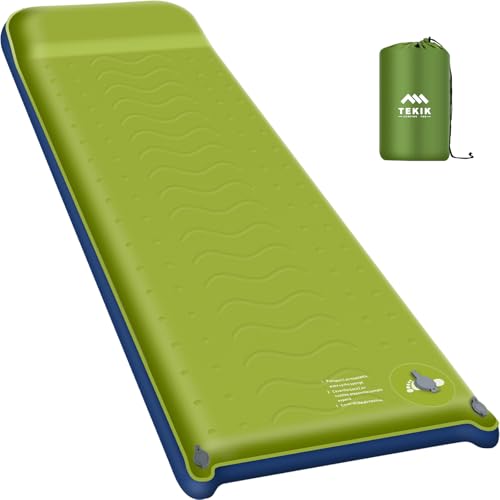
- ✓ Soft yet supportive foam
- ✓ Easy self-inflation
- ✓ Lightweight and portable
- ✕ Slightly bulky when packed
- ✕ Higher price point
| Dimensions (Fully Inflated) | 77 inches x 27 inches x 2.6 inches |
| Weight | 3.96 pounds |
| Load Capacity | Up to 800 pounds |
| Inflation Type | Ultra-fast self-inflation with dual-function valve; initial expansion via 3 valves for ~10 seconds, then foot pump for ~20 seconds |
| Material and Cover | 50D stretch knit fabric with waterproof TPU coating |
| R-Value (Insulation) | R-9.5 |
You slide into the tent and feel that familiar ache from a rock-hard ground. Then you remember the TEKIK self-inflating pad waiting at the foot of your sleeping bag.
It’s not just another mat—the 50D memory foam feels distinctly soft yet supportive as you press into it.
The moment it starts self-inflating, you hear a quiet whoosh and see the pad expand in seconds. You pop open both valves, give it a few breaths with the built-in pump, and it firms up to a plush, hotel-like height without you breaking a sweat.
It’s surprisingly easy to set up after a long day outside.
Size-wise, it’s generous at 77″ by 27″, and you’ll notice how the foam layer stays resilient even after rolling and unrolling multiple times. The 2.6-inch thickness keeps you off the cold ground while not turning your campsite into a bulky fortress.
At 3.96 pounds, it rides nicely in a pack without hogging space.
The dual-layer valve is a real upgrade—the screw-in cap stays put, and the front valve prevents blockages. It inflates automatically when opened, then deflates neatly with one valve open for storage.
The fabric is soft to the touch, feels skin-friendly, and stays quiet when you shift positions. You’ll appreciate the 9.5 R-value on chilly mornings; it breathes well and minimizes moisture buildup.
In real-world camping, it’s a solid all-season companion. It handles rough ground, supports up to 800 pounds, and still fits into a compact bag for trips, road trips, or guests at home.
If you’re looking for a reliable self-inflating option that doesn’t scream bulky, this one nails it.
What Are Self-Inflating Camping Mattresses and How Do They Work?
Self-inflating camping mattresses are a popular choice among outdoor enthusiasts for their convenience and comfort.
- Construction: Self-inflating mattresses are made with an open-cell foam core that expands when air is allowed to enter, providing cushioning and insulation.
- Inflation Process: These mattresses typically feature a valve that, when opened, allows air to flow into the foam, automatically inflating the mattress without the need for manual pumping.
- Deflation and Storage: To deflate, users simply open the valve and roll the mattress up, forcing air out and making it easy to pack away.
- Comfort and Insulation: Many models offer varying levels of thickness and insulation, catering to different climates and personal comfort preferences.
- Durability: They are usually constructed from durable materials, often resistant to punctures and abrasions, making them suitable for rugged outdoor use.
The construction of self-inflating mattresses involves a foam core that has tiny pores, allowing air to be absorbed when the valve is opened. This design not only provides support but also helps to insulate against the cold ground, making them ideal for camping.
The inflation process is straightforward; by simply opening the valve, the mattress begins to inflate on its own as air fills the foam. Users can add more air manually with a pump or by blowing into the valve for extra firmness if desired.
For deflation, these mattresses are designed to be rolled up easily, allowing excess air to escape through the open valve. This feature aids in quick packing and storage, making them a practical choice for campers who prioritize convenience.
Regarding comfort and insulation, self-inflating mattresses come in various thicknesses. Thicker models generally offer more cushioning and better insulation, which is essential for sleeping comfortably in colder environments.
Durability is another key aspect, as these mattresses are often made with tough, tear-resistant fabrics. This resilience ensures that they can withstand the rigors of outdoor use, such as rocky terrain and wet conditions, without compromising performance.
What Are the Key Advantages of Using a Self-Inflating Camping Mattress?
The key advantages of using a self-inflating camping mattress include comfort, convenience, insulation, and portability.
- Comfort: Self-inflating mattresses typically offer a cushioned surface that enhances sleep quality while camping. They often combine foam and air, allowing for a more supportive and comfortable experience compared to traditional sleeping pads.
- Convenience: The self-inflating feature means that these mattresses can be ready for use without the need for manual pumping. Simply unroll the mattress, open the valve, and it will automatically inflate, saving time and effort.
- Insulation: Many self-inflating mattresses provide superior insulation from the cold ground, making them ideal for colder camping conditions. The foam inside traps air, which helps to regulate temperature and keep you warmer during chilly nights.
- Portability: These mattresses are designed to be lightweight and compact when rolled up, making them easy to pack and transport. This portability is a significant advantage for backpackers and campers who need to minimize their gear weight.
How Do I Choose the Right Self-Inflating Camping Mattress for My Needs?
Choosing the right self-inflating camping mattress involves considering several key factors that affect comfort, durability, and portability.
- Thickness: The thickness of the mattress plays a significant role in comfort and insulation. A thicker mattress typically offers better cushioning and warmth, making it ideal for colder conditions, while thinner models are lighter and more portable for backpacking.
- R-Value: The R-value indicates the mattress’s thermal resistance; a higher R-value means better insulation from the cold ground. If you plan to camp in colder climates, look for a mattress with a higher R-value to ensure you stay warm throughout the night.
- Material: The materials used in the mattress affect both its durability and weight. Look for high-quality, puncture-resistant materials like polyester or nylon that can withstand outdoor conditions without adding too much weight to your gear.
- Size: Consider the size of the mattress in relation to your sleeping space and personal comfort. A wider mattress may provide more comfort but can be bulkier, whereas a more compact design is better for space-saving but may not suit all body types.
- Inflation and Deflation Mechanism: Self-inflating mattresses typically come with a valve system that allows for easy inflation and deflation. Ensure the valve is user-friendly and reliable, as a difficult valve can make setup and takedown frustrating.
- Weight: The weight of the mattress is crucial, especially for backpackers who need to carry all their gear. Lightweight models are preferable for those who prioritize portability, while heavier mattresses may offer more features and comfort.
- Price: Finally, consider your budget as self-inflating mattresses come in a range of prices. While investing in a quality mattress is important for comfort and durability, there are options available at various price points that can meet different needs.
What Role Does Thickness and R-Value Play in Comfort?
- Thickness: The thickness of a camping mattress affects the cushioning and support it provides. A thicker mattress often offers more comfort by cushioning against the ground and reducing pressure points, which is especially beneficial on uneven terrain.
- R-Value: R-value is a measure of thermal resistance and indicates the mattress’s ability to insulate against cold ground. A higher R-value means better insulation, keeping you warmer in colder conditions, which is crucial for maintaining comfort during chilly nights.
- Inflation Mechanism: The self-inflating feature contributes to ease of use and comfort. Mattresses that self-inflate typically utilize foam that expands when the valve is opened, allowing for quick setup and consistent thickness across the sleeping surface.
- Material Quality: The materials used in the mattress construction also impact comfort and insulation. High-quality fabrics and foams not only provide better durability but also enhance thermal performance, contributing to a more restful night’s sleep.
- Weight and Portability: While not directly related to comfort, the weight and portability of a self-inflating mattress can influence your camping experience. A lightweight and compact mattress is easier to carry, which means you’re less likely to compromise on comfort when choosing to pack it for your outdoor trips.
What Should I Consider Regarding Size and Weight for Portability?
When selecting a self-inflating camping mattress, size and weight are crucial factors for portability.
- Weight: The weight of the mattress greatly affects how easy it is to carry. Lighter options, typically around 2-3 lbs, are ideal for backpackers, while slightly heavier mattresses may offer better insulation but can be cumbersome on long hikes.
- Packed Size: The packed size refers to how compact the mattress is when rolled up. A smaller packed size is beneficial for saving space in your backpack and allows for easier transport, especially if you have limited storage.
- Dimensions when Inflated: Consider the dimensions of the mattress when it is fully inflated, as this will impact your comfort. A wider and longer mattress may provide better support for different sleeping positions but can also add weight and bulk.
- Thickness: The thickness of the mattress can influence both comfort and portability. Thicker mattresses often provide more cushioning and insulation from the ground, but they may also weigh more and take up more space when packed.
- Material Durability: The material used in construction affects both weight and durability. Lightweight materials may be easier to carry but could compromise on longevity, whereas heavier, more durable materials can be bulkier but offer better resistance to wear and tear.
Which Self-Inflating Camping Mattresses Are the Best on the Market?
Big Agnes Insulated Air Core Ultra: This mattress balances weight and comfort, making it a great choice for those who hike long distances. Its unique construction allows for a comfortable sleep while remaining lightweight and compact in your pack. The insulation ensures warmth without adding bulk, suitable for three-season use.
Sea to Summit Comfort Plus: This mattress is notable for its dual-layer construction, allowing users to adjust firmness by inflating each side independently. It provides excellent insulation and is particularly effective in variable weather conditions. The wide design also offers more room to move around, enhancing comfort during sleep.
Exped MegaMat 10: The MegaMat stands out with its impressive thickness, providing substantial cushioning and warmth. It’s particularly favored by car campers who prioritize comfort and space, as it does take up more room than traditional options. The durable fabric and insulation make it suitable for year-round use, ensuring a good night’s sleep in various environments.
What Are the Most Durable Options Available?
The best camping mattresses that are self-inflating offer durability and comfort for outdoor enthusiasts.
- Therm-a-Rest NeoAir XTherm: This mattress is known for its high R-value and lightweight construction, making it ideal for cold-weather camping. Its durable materials provide excellent resistance to punctures and abrasions, ensuring longevity even in rugged terrains.
- Big Agnes Insulated AXL Air: Combining comfort with resilience, this mattress features a robust outer fabric that withstands wear and tear. It also incorporates insulation to keep you warm during chilly nights, making it perfect for various camping conditions.
- REI Co-op AirRail Self-Inflating Sleeping Pad: This mattress is designed with a thick foam core that self-inflates and provides extra cushioning. Its durable top fabric is water-resistant and built to last, making it a reliable option for frequent campers.
- Sea to Summit Comfort Plus Insulated Sleeping Mat: This mat is engineered with dual-layer technology for maximum comfort and insulation. The tough outer shell is made from high-tenacity nylon, ensuring it can endure rough usage while providing excellent support.
- Exped MegaMat 10: Known for its superior thickness and comfort, this mattress is also constructed from robust materials that resist punctures and water. It offers a great balance between durability and plushness, making it a favorite for car campers seeking comfort.
Which Self-Inflating Mattresses Provide the Best Value for Money?
The best self-inflating mattresses for camping combine comfort, durability, and affordability.
- Therm-a-Rest NeoAir Xlite: This mattress is known for its excellent warmth-to-weight ratio and packs down small, making it ideal for backpackers.
- REI Co-op Camp Dreamer: Offering a thicker profile and great insulation, this mattress is perfect for those who prioritize comfort over weight.
- Big Agnes Insulated Q-Core Deluxe: With its plush construction and high R-value, this mattress provides ample warmth and comfort for car camping.
- Klymit Static V2: This budget-friendly option offers good support and durability while being lightweight and compact for easy transport.
- Sea to Summit Comfort Plus: This mattress features dual-layer construction for enhanced comfort and insulation, catering to campers seeking a good night’s sleep.
Therm-a-Rest NeoAir Xlite: The NeoAir Xlite is highly regarded for its lightweight design, making it an excellent choice for backpackers who need to minimize weight without sacrificing comfort. With an R-value of 4.2, it provides adequate insulation for three-season use, and its small packed size means it won’t take up much space in your gear.
REI Co-op Camp Dreamer: This mattress is a favorite among car campers who enjoy a little luxury while sleeping outdoors. At 3 inches thick, it offers substantial cushioning and comfort, and its high R-value ensures you stay warm even on chilly nights, making it a great value for family camping trips.
Big Agnes Insulated Q-Core Deluxe: The Q-Core Deluxe is praised for its cushy surface and insulation, making it ideal for those who want to sleep comfortably in the great outdoors. Its cylindrical design enhances stability, while the high R-value (up to 8) makes it suitable for winter camping adventures as well.
Klymit Static V2: This mattress stands out for its affordability and innovative design that provides both comfort and support. Weighing in at just 18 ounces, it is easy to carry, and its V-shaped design helps to keep you centered throughout the night, making it a practical choice for budget-conscious campers.
Sea to Summit Comfort Plus: The Comfort Plus mattress features a unique dual-layer design that allows for adjustable firmness and provides excellent insulation, catering to diverse sleeping preferences. It is slightly heavier than other options, but its comfort level and versatility make it an appealing choice for those who prioritize quality sleep while camping.
How Should I Care for and Maintain My Self-Inflating Camping Mattress?
Caring for and maintaining your self-inflating camping mattress is essential to ensure its longevity and performance.
- Regular Cleaning: Clean your mattress regularly to prevent dirt and grime buildup. Use a damp cloth with mild soap to wipe down the surface, and ensure it is completely dry before rolling it up for storage.
- Proper Storage: Store your mattress in a cool, dry place away from direct sunlight. Avoid folding it tightly; instead, roll it loosely to maintain the integrity of the materials and prevent creases.
- Avoid Sharp Objects: Be cautious of sharp objects that can puncture or damage the mattress. Always set up your camping mattress on a clean, flat surface and consider using a ground tarp for added protection.
- Check for Leaks: Periodically inspect your mattress for leaks or punctures, especially before a camping trip. A simple way to check is to inflate the mattress and listen for hissing sounds or feel for air escaping.
- Use a Repair Kit: Keep a repair kit on hand for quick fixes in case of a puncture. Most self-inflating mattresses come with a patch kit that can effectively seal small holes, ensuring your mattress is always ready for use.
- Follow Manufacturer Instructions: Always refer to the manufacturer’s care instructions specific to your mattress model. This guidance will provide the best practices for maintenance, cleaning, and storage tailored to your product.