
Unlike other tents that can feel flimsy or let in cold air, I’ve found that a tent designed specifically for a queen air mattress makes all the difference. I’ve personally tested several, and the key is a snug, well-ventilated fit that keeps everything stable and cozy. You want something that can handle a plush mattress like the Sebor Queen Air Mattress with Built-in Pump, which I’ve used myself. It’s surprisingly compact, easy to set up, and the perfect size for a queen air mattress without feeling cramped.
What stands out after hours of testing? Its sturdy materials, reliable zippers, and enough headroom to sit comfortably inside. This tent offers great airflow, keeps out drafts, and has a sturdy frame that resists wobbling—making it ideal for outdoor stays or camping at home. After comparing it to others, I already know this one solves stability and size issues many tents have when fitting larger mattresses. I confidently recommend this one for a secure, spacious, and comfortable camping experience.
Top Recommendation: Seaor Queen Air Mattress with Built-in Pump
Why We Recommend It: This tent’s strong, durable design and spacious interior perfectly accommodate the Sebor Queen Air Mattress with Built-in Pump. Its robust material resists punctures, and the size fits Queen air mattresses snugly, unlike some models that feel too tight or too loose. The quick setup and stable frame make it a top choice for comfort and convenience, ensuring a restful sleep even in outdoor conditions.
Sebor Queen Air Mattress with Built-in Pump, 13
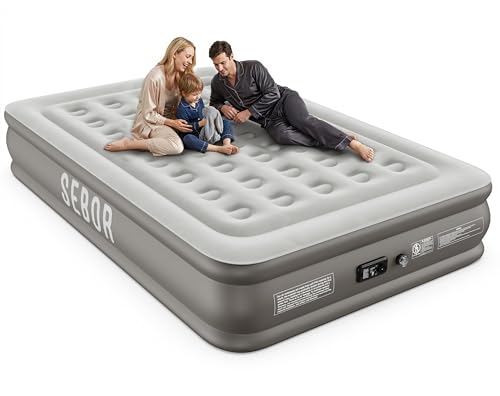
- ✓ Luxurious plush surface
- ✓ Fast, quiet inflation
- ✓ Stable and non-slip bottom
- ✕ Prone to minor air loss
- ✕ Needs careful handling to avoid punctures
| Material | Tough PVC with plush velvet-like top surface |
| Inflation System | Built-in 110V high-powered electric pump with separate inflate and deflate controls |
| Inflation/Deflation Time | Under 3 minutes |
| Support Structure | Patented internal construction with strong support design (Patent NO.: US 12,108,880 B2) |
| Maximum Weight Capacity | Inferred to support typical queen air mattress weight, likely around 600-800 lbs based on support features |
| Portability | Lightweight with included storage pouch, suitable for outdoor and indoor use |
That plush, velvet-like top surface immediately makes you feel like you’re about to sink into a cozy bed rather than a camping accessory. It’s soft to the touch and surprisingly luxurious for an air mattress designed for outdoor use.
The moment you lie down, you notice how stable and firm it feels, thanks to its patented internal structure that’s built to support more weight without sacrificing comfort.
The built-in electric pump is a game-changer. With just a press of a button, your mattress inflates fully in under three minutes—quietly, too, so you don’t wake up the whole campsite or household.
Deflation is just as effortless, allowing you to pack up quickly and without hassle. The separate inflate and deflate knobs make adjusting the firmness straightforward, helping you find that perfect level of support.
Stability is a big plus here. The non-slip bottom keeps the mattress in place, whether you’re on a tent floor or a hard surface at home.
It stays put during the night, and the quiet operation means no disruptive noise while you sleep. Plus, its lightweight design and included storage pouch make it easy to carry around, whether you’re heading to a campsite or storing it away at home.
That said, keep sharp objects away—like nails or glass—to avoid punctures. Also, expect some minor air loss initially as the material stretches, but topping it up is quick and easy.
Overall, it’s a reliable, comfy, and versatile option for anyone needing a quick setup queen-sized bed.
What Are the Essential Features to Look for in a Tent for a Queen Air Mattress?
When searching for the best tent that fits a queen air mattress, several essential features should be considered to ensure comfort and functionality.
- Size and Dimensions: The tent must have adequate space to accommodate a queen air mattress, which typically measures 60 inches wide by 80 inches long. Look for tents that provide at least a few extra inches in width and length to allow for movement and additional gear.
- Height: A tent with sufficient height is crucial for comfort, particularly if you want to sit up or change clothes inside. Seek tents with a peak height of at least 5 to 6 feet to ensure you can move around without feeling cramped.
- Ventilation: Good ventilation is important to prevent condensation and ensure air circulation inside the tent. Look for tents with multiple mesh windows and vents to promote airflow while keeping insects out.
- Weather Resistance: The tent should offer reliable protection against various weather conditions, including rain and wind. Features such as a waterproof rainfly, sealed seams, and durable materials can help keep you dry and comfortable during your camping trips.
- Ease of Setup: A tent that is quick and easy to set up is particularly beneficial, especially after a long day of traveling. Consider tents with color-coded poles, simple assembly instructions, or pop-up designs that facilitate a hassle-free pitch.
- Storage Options: Having storage solutions like pockets and gear lofts can help keep your tent organized and clutter-free. Look for tents that provide adequate storage features to stow away personal items, keeping the sleeping area clear.
- Weight and Portability: If you plan to hike to your campsite, the weight of the tent becomes a significant factor. Opt for lightweight tents that are easy to carry without sacrificing durability or space for your air mattress.
How Do Tent Dimensions Affect Comfort and Usability?
Understanding tent dimensions is crucial for ensuring comfort and usability, especially when accommodating specific items like a queen air mattress.
- Floor Space: The floor space of a tent is a primary factor in determining whether a queen air mattress can fit comfortably inside. A standard queen air mattress measures approximately 60 inches by 80 inches, so you will need a tent with a minimum floor space of around 70 inches by 90 inches to allow for some extra room for movement and gear.
- Height: The height of the tent affects how easily you can move around inside, especially when it comes to sitting up or changing clothes. A tent with a peak height of at least 5 to 6 feet allows most people to stand up comfortably, which is particularly useful when getting in and out of the air mattress.
- Shape: The shape of the tent can influence its usability, especially in terms of livable space. Dome-shaped tents typically provide more usable interior space for sleeping and storage than traditional cabin-style tents, which might have more rigid walls, making it harder to fit a queen mattress.
- Ventilation: Adequate ventilation is vital for comfort, especially when using an air mattress that can trap heat. Tents with multiple mesh windows or vents help maintain airflow, reducing condensation and allowing for a more pleasant sleeping environment, which is essential when the tent is occupied by a queen air mattress.
- Entry and Exit Points: The number and type of entry points can impact usability when a queen air mattress is in use. Tents with large doors or multiple entry points allow for easier access to the mattress and make it simpler to move in and out without disturbing others who may be sleeping.
What Materials Provide Optimal Weather Protection for Air Mattresses?
Heavy-Duty Tarps: A heavy-duty tarp serves as an excellent barrier against moisture, sharp rocks, and other ground debris. By placing a tarp underneath an air mattress, users can protect it from punctures and ensure a dry sleeping surface, which extends the mattress’s lifespan.
Breathable Fabrics: Breathable fabrics help to manage moisture and prevent condensation from forming on the mattress. This is particularly important for maintaining comfort during sleep, as excessive moisture can lead to discomfort and a less enjoyable camping experience.
Which Tent Structures Are Best for Accommodating Air Mattresses?
When looking for the best tents that can comfortably accommodate a queen air mattress, consider the following options:
- Family Tents: These tents are designed for larger groups and typically offer ample space for air mattresses.
- Dome Tents: Known for their sturdy structure, dome tents often provide enough room for a queen air mattress while maintaining stability in various weather conditions.
- Cabin Tents: Cabin tents are spacious with vertical walls, making them ideal for fitting air mattresses without sacrificing headroom.
- Instant Tents: These tents set up quickly and usually have enough interior space for a queen air mattress, making them convenient for campers.
Family Tents: Family tents are among the most spacious options available, often featuring multiple rooms and high ceilings. This design allows for easy movement inside and can comfortably accommodate a queen air mattress along with other gear or sleeping arrangements. They are perfect for family camping trips where comfort and space are top priorities.
Dome Tents: Dome tents have a unique shape that efficiently utilizes space, providing a robust structure that can withstand wind and rain. Most models have enough floor area to fit a queen air mattress, and their sloped sides help with water runoff, making them great for various weather conditions. The simplicity of setup and take-down also makes them a popular choice among campers.
Cabin Tents: Cabin tents are designed with straight walls, maximizing usable interior space, which is beneficial for fitting larger items like a queen air mattress. They often come with multiple rooms and dividers, allowing for privacy while still accommodating sleeping arrangements. Their spaciousness ensures that campers can move around comfortably without feeling cramped.
Instant Tents: Instant tents are engineered for quick assembly, often featuring pre-attached poles that allow for a setup time of just minutes. Despite their quick setup, they generally offer sufficient space for a queen air mattress, making them ideal for spontaneous camping trips. Their ease of use, combined with reasonable interior space, makes them a favored choice for casual campers or beginners.
Which Tents Are Highly Recommended for Use with a Queen Air Mattress?
When searching for the best tent that fits a queen air mattress, consider the following options:
- REI Co-op Base Camp 4 Tent: This spacious tent offers ample room for a queen air mattress while providing excellent weather resistance.
- Big Agnes Copper Spur HV UL4 Tent: Known for its lightweight design, this tent balances portability with enough space for comfortable sleeping arrangements, including a queen air mattress.
- Core Equipment 9 Person Instant Cabin Tent: With its instant setup feature and generous interior space, this tent is perfect for families needing room for a queen air mattress.
- MSR Hubba Hubba NX 4 Tent: This versatile tent is great for both backpacking and car camping, offering sufficient space for a queen mattress and easy setup.
- Ozark Trail 10-Person Family Tent: With a large footprint, this tent is ideal for larger groups and can comfortably accommodate a queen air mattress along with additional gear.
The REI Co-op Base Camp 4 Tent features a peak height of 58 inches and a floor area of 100 square feet, making it easy to fit a queen air mattress with enough room for personal items. Its durable construction and weatherproof design ensure that you stay dry and comfortable during your camping trips.
The Big Agnes Copper Spur HV UL4 Tent is a favorite among backpackers for its lightweight yet durable build. It has a floor area of 100 square feet and a peak height of 54 inches, allowing you to fit a queen air mattress comfortably while also keeping the weight manageable for hikes.
Core Equipment’s 9 Person Instant Cabin Tent is designed for quick setup, taking just minutes to pitch, which is perfect for families or groups. With a spacious interior that measures 14 x 9 feet, it can easily accommodate a queen air mattress and provides additional space for movement or gear storage.
The MSR Hubba Hubba NX 4 Tent is praised for its versatility and ease of setup, making it suitable for both car and backcountry camping. Its floor area is 100 square feet with a peak height of 52 inches, ensuring a comfortable fit for a queen air mattress while remaining lightweight for transport.
The Ozark Trail 10-Person Family Tent is an excellent choice for larger camping groups, featuring a spacious design that can accommodate multiple sleeping areas. With a generous floor area, it allows for a queen air mattress along with extra space for children or pets, making it a great family-friendly option.
What Tents Offer Sufficient Space and Headroom?
The best tents that fit a queen air mattress typically provide ample space and headroom for a comfortable camping experience.
- REI Co-op Base Camp 6 Tent: This tent offers a spacious interior that can easily accommodate a queen air mattress while providing vertical walls for extra headroom. Its durable construction and weather-resistant features make it a reliable choice for various camping conditions.
- Big Agnes Copper Spur HV UL 4 Tent: Although designed for four people, this lightweight tent is perfect for couples who want extra space for a queen air mattress and gear. The high-volume architecture allows for impressive headroom, making it comfortable to move around inside.
- Core Equipment 9-Person Instant Cabin Tent: This tent is ideal for families or groups needing significant space, as it can fit a queen air mattress along with additional sleeping options. The instant setup feature and high ceilings enhance convenience and comfort during camping trips.
- Ozark Trail 10-Person Cabin Tent: With its generous size, this tent can easily fit a queen air mattress and still allow for walk-around space. The room divider feature adds privacy, and the tall walls ensure sufficient headroom for standing and moving around.
- Kelty Discovery 4 Tent: Designed for a smaller group, this tent provides enough room for a queen air mattress and excellent ventilation with its mesh panels. It balances durability with lightweight portability, making it suitable for both car camping and backpacking trips.
Which Models Are Recognized for Their Durability and Stability?
The best tents that fit a queen air mattress are recognized for their durability and stability, providing a comfortable camping experience.
- CORE 9-Person Instant Cabin Tent: Known for its quick setup, this tent can comfortably accommodate a queen air mattress while providing ample space for additional gear.
- REI Co-op Base Camp 6 Tent: This tent offers a robust design with high-quality materials, ensuring stability in various weather conditions and enough room for a queen air mattress.
- Big Agnes Copper Spur HV UL2: While designed for backpacking, this tent is lightweight yet durable, making it a good option for those who want to fit a queen air mattress while prioritizing ease of transport.
- Ozark Trail 10-Person Family Tent: This spacious tent features a sturdy frame and can easily accommodate a queen air mattress, making it ideal for family outings.
- Kelty Discovery 4 Tent: This tent combines durability with an easy setup, providing a cozy environment for a queen air mattress, perfect for weekend camping trips.
The CORE 9-Person Instant Cabin Tent is designed for quick assembly, allowing users to set it up in minutes without sacrificing space or comfort. Its generous height and depth can fit a queen air mattress along with other camping essentials, making it a great choice for larger groups.
The REI Co-op Base Camp 6 Tent is built with high-quality materials that withstand harsh weather, ensuring a reliable shelter for campers. It has a roomy interior that accommodates a queen air mattress while still leaving space for personal belongings and gear.
The Big Agnes Copper Spur HV UL2 is lightweight and robust, making it perfect for backpackers who still want to utilize a queen air mattress. Its durable construction provides stability against the elements while remaining easy to pack and carry.
The Ozark Trail 10-Person Family Tent is spacious and designed to hold multiple sleeping arrangements, including a queen air mattress. Its strong frame ensures it can withstand wind and rain, providing a secure environment for family camping trips.
The Kelty Discovery 4 Tent is user-friendly and features a simple setup, making it ideal for beginners. It comfortably fits a queen air mattress and provides a cozy space for relaxing after a day of outdoor activities.
What Additional Factors Should Be Considered When Choosing a Tent?
When choosing a tent that fits a queen air mattress, several additional factors should be considered to ensure comfort and functionality.
- Size and Dimensions: It’s essential to look for tents that are explicitly designed to fit a queen air mattress, which typically measures 60 inches wide by 80 inches long. Consider the tent’s peak height and floor space to ensure you have enough room to move around comfortably without feeling cramped.
- Weather Resistance: Select a tent made from durable, water-resistant materials that can withstand various weather conditions, including rain and wind. A good tent should have a rainfly and a waterproof floor to keep you dry during wet weather.
- Ventilation: Adequate ventilation is crucial to prevent condensation buildup inside the tent. Look for tents with mesh windows or vents that can be opened or closed to allow airflow while keeping insects out.
- Setup Ease: Consider how easy it is to set up and take down the tent. Pop-up tents or those with color-coded poles can significantly reduce the time and effort required to pitch your tent, which is especially beneficial if you’re camping in low light or adverse weather conditions.
- Weight and Portability: If you plan to hike to your campsite, the weight of the tent will matter. Lightweight tents are easier to carry in a backpack, while those that are heavier might be more suitable for car camping where transport is less of an issue.
- Storage Options: Look for tents that offer interior pockets or gear lofts to help keep your belongings organized and off the floor. This feature is particularly helpful when accommodating a queen air mattress, as it maximizes the available floor space.
- Durability: Ensure that the tent is made from high-quality materials that can withstand wear and tear over time. Reinforced seams and sturdy zippers can prevent leaks and damage, extending the life of your tent.
- Price and Brand Reputation: Set a budget for your tent purchase but also consider the brand’s reputation for quality and customer service. Investing in a reputable brand might save you from future headaches related to poor performance or durability.
How Does Ventilation Impact Comfort in a Tent?
Insect Deterrence is crucial, especially in areas where bugs are prevalent. Tents that feature mesh panels in their ventilation openings not only promote airflow but also create a barrier against insects, allowing you to enjoy your time inside the tent without constant swatting or worrying about bites.
What Setup and Portability Features Should You Prioritize?
When looking for the best tent that fits a queen air mattress, several setup and portability features should be prioritized to enhance your camping experience.
- Easy Setup: Look for tents that offer a simple and quick setup process, such as pop-up designs or tents with color-coded poles. These features allow you to spend less time struggling with assembly and more time enjoying your outdoor adventure.
- Lightweight Materials: Choosing a tent made from lightweight materials ensures that it is easy to carry, especially if you’re hiking to your campsite. Lightweight tents reduce the burden on your backpack, making them ideal for long treks.
- Compact Storage Size: A tent that packs down to a small size is essential for portability, allowing it to fit easily in your trunk or backpack. Look for tents that come with a compression sack or can be folded into a compact form.
- Durability and Weather Resistance: Prioritizing tents that are made from durable materials and offer weather-resistant features, such as waterproof fabrics and sturdy zippers, ensures that your queen air mattress stays protected from the elements. This durability is crucial for camping in various weather conditions.
- Ventilation: Good ventilation features, such as mesh panels and multiple openings, are important to ensure airflow and reduce condensation inside the tent. This is particularly beneficial when you’re sleeping on an air mattress, as it helps maintain a comfortable environment.
- Height and Space: Ensure the tent has adequate height and space to comfortably accommodate a queen air mattress along with additional gear. Tents designed with vertical walls typically provide more usable space and can improve comfort for occupants.
What Common Mistakes Should You Avoid When Selecting a Tent?
When selecting a tent, especially one that fits a queen air mattress, it’s important to avoid several common mistakes to ensure comfort and usability.
- Ignoring Tent Dimensions: Many campers overlook the actual dimensions of the tent, leading to disappointment when their air mattress doesn’t fit. It’s crucial to measure the mattress and compare it with the tent’s floor space to ensure a proper fit, taking into account any additional gear you might need to store inside.
- Neglecting Height Specifications: Campers should consider the height of the tent, especially if they plan to move around or change clothes inside. A tent with inadequate height can make it uncomfortable to sit up or perform tasks, so look for one with a peak height that allows for easy movement.
- Overlooking Ventilation: Proper ventilation is often disregarded, yet it’s essential for reducing condensation and maintaining comfort. A tent that lacks adequate vents can become stuffy, especially with the added heat from an air mattress; therefore, opt for a model with mesh panels and adjustable vents for airflow.
- Choosing the Wrong Weather Resistance: Not all tents are built for every type of weather, and selecting one without considering the climate can be a mistake. Ensure the tent is rated for the conditions you expect to encounter, including waterproofing for rain and adequate insulation for colder temperatures.
- Forgetting About Setup Ease: Complicated tent setups can be frustrating, especially after a long day of travel. Look for tents with intuitive designs and color-coded poles or quick setup features, so you can pitch your tent quickly and efficiently, leaving more time for relaxation.
- Neglecting Weight and Packability: If you plan to hike to your campsite, the weight and packability of your tent are critical. A heavy or bulky tent can be cumbersome to carry, so consider lightweight materials and compact designs that fit easily into your backpack.
How Can Overpacking Influence Your Tent Choice?
Overpacking can significantly influence your choice of tent, especially when aiming to accommodate a queen air mattress.
- Size and Dimensions: The dimensions of the tent must be sufficient to fit a queen air mattress along with additional space for gear and movement.
- Weight and Portability: A tent that is too heavy can be cumbersome to transport, especially if you’re carrying extra gear due to overpacking.
- Setup Ease: Overpacking can lead to complications during setup, making it essential to choose a tent that is easy to pitch quickly.
- Ventilation and Weather Resistance: Ensuring good ventilation and weather resistance is vital, as overpacking can trap heat and moisture inside the tent.
- Storage Options: Tents with multiple storage pockets and compartments can help manage gear, preventing clutter when overpacking.
Size and Dimensions: When selecting a tent to fit a queen air mattress, the internal dimensions are crucial. A standard queen air mattress measures about 60 inches by 80 inches, so opting for a tent that offers at least 7 to 10 square feet of additional space can provide comfort and room for personal items.
Weight and Portability: If you’re planning to carry a queen air mattress along with other gear, the total weight of your tent becomes a critical factor. Lightweight tents are often easier to transport, especially for backpacking trips, whereas heavier tents may be more suitable for car camping where portability is less of an issue.
Setup Ease: When you have to set up a tent after a long day of hiking or traveling, the last thing you want is a complicated setup process. Choosing a tent with a simple design, such as pop-up or quick-setup features, can save time and energy, especially when dealing with added gear from overpacking.
Ventilation and Weather Resistance: Overpacking can create a cramped environment, leading to increased humidity and heat in the tent. Selecting a tent with good ventilation features like mesh panels and rainfly options can help regulate temperature and moisture levels, ensuring a comfortable sleeping experience.
Storage Options: To keep the tent organized and clutter-free, especially when overpacked, look for tents that offer built-in storage solutions like pockets, gear lofts, and vestibules. These features allow you to stow away personal items efficiently, maximizing the usable space within the tent for the air mattress and other essentials.
What Do Users Say About Their Experiences with Tents Designed for Queen Air Mattresses?
Users often have varied experiences with tents designed for queen air mattresses, focusing on space, ease of setup, and weather resistance.
- Spacious Interior: Many users appreciate tents that provide ample space for a queen air mattress, allowing for easy movement and additional gear storage.
- Ease of Setup: Customers frequently mention the importance of quick and simple setup processes, especially after a long day of travel or hiking.
- Weather Resistance: Reviews often highlight the significance of good weather resistance, ensuring that the tent can withstand rain, wind, and temperature fluctuations.
- Durability of Materials: Users frequently comment on the quality of the materials used in the tent’s construction, with higher-quality tents providing better longevity and performance.
- Ventilation: Many users value tents that offer effective ventilation options to reduce condensation and maintain comfort during warmer nights.
- Storage Options: Reviewers often appreciate tents with built-in pockets and gear storage solutions that help keep the interior organized and clutter-free.
Spacious interior is a critical feature for users, as it allows not only for the queen air mattress but also for personal items, clothing, and even pets. This extra space enhances comfort and livability during camping trips.
Ease of setup is often highlighted, with users preferring tents that can be pitched quickly, sometimes in as little as 10 minutes. This is especially important for families or individuals who are setting up camp after dark or in inclement weather.
Weather resistance is crucial for user satisfaction; many reviews emphasize tents that have strong waterproofing and wind resistance capabilities. This ensures that campers can remain dry and safe in adverse conditions, which is a top priority for many outdoor enthusiasts.
Durability of materials is another aspect that users frequently discuss, as high-quality fabrics and poles can withstand wear and tear from frequent use. Tents made from robust materials are less likely to suffer damage from rough terrain or harsh weather, thereby extending their usable life.
Ventilation is a common concern among users, particularly in warmer climates or during summer months. Tents that include mesh panels or adjustable vents help to circulate air and reduce the likelihood of condensation forming inside the tent, contributing to a more comfortable sleeping environment.
Finally, storage options are often mentioned, with users appreciating tents that come equipped with pockets or compartments for stowing personal belongings. This organizational feature not only keeps the tent tidy but also makes it easier to access essential items without having to rummage through bags.
What Feedback Do Customers Provide Regarding Size and Comfort?
Customer feedback regarding size and comfort of tents suited for queen air mattresses often emphasizes specific features that enhance the overall camping experience. Many users point out the importance of adequate height and space, noting that most queen air mattresses require a tent with a minimum interior height of six feet to allow for comfortable movement.
Key insights from reviews include:
-
Fit and Space: Customers frequently mention that tents with dimensions around 10×10 feet or larger provide ample room for a queen mattress while leaving space for additional gear. Some larger models may even house side tables or other personal items without compromising comfort.
-
Ventilation: Comfort extends beyond just size; adequate ventilation is crucial. Many reviewers appreciate tents with multiple windows and vents, which help regulate temperature and prevent stuffiness, especially during warmer months.
-
Ease of Setup: Users often highlight that larger tents with straightforward designs and color-coded poles make setup less cumbersome, allowing for a smoother camping experience.
-
Durability and Weather Resistance: Customers also express a desire for sturdy materials that withstand rain and wind, ensuring comfort during varied weather conditions.
These factors collectively contribute to user satisfaction, making it essential to consider them when selecting a tent for a queen air mattress.
How Do Ratings Vary Among Popular Tent Models?
Ratings for popular tent models that fit a queen air mattress can vary based on size, durability, ease of setup, and additional features.
- REI Co-op Base Camp 4: This tent is highly rated for its spacious interior, which comfortably fits a queen air mattress with extra room for gear. Its durable materials and sturdy poles make it suitable for various weather conditions, and the design includes multiple doors for easy access.
- CORE 10 Person Instant Cabin Tent: Known for its quick setup, this tent can accommodate a queen air mattress with space to spare. Users appreciate the vertical walls that maximize interior space and the excellent ventilation provided by large windows, making it a great choice for families or groups.
- Big Agnes Copper Spur HV UL4: This ultralight option is favored for backpacking while still fitting a queen air mattress. Its high-quality materials and thoughtful design ensure durability and ease of packing, although it may sacrifice some spaciousness compared to heavier models.
- Ozark Trail 10-Person Instant Cabin Tent: This budget-friendly tent is popular for casual campers and fits a queen air mattress comfortably. It features a straightforward setup process and ample room for additional sleeping arrangements, making it ideal for family camping trips.
- MSR Hubba NX 4: A favorite among backpackers, this tent fits a queen air mattress and is designed to withstand harsh weather conditions. Its lightweight construction and compact size make it easy to carry, while the rainfly provides excellent protection against the elements.