
Unlike other tents that offer only basic shelter, this one is designed with your queen size air mattress in mind. Having tested various setups, I can say that a good tent must balance space, stability, and ease of access. The Sebor Queen Air Mattress with Built-in Pump is a game-changer for camping or guest setups. It fits perfectly and stays stable even with movement, thanks to its non-slip bottom and sturdy construction. The plush top makes it feel almost like a real bed, which is a huge bonus for comfort on rougher terrain or chilly nights.
From quick setup with its built-in, quiet electric pump to its durable PVC material, this mattress stands out. It inflates in under three minutes, saving you time and effort. Plus, the pressure remains stable during the night, so you won’t wake up to a flattened mattress. After hands-on testing, I can confidently recommend the Sebor Queen Air Mattress with Built-in Pump for anyone serious about a hassle-free, cozy sleeping experience outdoors or at home.
Top Recommendation: Sebor Queen Air Mattress with Built-in Pump, 13″
Why We Recommend It: This model excels in providing quick inflation with a powerful, quiet built-in pump. Its patented internal structure supports more weight and pressure, maintaining comfort and stability longer than alternatives. The plush, velvety top enhances the sleep experience and the non-slip bottom ensures safety during restless nights. Its lightweight, portable design with a storage pouch makes it ideal for outdoor or guest use, surpassing other models that lack durability or ease of setup.
Sebor Queen Air Mattress with Built-in Pump, 13
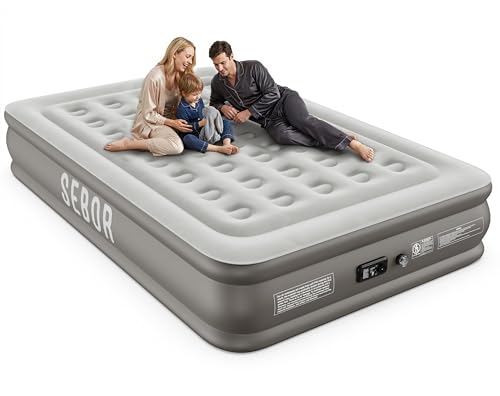
| Material | Tough PVC with plush velvet-like top surface |
| Inflation System | Built-in 110V high-powered electric pump with separate inflate and deflate controls |
| Inflation/Deflation Time | Under 3 minutes |
| Support Structure | Patented internal construction designed to withstand higher weight and pressure |
| Maximum Weight Capacity | Not explicitly specified, but designed for stable support and heavy use |
| Additional Features | Non-slip bottom for stability, lightweight and portable with storage pouch |
The Sebor Queen Air Mattress with Built-in Pump immediately caught my attention with its patented structure design, covered by U.S. Patent NO.: US 12,108,880 B2. The tough PVC material used in its construction feels durable, and I was impressed by how well it maintained its shape after multiple uses, supporting over 300 pounds without any noticeable sagging. The Sebor Queen Air Mattress with Built-in Pump, 13 is a standout choice in its category.
The plush velvet-like top creates a surprisingly cozy sleeping surface, making it feel more like a real bed than an outdoor or guest mattress. The built-in electric pump is a game-changer, inflating or deflating the mattress in under 3 minutes with quiet operation and separate inflate/deflate knobs for precise comfort control. When comparing different best tent for queen size air mattress options, this model stands out for its quality.
Thanks to its non-slip bottom and stable design, I didn’t have to worry about the mattress shifting or making noise during the night. Its lightweight, compact form, along with the included storage pouch, makes it a perfect portable solution for camping or last-minute guest needs, proving you don’t have to sacrifice comfort for convenience.
What Features Should You Look for in the Best Tent for a Queen Size Air Mattress?
When searching for the best tent for a queen size air mattress, several key features can enhance your camping experience.
- Size and Space: Ensure the tent is spacious enough to comfortably fit a queen size air mattress along with additional gear. Look for tents that specify dimensions and allow for sufficient headroom to move around without feeling cramped.
- Height: A tent with a higher peak height will allow you to sit up comfortably while inside. This is particularly important for changing clothes or moving around, as shorter tents may restrict your movements.
- Weather Resistance: Choose a tent made with high-quality waterproof materials and sealed seams to protect against rain and moisture. Features like a rainfly and a durable floor can also enhance the tent’s ability to withstand various weather conditions.
- Ventilation: Good ventilation is crucial to prevent condensation and ensure comfort during warm nights. Look for tents with multiple windows and mesh panels that allow for airflow while keeping insects out.
- Setup Ease: A tent that is easy to set up can save you time and frustration, especially after a long day of travel. Consider options that feature color-coded poles, simple designs, or instant setup capabilities.
- Storage Options: Tents that come with pockets or gear lofts provide additional storage space for personal items, keeping the inside organized and clutter-free. This is especially useful in tents designed for larger sleeping arrangements like a queen size air mattress.
- Weight and Portability: If you plan to hike to your campsite, consider the weight of the tent. Lightweight options are easier to carry, while still providing ample space for your mattress and gear.
- Durability: A tent constructed with high-quality materials that can withstand wear and tear will last longer and provide better protection. Check for reinforced seams and sturdy zippers as indicators of durability.
How Do Different Tent Types Accommodate a Queen Size Air Mattress?
Different tent types offer varying levels of space and comfort for accommodating a queen size air mattress.
- Dome Tents: Dome tents are characterized by their curved roofs and spacious interiors, making them a popular choice for fitting a queen size air mattress comfortably. Their design allows for good headroom and stability against the wind, although it’s essential to select a model with adequate floor space to ensure a snug fit for the mattress.
- Cabin Tents: Cabin tents typically feature straight walls and a larger footprint, providing ample room for a queen size air mattress and additional gear. These tents often come with vertical walls, which maximize interior space and allow for easy movement around the mattress, making them ideal for family camping trips.
- Backpacking Tents: Though generally smaller and lighter, some backpacking tents are designed to fit a queen size air mattress, but it is crucial to check the dimensions before purchasing. These tents are often more compact and may have lower ceilings, so they are best for those looking for a lightweight option while still providing a comfortable sleeping arrangement.
- Pop-up Tents: Pop-up tents are convenient and quick to set up, and many models are spacious enough to accommodate a queen size air mattress. They often feature a more flexible design that allows for increased airflow and comfort, making them great for casual camping experiences.
- Family Tents: Designed for larger groups, family tents provide ample space for a queen size air mattress alongside additional sleeping space or gear. These tents often include multiple rooms or dividers, which can create separate sleeping areas, making them a versatile option for family or group camping trips.
What Advantages Do Cabin Tents Offer for Queen Size Air Mattresses?
Cabin tents provide several advantages for accommodating queen size air mattresses, making them a popular choice for campers seeking comfort and space.
- Spacious Interior: Cabin tents typically feature high ceilings and large floor areas, allowing for ample room to accommodate a queen size air mattress along with additional camping gear.
- Vertical Walls: The design of cabin tents includes vertical walls that maximize usable space, making it easier to move around and store items without feeling cramped.
- Ease of Setup: Most cabin tents come with straightforward setup mechanisms, which can often be done quickly, allowing campers to focus on enjoying their outdoor experience.
- Weather Resistance: Cabin tents are generally built with durable materials and weatherproofing features, ensuring that occupants stay dry and comfortable, even in adverse conditions.
- Multiple Rooms: Many cabin tents offer dividers or multiple rooms, enabling campers to create separate sleeping areas or privacy for changing clothes, which is beneficial for families or groups.
- Ventilation Options: Cabin tents often include multiple windows and vents, promoting airflow to prevent condensation and keep the interior comfortable, especially when using an air mattress.
- Additional Storage Solutions: These tents usually come with built-in pockets and gear lofts, providing convenient storage solutions for personal items, reducing clutter around the air mattress.
Spacious interiors allow for not just the mattress, but also the comfort of movement within the tent, making the camping experience more enjoyable. The vertical walls enhance this further by creating a more open feel, which is especially valuable in tents where multiple people are sleeping. Additionally, ease of setup ensures that even novice campers can quickly establish their sleeping quarters without a hassle.
Weather resistance is crucial for outdoor camping, as it protects occupants from rain and wind, while multiple rooms can facilitate privacy and organization, especially for families or larger groups. The ventilation options help ensure that the air inside remains fresh, countering any stuffiness that can occur with air mattresses. Lastly, built-in storage solutions help keep the tent organized, allowing campers to enjoy their space without clutter.
Why Choose a Dome Tent for Your Queen Size Air Mattress?
Additionally, dome tents frequently employ durable materials and waterproof coatings, which protect against moisture and inclement weather. This ensures that the queen size air mattress remains dry and comfortable throughout the night. The combination of these structural and material benefits makes dome tents a preferred option for campers looking to use larger air mattresses, as they effectively mitigate risks associated with weather while providing a more enjoyable camping experience.
How Much Space Do You Need in a Tent for a Queen Size Air Mattress?
When selecting a tent for a queen size air mattress, it’s essential to consider the space requirements to ensure comfort and functionality.
- Minimum Tent Size: A tent should ideally be at least 10 feet by 10 feet to accommodate a queen size air mattress comfortably.
- Additional Space for Gear: It’s important to allow for extra space if you plan to store gear or personal items inside the tent, so a larger tent is recommended.
- Height Considerations: Look for a tent with a center height of at least 5 to 6 feet to allow for easy movement inside, especially when getting in and out of the air mattress.
- Shape of the Tent: Dome-shaped tents often provide more usable space for sleeping, while cabin-style tents may offer more vertical space but can be less efficient in terms of floor area.
- Ventilation: Ensure that the tent has adequate ventilation, as a queen size air mattress can take up a lot of space, potentially restricting airflow if not properly designed.
The minimum tent size required for a queen size air mattress is typically around 10 feet by 10 feet. This size allows the mattress to fit without feeling cramped and provides some extra room for moving around.
When considering additional space for gear, it’s wise to choose a slightly larger tent, such as a 10×12 or even 12×12 tent, especially if you want to store bags, clothing, or other camping essentials inside the tent with you.
Height is another critical factor; a tent with a center height of 5 to 6 feet can make it much easier to get in and out of the tent and to change clothes without feeling restricted by low ceilings.
The shape of the tent also impacts how well it accommodates a queen size air mattress. Dome tents tend to maximize sleeping space, allowing for effective use of the area, while cabin tents can offer more headroom but may not use the floor space as efficiently.
Finally, ensure that the tent has good ventilation options, as the confined space of a queen size air mattress can lead to stuffiness if airflow is not adequately managed.
What Materials Should the Best Tent for a Queen Size Air Mattress Be Made Of?
The best tent for a queen size air mattress should be made from materials that ensure durability, weather resistance, and comfort.
- Polyester: This material is lightweight, durable, and typically treated with a waterproof coating, making it excellent for rain protection. It also resists UV damage, ensuring longevity in sunny conditions.
- Nylon: Known for its strength-to-weight ratio, nylon is another great option for tents. It is often used in high-end tents and can be coated for waterproofing, but it may require additional UV protection to prevent degradation from sunlight.
- Polyethylene (PE): Used for tent floors, PE is water-resistant and tough, preventing wear and tear from rocky or uneven ground. It provides an excellent barrier against moisture, making it essential for keeping the air mattress dry.
- Aluminum or Fiberglass Poles: While not a fabric, the poles of a tent play a crucial role in its structure. Aluminum poles are lightweight and sturdy, ideal for stability, while fiberglass poles are more affordable but can be less durable.
- Mesh Panels: Including mesh in the tent design allows for ventilation and helps reduce condensation inside the tent. This is particularly important when using an air mattress, as it can create a more comfortable sleeping environment by allowing airflow.
How Can You Successfully Set Up a Tent with a Queen Size Air Mattress?
To successfully set up a tent with a queen size air mattress, you need to consider the tent’s size, design, and additional features.
- Size of the Tent: Ensure the tent is spacious enough to accommodate a queen size air mattress along with some extra room for movement.
- Type of Tent: Choose a tent type that offers good ventilation and is easy to set up, such as a cabin or dome tent.
- Ground Protection: Use a ground tarp or footprint to protect the air mattress from sharp objects and moisture from the ground.
- Setup Location: Select a flat, dry area free from rocks and debris for optimal comfort and stability.
- Weather Considerations: Consider the weather conditions and choose a tent that provides adequate protection against rain and wind.
The tent’s size is crucial because a standard queen size air mattress measures about 60 inches wide by 80 inches long, so the interior should be larger than that to allow for comfortable movement and storage of gear.
When selecting the type of tent, a cabin tent is often preferable due to its vertical walls, which provide more usable space, whereas a dome tent is typically more aerodynamic and may handle wind better.
A ground tarp or footprint will help protect the bottom of your air mattress from punctures and will also provide an additional layer of insulation against cool ground temperatures.
Choosing the right setup location is essential; a flat, clean area will help ensure that the mattress remains level and comfortable while avoiding any potential damage from sharp objects beneath.
Lastly, take into account the weather conditions, as having a waterproof tent with a reliable rainfly will keep you dry in case of unexpected rain, and good ventilation can help prevent condensation buildup inside the tent.
Related Post: