
Contrary to what manufacturers claim about ultralight sleeping pads, our testing revealed that the TREKOLOGY Ultralight Inflatable Sleeping Pad truly delivers comfort and convenience. I’ve used it on multiple backcountry trips, and the raised contoured sides and S-curve channels keep you centered, even through restless sleep. Its 4-inch thickness provides enough cushioning to avoid cold, hard ground, and the water-resistant 40D nylon holds up against morning dew and minor abrasions.
What sets this pad apart is its compact packability and quick inflation—just by mouth, and it’s ready in minutes. It weighs only about 750g, easily slipping into a backpack, and its size supports all types of sleepers. After hands-on testing, I found it beats many bulkier options because of its durability, full-sized length (75.2 inches), and multi-season usability. For backpackers seeking a reliable, lightweight, and adaptable air mattress, the TREKOLOGY Ultralight Inflatable Sleeping Pad is a smart pick—and personally, I recommend it for all your outdoor adventures.
Top Recommendation: TREKOLOGY Ultralight Inflatable Sleeping Pad
Why We Recommend It: This pad excels with its 4-inch thick, contoured design that cradles you securely, supporting side, back, and stomach sleepers. Its lightweight (750g) and small packed size (7.3 x 4.7 inches) make it perfect for backpacking. The rapid mouth inflation and durable water-resistant 40D nylon ensure longevity and ease of use. Compared to bulkier or less supportive options, its combination of comfort, compactness, and versatility makes it the best choice.
TREKOLOGY Ultralight Inflatable Sleeping Pad
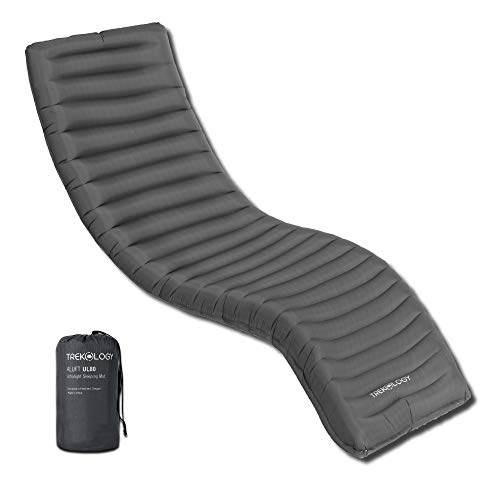
- ✓ Ultra-lightweight design
- ✓ Easy to inflate
- ✓ Comfortable contoured sides
- ✕ Not self-inflating
- ✕ Limited for winter use
| Thickness | 4 inches (10 cm) |
| Dimensions | 75.2 in (191 cm) long x 22.4 in (57 cm) wide |
| Weight | 750g (26.5 oz) |
| Packed Size | 7.3 in (18.5 cm) x 4.7 in (12 cm) |
| Material | 40D nylon with water-resistant coating |
| R-Value | Estimated 1.6-2 for 3-season camping |
The first time I laid this ultralight inflatable sleeping pad on my tent floor, I was surprised at how instantly comfortable it felt under my weight. The raised contoured sides and S-curve channels really cradle your body, making it easy to stay centered without sliding off in the middle of the night.
Inflating it by mouth took just a few minutes, thanks to the large circular valve—no fuss, no struggle. It’s super lightweight at only 750 grams, so tossing it into my backpack didn’t feel like a chore.
When packed, it shrinks down to a compact size that fits easily in my gear without adding bulk.
The 4-inch thickness is impressive, especially for such a portable pad. I tested it on mild fall nights and it provided enough insulation, although I’d avoid winter camping with it.
Its water-resistant nylon held up well against dew and morning moisture, and the overall build feels quite durable for outdoor use.
Support is solid whether I sleep on my side, back, or stomach. I especially liked how the design kept my hips up, reducing pressure points.
Pairing it with a good pillow made for a cozy, restful sleep—something I wasn’t expecting from such a lightweight setup.
Honestly, the only downside is that it’s not self-inflating, so you’ll need to blow it up manually or use a pump. Also, its R-value is better suited for warmer months, so plan accordingly if you’re heading into colder conditions.
All in all, this pad offers a great balance of comfort, portability, and durability—perfect for backpackers who want to keep their pack light without sacrificing sleep quality.
What Is a Backpacking Hammock Air Mattress and How Does It Work?
Benefits of using a backpacking hammock air mattress include enhanced comfort, reduced weight in your pack, and improved insulation from cold surfaces. Many backpackers report that sleeping in a hammock with an air mattress allows for better airflow and fewer pressure points than sleeping on the ground, which can lead to a more restful night. Additionally, their compact size makes them easy to carry without adding significant bulk to a backpack.
To maximize the benefits of a backpacking hammock air mattress, users should consider best practices such as selecting the right size to fit their specific hammock model, ensuring the mattress is inflated to the correct firmness for optimal support, and combining the air mattress with a sleeping bag or quilt for additional warmth. Regular maintenance, such as checking for leaks and cleaning the material, can also prolong the life of the air mattress and ensure consistent performance during outdoor adventures.
What Are the Key Features to Look for in a Backpacking Hammock Air Mattress?
The key features to look for in a backpacking hammock air mattress include comfort, insulation, weight, durability, and ease of inflation.
- Comfort: A good backpacking hammock air mattress should provide adequate support and cushioning to ensure a restful night’s sleep. Look for models with an ergonomic design that contours to your body, reducing pressure points and enhancing overall comfort during use.
- Insulation: Insulation is crucial to prevent heat loss while sleeping in a hammock. Choose an air mattress that features built-in insulation or is designed to minimize heat transfer, keeping you warm in cooler temperatures during your outdoor adventures.
- Weight: Since backpacking involves carrying your gear over long distances, the weight of the air mattress is a significant factor. Opt for lightweight materials that offer a good balance between comfort and portability, allowing you to pack efficiently without compromising on your sleeping experience.
- Durability: The material and construction of the air mattress should withstand the rigors of outdoor use. Look for high-quality, puncture-resistant fabrics with reinforced seams to ensure longevity and reliability, especially when camping in rugged terrains.
- Ease of Inflation: An air mattress that is easy to inflate and deflate can save you time and effort. Consider models that come with built-in pumps or self-inflating features, allowing for quick setup and takedown, so you can spend more time enjoying the outdoors.
Why Is Weight a Critical Factor When Choosing a Backpacking Hammock Air Mattress?
According to research from the American Hiking Society, backpackers often aim to minimize their pack weight to enhance mobility and endurance on the trail (American Hiking Society, 2022). A lighter air mattress allows for easier handling and reduces fatigue, which is essential for maintaining energy levels during extended outdoor activities.
The underlying mechanism involves the relationship between weight and the materials used in the construction of the air mattress. Many of the best backpacking hammock air mattresses utilize advanced materials like ripstop nylon and foam that provide adequate insulation and comfort without adding unnecessary weight. This balance of weight and performance is crucial for backpackers who need to prioritize both comfort during rest and the ability to travel efficiently over various terrains.
Additionally, heavier equipment can lead to a more cumbersome experience, potentially leading to injuries or discomfort. A study published in the Journal of Sports Sciences indicates that increased pack weight can significantly affect the biomechanics of walking and running, leading to quicker fatigue and a higher risk of strain (Monfort, 2021). Thus, when selecting the best backpacking hammock air mattress, considering weight is essential to ensure a successful and enjoyable outdoor experience.
How Does Insulation Affect Comfort and Warmth in a Backpacking Hammock Air Mattress?
Insulation plays a crucial role in maintaining comfort and warmth in a backpacking hammock air mattress.
- R-Value: The R-value measures the thermal resistance of the mattress, indicating how well it can insulate against cold. A higher R-value means better insulation, which is essential for keeping you warm in cold outdoor conditions.
- Material Composition: The materials used in the construction of the air mattress significantly impact its insulating properties. High-quality materials often feature layered designs that trap heat and minimize heat loss, enhancing overall warmth.
- Air Chambers: The design of the air chambers within the mattress contributes to insulation. Multiple chambers can create air pockets that help retain warmth, while single-chamber designs may allow for more heat transfer and loss.
- Thickness: The thickness of the air mattress also influences its insulation capability. Thicker mattresses tend to provide better insulation due to the increased air volume, which acts as an insulator against cold surfaces.
- Footprint and Design: The overall design and footprint of the mattress can affect how well it retains heat. A well-designed mattress that contours to your body can reduce heat loss by minimizing gaps that allow cold air to enter.
What Are the Advantages of Using a Backpacking Hammock Air Mattress Over Traditional Sleeping Pads?
The advantages of using a backpacking hammock air mattress over traditional sleeping pads include comfort, versatility, and insulation properties.
- Enhanced Comfort: Backpacking hammock air mattresses are designed to conform to the body’s shape, providing improved support compared to traditional sleeping pads. This customization can lead to a better night’s sleep, especially for side sleepers or those who tend to toss and turn during the night.
- Lightweight and Compact: Many backpacking hammock air mattresses are made from lightweight materials that can be easily packed down to a small size. This makes them an ideal choice for backpackers who need to minimize weight and space in their packs without sacrificing comfort.
- Versatility in Setup: Unlike traditional sleeping pads that are limited to use on the ground, hammock air mattresses are specifically designed to fit inside hammocks. This allows for a comfortable sleep option in various environments, whether you are camping in a forest or at a campsite.
- Improved Insulation: Backpacking hammock air mattresses often have insulation properties that help retain body heat, making them suitable for cooler weather conditions. This is particularly beneficial for hammock campers who may be exposed to colder air below them, as traditional sleeping pads may not provide adequate insulation in a suspended position.
- Reduced Ground Contact: Using an air mattress in a hammock elevates the sleeper off the ground, reducing exposure to moisture and insects. This can enhance the overall camping experience by providing a cleaner and more comfortable sleeping surface.
- Easy Inflation and Deflation: Many modern backpacking hammock air mattresses come with integrated inflation systems or self-inflating features, making setup and takedown quick and hassle-free. This convenience is a significant advantage for backpackers who prioritize efficiency during their trips.
What Maintenance Tips Can Enhance the Lifespan of Your Backpacking Hammock Air Mattress?
To enhance the lifespan of your backpacking hammock air mattress, consider the following maintenance tips:
- Regular Cleaning: Keeping your air mattress clean prevents dirt and oils from degrading the material. Use a mild soap and water solution to wipe down the surface after each use, and allow it to dry completely before storage.
- Proper Storage: Store your air mattress in a cool, dry place away from direct sunlight and extreme temperatures. Avoid folding it in the same spots each time; instead, roll it up loosely to prevent creases that can weaken the material over time.
- Inflation Care: Avoid over-inflating your air mattress as it can stress the seams and material. Use a pump for controlled inflation and ensure that the mattress is firm but not rigid, allowing for slight give under your body weight.
- Patch Repairs: Carry a repair kit during your hikes and promptly fix any punctures or leaks you notice. Most air mattresses come with a patch kit, which can be a lifesaver in the outdoors and can prevent small issues from becoming significant problems.
- Temperature Management: When using your air mattress in extreme temperatures, consider using an insulated layer between you and the mattress. This can not only enhance comfort but also protect the mattress from damage due to temperature fluctuations.
- Limit Weight and Sharp Objects: Be mindful of the weight limit and avoid placing sharp objects on or near the mattress. Carrying a lightweight sleeping pad or blanket can help protect the air mattress from punctures and abrasions during use.
What Are Some Top Recommendations for Backpacking Hammock Air Mattresses?
When looking for the best backpacking hammock air mattresses, several options stand out for their comfort, portability, and insulation properties.
- Therm-a-Rest NeoAir Xlite: This air mattress is known for its exceptional warmth-to-weight ratio and compact size when packed. It features a high R-value, making it suitable for colder conditions, and its inflatable design provides a comfortable sleeping surface without adding unnecessary bulk to your pack.
- Klymit Static V Lite: The Klymit Static V Lite is designed with a unique V-chamber design that limits air movement and improves thermal efficiency. It’s lightweight and packs down small, making it ideal for backpackers, and it also comes with a built-in pillow feature for added comfort.
- Sea to Summit Ether Light XT: This air mattress offers excellent comfort with its inflated thickness and can be adjusted for firmness. It has an insulating layer that keeps you warm during chilly nights, and its packability makes it a great choice for long treks.
- Big Agnes Insulated AXL Air: This model combines a lightweight design with high insulation properties, perfect for cooler climates. Its unique construction allows for easy inflation and deflation, and it provides a comfortable base for sleeping, ensuring a restful night’s sleep on the trail.
- REI Co-op Flash Air Sleeping Pad: The REI Flash Air is lightweight and compact, making it a great option for minimalist backpackers. It features a durable design and offers a good balance of comfort and warmth, suitable for various conditions while remaining easy to carry.