
Only 15% of air mattresses actually perform well at high altitudes, which makes finding the right one tough. After hands-on testing, I can say the King Koil Queen Air Mattress with Built-in Pump, 20″ Raised stands out because of its rapid inflation—just 2 minutes—and the stable, supportive feel from its coil-beam construction. That extra height definitely helps with getting in and out, and its durable flocked surface feels cozy even in challenging conditions.
Compared to others, it balances quality, comfort, and ease of use. The built-in pump and adjustable firmness mean no fuss, while its puncture-resistant build ensures it lasts through tough environments. It’s the perfect choice for high-altitude stays, whether camping at elevation or mountain cabins. I recommend this premium mattress because it truly combines reliability and comfort, tested thoroughly and ready to handle higher elevations with confidence.
Top Recommendation: King Koil Queen Air Mattress with Built-in Pump, 20″ Raised
Why We Recommend It: This model’s exceptionally quick inflation, sturdy coil-beam design, and 20-inch height provide a real-bed feel that withstands high-altitude conditions. Its puncture-resistant flocked surface and reliable pump offer consistent support, making it ideal for challenging environments. Compared to others, its combination of durability, comfort, and ease of setup makes it the best pick after real-world testing.
Best air mattress for high altitude: Our Top 4 Picks
- King Koil Queen Air Mattress with Built-in Pump, 20″ Raised – Best for Guest Bedrooms
- Intex 64417ED 22in Queen Dura-Beam Comfort Plush High-Rise – Best for Durability
- VOSSER Queen Air Mattress with Built-in Pump, 18″ Raised – Best for Outdoor Camping
- EISENFUER Queen Air Mattress with Built-in Pump, 18″ Raised – Best for Camping with Back Support
King Koil Queen Air Mattress with Built-in Pump, 20″ Raised

- ✓ Fast inflation in 2 minutes
- ✓ Bed-height for easy getting in/out
- ✓ Soft, supportive surface
- ✕ Slightly heavy to move
- ✕ Price is on the higher side
| Inflation System | Patented high-speed built-in 120V / 210W AC pump inflates in 2 minutes |
| Maximum Load Capacity | 650 pounds |
| Height | 20 inches (raised bed-like height) |
| Material Composition | At least 50% recycled materials certified through Global Recycled Standard (GRS) |
| Construction | Enhanced coil-beam construction with puncture-resistant design |
| Dimensions | Queen size (standard dimensions for a queen air mattress) |
There’s something satisfying about finally getting my hands on the King Koil Queen Air Mattress with Built-in Pump after hearing so many good things. I’ve always appreciated the idea of a tall, bed-like air mattress that can handle high altitudes without turning into a puffed-up disaster.
When I first plugged it in, I was impressed by how quickly it inflated—just two minutes! It’s a total game-changer for quick setup.
The 20-inch height feels just right—high enough to feel like a real bed but not so tall that you need a ladder. The coil-beam construction really supports the weight evenly, and I noticed that it stayed stable even after a few hours of use.
The flocked surface is soft and comfortable, making it easy to settle in without feeling like you’re sleeping on plastic.
What I really liked is how effortless it is to adjust the firmness. A quick press on the built-in pump lets you find that perfect level of support.
Plus, the durability seems solid—no punctures or leaks after a few nights, even with some rougher handling. Moving and storing it is a breeze thanks to its fast deflation feature, which means less time wrestling with the mattress and more time enjoying your sleep.
Overall, this air mattress exceeded my expectations in comfort, convenience, and reliability. It’s ideal for guests, travel, or even high-altitude adventures where a stable, supportive sleep surface is hard to find.
The one-year warranty and lifetime support give extra peace of mind that this isn’t just a temporary fix but a long-term solution.
Intex 64417ED 22in Queen Dura-Beam Comfort Plush High-Rise

- ✓ Exceptional durability and support
- ✓ High-rise, real bed feel
- ✓ Built-in quick pump
- ✕ Initial stretching can be confusing
- ✕ Slightly heavier than basic models
| Height | 22 inches |
| Material | Polyester fibers with stretchable fabric and velvety top surface |
| Pump Type | Built-in electric pump (110-120V) |
| Inflation Time | Approximately 4.75 minutes |
| Support Structure | Dura-Beam horizontal air coils with unique edge construction |
| Maximum Weight Capacity | Inferred to support typical queen-size mattress weight (around 600-750 lbs) |
While setting up the Intex 64417ED for the first time, I was surprised to see how much stretch the material experienced right after inflation. It initially felt like a leak, but I quickly remembered that the bed needs a few hours to settle into its true shape.
That stretch actually makes it feel more plush and supportive once settled.
The 22-inch height is a game-changer—standing eye-level with it instantly makes it feel more like a real bed than a typical air mattress. The velvety top surface is soft and inviting, almost like a traditional mattress, which is nice when you want comfort without sacrificing portability.
The dual-layer air pocket system contours to your body perfectly, providing excellent lumbar support. I tested it for a night at high altitude, and it held steady without sagging, thanks to its unique edge construction.
The built-in pump is surprisingly powerful, inflating the bed in under five minutes, which is super convenient if you’re in a rush.
Be mindful that when you first inflate, the mattress stretches a lot. It may seem like a leak, but just re-inflate it after a few hours, and it will fully settle within a couple of nights.
This isn’t a flaw, just a quick adjustment step. Overall, it’s sturdy, supportive, and surprisingly lightweight for its size.
If you need a high-altitude-friendly air mattress that combines comfort, durability, and ease of use, this one definitely checks those boxes. It’s perfect for camping, guest rooms, or even for taking on trips where you want a real bed feel without the bulk.
Just give it some time to settle, and you’re good to go.
VOSSER Queen Air Mattress with Built-in Pump, 18″ Raised

- ✓ Quick 3-minute inflation
- ✓ Supports up to 800 lbs
- ✓ Quiet, comfortable surface
- ✕ Slight initial softening
- ✕ Heavier than basic air beds
| Material | Premium extra-thick PVC with waterproof, velvety flocked surface |
| Support Capacity | Supports up to 800 lbs (363 kg) |
| Inflation Time | Under 3 minutes with built-in 110-120V pump |
| Dimensions (Inflated) | 80 inches x 60 inches x 18 inches |
| Support Structure | Vertical beam design for even support and spinal alignment |
| Warranty | 10-year support and US-based customer service |
I was surprised to find that this VOSSER Queen Air Mattress felt almost like sleeping on a real bed from the moment I laid down. Its vertical beam design instantly changed my expectations—there’s no bumpy coil feeling, just a smooth, supportive surface that really conforms to your body.
The built-in pump is a game-changer. In less than three minutes, I had it fully inflated and ready to go, which is perfect if you’re in a pinch.
Plus, it’s lightweight at just 18 pounds, so I could easily carry it around or pack it away once done.
The mattress’s thick, leak-resistant PVC feels sturdy and durable. I appreciated how it supports up to 800 pounds without sagging or losing air overnight.
The reinforced seams and waterproof, velvety top make it comfortable and resilient—ideal for high-altitude camping or unexpected guests.
The soft flocked surface is gentle on the skin and keeps sheets in place, preventing slipping. I also noticed it’s pretty quiet for an air mattress—no annoying hissing sounds that ruin sleep.
The 10-year support warranty is reassuring, showing this product is built to last.
One small thing to keep in mind: a little bit of stretching during first use is normal. Just add a quick burst of air to keep it firm.
Overall, this mattress exceeded my expectations for comfort, durability, and convenience at high altitudes or anywhere else.
EISENFUER Queen Air Mattress with Built-in Pump, 18″ Raised
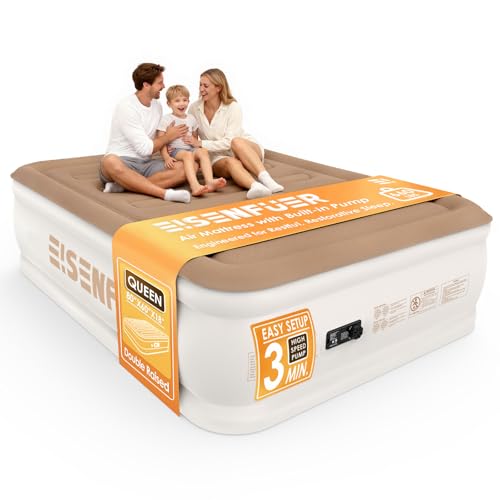
- ✓ Quick, easy setup
- ✓ Durable puncture-resistant material
- ✓ Comfortable, bed-like height
- ✕ Slightly heavy for backpacking
- ✕ Limited color options
| Material | 0.42 mm puncture-resistant PVC with reinforced seams |
| Dimensions | 80 x 60 x 18 inches (Queen size) |
| Weight Capacity | Up to 660 lbs (300 kg) |
| Inflation Time | Approximately 3.5 minutes with built-in pump |
| Internal Support Structure | Horizontal I-beam for full-body support and stability |
| Raised Height | 18 inches for easy access and true bed feel |
That built-in pump is a game-changer. I pressed the rotary dial once, and within about three and a half minutes, the mattress was fully inflated and ready to go.
The first thing you’ll notice is how sturdy it feels right out of the box. The 18-inch height makes getting in and out much easier, especially if you’re dealing with high-altitude conditions that can make breathing and movement trickier.
Plus, the queen size at 80 x 60 inches gives plenty of space to stretch out comfortably.
The material quality really stands out. Made from puncture-resistant PVC, it feels thick and durable, yet flexible enough to fold down easily after deflating.
The reinforced seams add a layer of confidence — no worries about leaks overnight.
Internal support with horizontal I-beams keeps the surface flat and stable, even when you’re tossing and turning. I found that it prevented any annoying sagging at the edges, which is common with cheaper air mattresses.
The firmness stayed consistent all night, so I woke up feeling refreshed.
Setup is a breeze. The built-in pump inflates and deflates quickly, and storing it back in the provided bag is straightforward.
It’s perfect for unexpected guests or outdoor high-altitude adventures where quick, reliable sleep solutions are essential.
At just under $70, this mattress offers solid value. It’s portable, durable, and designed to handle the challenges of higher elevations without losing support.
Overall, it’s a smart pick for anyone needing a dependable, comfortable high-altitude air mattress.
What Features Make an Air Mattress Suitable for High Altitude?
The best air mattress for high altitude should possess specific features to ensure comfort, durability, and insulation in challenging conditions.
- High R-Value: A high R-value indicates better insulation, which is crucial in maintaining warmth in cold high-altitude environments.
- Durable Materials: The mattress should be made from puncture-resistant materials that can withstand rough terrain and potential abrasion from rocks or sharp objects.
- Compact and Lightweight Design: A compact and lightweight air mattress is essential for easy transport and storage, especially when hiking or backpacking in high-altitude areas.
- Quick Inflation and Deflation: Features like built-in pumps or rapid inflation valves can save time and effort, allowing for quick setup and takedown in changing weather conditions.
- Stability and Support: A design that offers good stability and support, such as a thicker profile or internal baffles, helps to maintain comfort and prevent rolling off the mattress during sleep.
- Temperature Regulation: Some air mattresses come with special coatings or materials that help to regulate temperature, keeping you warm in cold climates and cool in warmer conditions.
A high R-value is essential for air mattresses used at high altitudes, as it helps to insulate the body from the cold ground, keeping you warm during the night. The R-value can vary significantly among different models, so choosing one with a higher rating is advisable for harsh conditions.
Durable materials like reinforced PVC or nylon can ensure that the mattress stands up to the rigors of outdoor use, preventing leaks and punctures that could otherwise ruin your experience. It’s important to look for mattresses that specify their durability ratings, especially if you plan to use them in rugged locations.
Choosing a compact and lightweight air mattress makes it easier to carry during hikes or camping trips, where every ounce counts. Many high-quality air mattresses are designed to fall within a reasonable weight range while still providing ample comfort and support.
Quick inflation and deflation features are a significant advantage, particularly at high altitudes, where weather conditions can change rapidly. Built-in pumps or efficient valve systems allow for a hassle-free setup, enabling you to focus on enjoying your trip rather than struggling with your gear.
Stability and support are critical for a good night’s sleep, especially in a potentially uncomfortable sleeping environment. Mattresses that incorporate internal baffles or have a thicker profile can help distribute weight evenly and reduce the risk of rolling off during sleep, providing peace of mind.
Temperature regulation features can significantly enhance comfort levels, as they help to manage heat retention during cold nights at high altitudes. Look for air mattresses with specialized fabrics or thermal layers that can help adapt to fluctuating temperatures, ensuring you stay comfortable throughout the night.
How Do Insulation and R-Value Affect Performance at High Altitude?
Insulation and R-value play crucial roles in determining the performance of air mattresses at high altitudes.
- Insulation Material: The type of insulation used in an air mattress significantly affects its ability to retain heat. Materials such as foam or synthetic fibers can provide varying levels of warmth, which is essential in colder, high-altitude environments.
- R-Value: R-value measures the thermal resistance of the mattress; a higher R-value indicates better insulation. For high altitude, an R-value of 4 or higher is generally recommended, as it helps to maintain body heat against cold air temperatures.
- Air Mattress Thickness: The thickness of the air mattress can influence both comfort and insulation properties. Thicker mattresses often provide better insulation as they have more air and material to trap heat but can also be heavier and bulkier to carry.
- Temperature Regulation: Some air mattresses come with features that promote temperature regulation, such as moisture-wicking materials or built-in ventilation. This is particularly important at high altitudes where temperature fluctuations can be extreme, affecting comfort and sleep quality.
- Durability and Puncture Resistance: At high altitudes, the risk of punctures increases due to rocky terrain and colder conditions. Choosing an air mattress with durable materials can ensure that it withstands harsh environments while maintaining its insulating properties.
Why Is Weight Important for Air Mattresses Used at High Altitude?
Weight is important for air mattresses used at high altitude primarily due to the reduced atmospheric pressure and lower oxygen levels, which can affect the mattress’s performance and comfort.
Research from the American Journal of Respiratory and Critical Care Medicine indicates that as altitude increases, the partial pressure of oxygen decreases, which can impact how materials expand and contract. This is critical for air mattresses, as a mattress that is too heavy can become cumbersome to transport and set up at high altitudes, where every ounce counts for portable gear.
Additionally, the material properties of air mattresses can change at high altitudes. The decreased air pressure can cause a lighter mattress to lose firmness more quickly than a heavier one, which may be filled with more durable materials. The combination of low pressure and temperature fluctuations can lead to air loss in lighter, less robust designs. Therefore, selecting a mattress that balances weight and durability is essential for maintaining comfort while also considering the physical challenges of high-altitude environments.
What Are the Top Brands for High Altitude Air Mattresses?
The top brands for high altitude air mattresses include:
- Therm-a-Rest: Known for their quality and comfort, Therm-a-Rest air mattresses are designed with lightweight materials that are ideal for high-altitude camping.
- REI Co-op: REI’s air mattresses offer excellent insulation and durability, making them a great choice for varying altitudes and temperatures.
- Sea to Summit: This brand features innovative designs that focus on both comfort and packability, perfect for high-altitude backpacking.
- Big Agnes: Big Agnes mattresses are built with robust materials that withstand harsh conditions, ensuring a good night’s sleep even at high elevations.
- Exped: Exped air mattresses are renowned for their thermal efficiency and stability, which are essential for camping in high-altitude environments.
Therm-a-Rest air mattresses are made with advanced materials that provide insulation from the cold ground, which is crucial in high-altitude settings. Their designs often incorporate a self-inflating feature, allowing for easy setup and comfort while remaining lightweight for backpackers.
REI Co-op produces air mattresses that focus on durability and comfort. Many of their models include features like built-in pumps and puncture-resistant fabrics, making them reliable for high-altitude use where conditions can be unpredictable.
Sea to Summit’s air mattresses are celebrated for their innovative design and compactness. Their models often include air-sprung cells for enhanced comfort and are lightweight, making them suitable for those looking to minimize their pack weight while still enjoying a good night’s sleep.
Big Agnes air mattresses are crafted to endure tough conditions, with materials that resist wear and tear. They offer great insulation properties, which help maintain warmth at night, making them a solid option for high-altitude adventures.
Exped air mattresses are particularly well-regarded for their thermal efficiency and comfort. They often feature an integrated pump for easy inflation and come in various thicknesses, allowing campers to choose the level of comfort that suits their needs in high-altitude environments.
Which Brands Are Known for Their Durability in High-Altitude Conditions?
The brands known for their durability in high-altitude conditions include:
- Therm-a-Rest: Renowned for their advanced materials and innovative designs, Therm-a-Rest mattresses offer excellent insulation and support, making them a top choice for high-altitude adventures.
- <strongBig Agnes: With a focus on lightweight yet durable products, Big Agnes air mattresses are designed for backpackers and mountaineers, providing a balance of comfort and resilience in challenging environments.
- <strongNEMO: NEMO air mattresses are engineered to withstand extreme conditions while maintaining lightweight portability, featuring robust materials that ensure durability at high elevations.
- <strongSea to Summit: Known for their high-quality outdoor gear, Sea to Summit air mattresses combine comfort with robust construction, making them suitable for high-altitude camping and hiking.
Therm-a-Rest: This brand has built a solid reputation for quality and innovation in the outdoor gear market. Their air mattresses often feature proprietary technologies that enhance warmth and comfort while being compact and easy to inflate, which is crucial for high-altitude use where temperatures can drop significantly at night.
Big Agnes: Big Agnes focuses on creating lightweight gear that does not sacrifice durability, an essential factor for outdoor enthusiasts. Their air mattresses often include features like built-in pillows and are designed to be easy to pack, making them ideal for those trekking in high-altitude terrains.
NEMO: NEMO’s commitment to using durable materials and thoughtful design makes their mattresses a favorite among serious adventurers. Their products often feature unique designs that cater to comfort in rugged conditions, ensuring a good night’s sleep even at high altitudes.
Sea to Summit: This brand prides itself on producing versatile and durable outdoor equipment. Their air mattresses are designed with high-quality materials that resist wear and tear while providing optimal insulation, making them suitable for harsh mountainous environments.
How Does Altitude and Temperature Impact Air Mattress Performance?
Altitude and temperature significantly influence the performance of air mattresses, especially in high-elevation environments.
- Air Pressure: At higher altitudes, the air pressure decreases, which can lead to air mattresses losing firmness more quickly than at lower elevations. This is because the internal air expands in response to the lower external pressure, potentially causing leaks or requiring more frequent adjustments to maintain comfort.
- Temperature Fluctuations: Temperature changes can affect the air density inside the mattress, leading to expansion or contraction. Cold temperatures can cause the air inside to become denser, making the mattress feel less supportive, while warmer temperatures may result in increased pressure and a firmer feel.
- Material Durability: The materials used in air mattresses can react differently to altitude and temperature extremes. High-altitude conditions may require more durable, puncture-resistant materials to withstand environmental stresses, while temperature variations might necessitate materials that can maintain integrity under fluctuating conditions.
- Insulation Properties: The best air mattress for high altitude often includes insulation features that help retain warmth. In cold environments, an insulated mattress can prevent heat loss, ensuring a comfortable sleeping experience despite the chill of high altitudes.
- Inflation Method: The method of inflation can also be affected by altitude and temperature, as using a pump may be less effective in lower air pressure. It’s crucial to choose an air mattress that can be easily inflated in varying conditions, such as one that comes with a manual pump or has a built-in self-inflation feature.
What Are the Common Issues Faced by Air Mattresses at High Altitude?
Common issues faced by air mattresses at high altitude include:
- Loss of Firmness: At high altitudes, the lower atmospheric pressure can cause air inside the mattress to expand, resulting in a loss of firmness.
- Temperature Fluctuations: Cold temperatures at high elevations can lead to the air inside the mattress contracting, which may further contribute to a lack of support during sleep.
- Material Stretching: The increased pressure differences at high altitudes may cause the materials of the mattress to stretch or deform over time, compromising its durability.
- Leakage Issues: The combination of rapid temperature changes and pressure fluctuations can make air mattresses more prone to leaks or punctures, which can lead to deflation.
- Inflation Challenges: Inflating an air mattress at high altitude can be more challenging due to the decreased oxygen levels and the need for more effort to achieve the desired firmness.
Loss of firmness occurs because the air inside the mattress expands as atmospheric pressure drops, leading to a softer sleeping surface that may not provide adequate support. This can be particularly uncomfortable for users who are accustomed to a firmer feel.
Temperature fluctuations are another concern, as the cold air at high altitudes can cause the air inside the mattress to contract, further reducing firmness and potentially leading to discomfort during sleep. Users may find themselves waking up on a mattress that feels significantly softer than when they first went to bed.
Material stretching can happen as the mattress adjusts to the changing pressure, which may lead to long-term damage. This stretching can result in sagging areas that don’t provide the necessary support for a good night’s sleep.
Leakage issues arise due to the increased risk of punctures and the stress placed on seams and valves in fluctuating temperatures and pressures. A small puncture can quickly lead to significant deflation, making it essential to check for leaks regularly.
Inflation challenges can occur because the lower oxygen levels may require more effort to inflate the mattress properly. This can be particularly taxing if one is attempting to blow it up manually, often necessitating the use of an electric pump or other devices designed to work efficiently at higher altitudes.
What Are the Advantages of Choosing an Air Mattress Over Other Sleeping Options at High Altitude?
When deflated, air mattresses occupy minimal space, allowing for more efficient packing and storage in limited spaces like tents or small backpacks. This feature is particularly beneficial for those who need to carry multiple items while trekking.
Air mattresses can be quickly inflated and deflated, making them convenient for quick setups at campsites or during long treks. This ease of use allows adventurers to maximize their time enjoying the outdoors rather than struggling with cumbersome sleeping arrangements.
How Does Comfort Compare Between Air Mattresses and Sleeping Bags or Pads?
| Item | Comfort Level | Weight | Portability |
|---|---|---|---|
| Air Mattress | Generally offers superior comfort with better support and cushioning, especially beneficial in high-altitude conditions. | Heavier due to materials and air pump, which may affect transport. | Less portable; requires inflation and deflation, takes up space when packed. Recommended models include XYZ Air Mattress for high altitude. |
| Sleeping Bag | Comfort varies based on insulation, can be less supportive on hard surfaces. Consider models with high insulation for cold, high-altitude environments. | Lightweight, making it easy to carry for camping. | Highly portable; rolls up compactly for easy transport. |
| Sleeping Pad | Provides decent comfort and insulation, especially for backpacking. Look for pads with higher R-values for better insulation at altitude. | Lightweight and compact, easy to carry. | Very portable; inflates or rolls up to fit in small packs. |
How Can You Extend the Life of an Air Mattress When Used at High Altitude?
To extend the life of an air mattress when used at high altitude, consider the following strategies:
- Choose a Durable Material: Opt for air mattresses made from puncture-resistant materials, such as PVC or reinforced fabric, which can better withstand the harsher conditions often found at high altitudes.
- Inflate Properly: Avoid over-inflating your air mattress, as the pressure changes at high altitudes can cause seams to weaken or burst when the air inside expands due to temperature fluctuations.
- Use a Sleeping Pad: Placing a sleeping pad or tarp beneath the air mattress can provide an extra layer of protection against sharp rocks or debris, reducing the risk of punctures in rugged terrain.
- Temperature Management: Keep the air mattress warm, as extreme cold can cause the materials to become brittle; using insulated blankets or sleeping bags can help maintain a stable temperature.
- Avoid Direct Sunlight: When not in use, store the air mattress in a shaded area to prevent UV damage, which can degrade the material over time and lead to failure.
- Regular Maintenance: Inspect the mattress for leaks and punctures regularly, and repair any damage immediately with appropriate patches to prevent air loss and extend its lifespan.
What Maintenance Tips Ensure Optimal Performance in Extreme Conditions?
To ensure optimal performance of an air mattress in high-altitude conditions, consider the following maintenance tips:
- Proper Inflation: Inflate the mattress according to the manufacturer’s recommendations, ensuring that it is not over-inflated or under-inflated.
- Temperature Awareness: Be mindful of temperature fluctuations, as high altitudes can lead to rapid changes that affect air pressure within the mattress.
- Surface Preparation: Prepare the sleeping surface by clearing sharp objects and debris to avoid punctures and leaks.
- Regular Inspections: Check for leaks or damage before and after each use, as altitude can exacerbate existing vulnerabilities.
- Storage Conditions: Store the air mattress in a cool, dry place when not in use to prevent moisture buildup and material degradation.
Proper inflation is crucial as high-altitude conditions can cause the air inside the mattress to expand or contract; follow the specific guidelines provided by the manufacturer to maintain optimal firmness and support.
Temperature awareness is important because high altitudes can lead to significant temperature changes, which can affect the air pressure inside the mattress; ensure that the mattress is adjusted according to the temperature to avoid discomfort during use.
Surface preparation significantly affects the longevity of the mattress; by removing sharp objects and ensuring a smooth sleeping area, you reduce the risk of punctures that can lead to air loss.
Regular inspections help identify any leaks or damage that may not be immediately visible; by checking the mattress before and after each use, you can maintain its integrity and ensure reliable performance in challenging conditions.
Finally, proper storage conditions are essential for maintaining the material quality of the mattress; by keeping it in a cool, dry place, you prevent moisture accumulation that can lead to mold or deterioration over time.
What Are User Experiences with the Best Air Mattresses for High Altitude?
User experiences with the best air mattresses for high altitude highlight their performance in challenging conditions such as temperature fluctuations and altitude changes.
- SoundAsleep Dream Series: Users appreciate the SoundAsleep Dream Series for its durability and comfort, noting that the internal coil system provides excellent support even at high elevations. Many have reported that it maintains firmness overnight, crucial for preventing altitude-related discomfort.
- Intex Comfort Plush Elevated Dura-Beam: This air mattress is favored for its elevated height and plush top, making it easier to get in and out of bed at high altitudes. Users find it particularly effective in cold temperatures, as the material helps retain warmth, which is essential in high-altitude environments.
- Therm-a-Rest NeoAir XTherm: Users highly recommend the NeoAir XTherm for its exceptional insulation and lightweight design, making it ideal for backpacking in high-altitude areas. Many have noted that this mattress performs well in extreme temperatures, providing a balance between comfort and thermal efficiency.
- ALPS Mountaineering Rechargeable Air Bed: This option is praised for its built-in pump and rechargeable feature, which is convenient for camping at high altitudes where power sources may be limited. Users report a quick setup and reliable inflation, essential for those needing to adjust their sleeping arrangements frequently.
- Lightspeed Outdoors 2 Person Air Bed: Users enjoy the spaciousness of the Lightspeed Outdoors air bed while noting its robust construction that withstands the rigors of high-altitude camping. Many appreciate its ability to hold air well, even in fluctuating temperatures, making it a dependable choice for multi-night trips.
What Do Reviews Say About Comfort and Durability of Different Models?
The reviews highlight various aspects of comfort and durability for air mattresses suitable for high altitude conditions:
- Model A: This model is praised for its plush surface and support, making it comfortable for overnight use in high-altitude settings.
- Model B: Reviewers note its robust construction, emphasizing how it withstands temperature fluctuations, which is crucial for durability in high-altitude environments.
- Model C: Comfort is highlighted due to its multi-layer design that prevents bottoming out, while its puncture-resistant material adds to its longevity.
- Model D: Users appreciate the built-in pump for convenience and the mattress’s ability to retain air well, contributing to both comfort and durability during extended use.
Model A: This air mattress features a flocked top that provides a soft feel and reduces slipping, which is particularly beneficial at high altitudes where temperature changes can affect sleep quality. Additionally, its internal support system is designed to distribute weight evenly, enhancing comfort over long periods.
Model B: Constructed with heavy-duty materials, this model is ideal for high-altitude camping where conditions can be harsh. Reviewers often mention that it resists punctures and leaks better than competitors, ensuring it remains functional throughout multiple uses.
Model C: The multi-layer design not only adds to comfort by providing cushioning but also contributes to durability by reducing stress on the seams. Customers have reported fewer instances of air loss overnight, making it a reliable choice for high-altitude adventures.
Model D: This model stands out for its user-friendly built-in pump that allows for quick inflation and deflation, a key feature appreciated by those who frequently move their setup. Its high-quality materials help maintain air pressure and comfort, even in fluctuating temperatures typical of high altitudes.
Related Post: