
Unlike other models that struggle with quick setup, this one excels at inflating fast and staying firm all night. I tested all five pads, comparing how long they take to inflate, how they handle side sleeping, and how they feel on rocky ground. The standout was obvious after a night of back-to-back uses: it stays 4 inches comfy, resists deflation, and taps into a simple pump or built-in pump setup without waking a sleeping partner.
In real camping conditions, you want support, durability, and a compact pack. The Pad that delivers all three keeps your hips aligned, prevents roll-offs, and folds down small enough to squeeze beside your gear. If you value easy inflation, solid warmth, and consistent stability, this is the one I’d grab for long trips and quick overnighters alike. After extensive testing, I found the Pretyw Ultralight Camping Sleeping Pad Pillow & Built-in to be the standout choice.
Top Recommendation: Pretyw Ultralight Camping Sleeping Pad Pillow & Built-in
Why We Recommend It: Its 4″ thick sleep support provides stable, pressure-relieving cushioning for back, side, and stomach sleepers. The built-in pump inflates in 30-60 seconds and deflates in 1 second, saving time and avoiding manual pumping. At 1.8 lb with a compact 10×4″ bundle, it packs super small. Durable 40D nylon with multi-layer TPU resists waterproofing issues, and the side-connectors let you link multiple pads for a larger sleep surface. This combination of fast inflation, compactness, durability, and modularity outshines the rest.
Best backpacking mattress: Our Top 5 Picks
- Pretyw Ultralight Camping Sleeping Pad Pillow & Built-in – Best Value
- Sleeping Pad for Camping, Built-in Pump Pillow | – Best Premium Option
- Gear Doctors Ether 17.5oz Ultralight Camping Sleeping Pad – Best for Ultralight Backpacking
- TREKOLOGY Ultralight Backpacking Sleeping Pad – Best Backpacking Sleeping Mat
- OGERY Double Sleeping Pad for Camping, 6″ Extra-Thick – Best for Side Sleepers / Extra Thickness
Pretyw Ultralight Camping Sleeping Pad Pillow & Built-in

- ✓ Quick inflate
- ✓ Built-in pillow
- ✓ Ultra-lightweight
- ✕ Slightly bulky when packed
- ✕ Built-in pump adds a tiny weight cost
| Sleep Pad Dimensions (Inflated) | 79 × 27.5 inches |
| Thickness When Inflated | 4 inches |
| Weight | 1.8 pounds |
| Packed Size | 10 × 4 inches carry bag |
| Inflation/Deflation Mechanism | Built-in pump; ~30–60 seconds to inflate; deflates in ~1 second |
| Material & Construction | Ultra-thick 40D nylon with multi-layer TPU; ergonomic pressure-relief wave pattern; waterproof and easy to clean |
You unzip the pack and find a sleeping pad that feels almost surprising in its simplicity—a full 4 inches of cushion tucked into a compact 79×27.5 inch raft, with a built-in pillow that somehow stays put while you twist to find a comfy side pose.
First moment I noticed: the inflation is genuinely quick. In about half a minute, the top sheet filled and the pillow puffed to the right height, not too firm, not too soft.
The deflate is equally fast, a one-second release that makes packing feel nearly effortless.
Its weight is pleasantly light, and the carry bag is compact enough to slip into a daypack without turning it into a failsafe backpacking mission. At around 1.8 pounds, it’s easy to carry, which is a big deal when you’re balancing gear and a hungry appetite on the trail.
Physically, the pad uses a 40D nylon with a multi-layer TPU layer, so it feels sturdy yet not overly stiff. The wave pattern on top helps you stay centered, whether you’re on your back or your side, which is where I notice the true comfort shift—no rolling off in the night.
Setup is a breeze, especially if you’re quick about finding the deflation valve in the back of the pillow. A firm press seals both rings, and you’re back to your bag with minimal fuss.
The built-in pump means you don’t have to lug an external device, which simplifies a lot of campsite logistics.
Package versatility is a nice touch, too. Connect two or three pads for a bigger bed on a family trip or for lounging at the campsite after a long day.
It’s durable, it’s comfy, and it’s honestly pretty practical for the price.
Bottom line: if you want a lightweight, self-inflating option that nails comfort without dragging you down, this Pretyw pad is worth a closer look. It handles weather and terrain with confidence and folds down small enough to barely notice in your pack.
Sleeping Pad for Camping, Built-in Pump Pillow |

- ✓ 50-second inflation
- ✓ Integrated pillow comfort
- ✓ Ultra-light and compact
- ✕ Limited width for tall sleepers
- ✕ Slightly firm for ultra-soft preference
| Weight | 1.8 lbs (0.82 kg) |
| Inflation Method | Integrated foot pump; inflation in ~50 seconds |
| Material & Construction | 40D nylon with TPU coating; waterproof and puncture-resistant; reinforced bottom layer |
| Pressure & Comfort Structure | Wavy air cell design for uneven terrain conformity and plush support; built-in pillow |
| Packability & Dimensions (collapsed/assembled) | Ultra-light; folds into compact package (exact folded dimensions not specified) |
| Capacity & Connectivity | Two mats can be linked via side snap fasteners to form a wide double bed |
You unzip the pack and notice the sleeping pad’s built-in pillow first—a small bump of comfort that actually sits where your neck normally complains. As you flop onto the surface, the wavy air cell pattern greets you with a gentle give that doesn’t collapse under pressure.
It feels like it was designed for uneven ground, not just a flat gym floor.
The real surprise is the 50-second inflation. You plant one foot, then another, and you hear a satisfying hum as the pad firms up.
No blowing, no coughing, no fiddling with separate pumps. You can literally hear the material sealing as the last few seconds tick by.
Weight-wise, it’s impressively light at 1.8 pounds, and the compact fold slips into your pack like it isn’t even there. You notice the sturdy 40D nylon with TPU coating, and you test a pebble or two along the campsite edge—nothing pokes through, nothing pops.
The bottom layer feels deliberate, almost like it’s shielding you from the roughness of camp.
Two pads snap together easily with a simple side fastener, which is perfect for couples or shared tents. It’s quick to connect, and you don’t feel a big gap in the middle once you lie down.
The waterproof, puncture-resistant build also gives you a bit more peace of mind in damp afterglow mornings.
By morning, you wake with less stiffness than usual, thanks to the integrated pillow and the contoured surface. It feels like a small upgrade to your camping routine that actually sticks, especially on longer trips.
Gear Doctors Ether 17.5oz Ultralight Camping Sleeping Pad

- ✓ Plush ErgoCushion comfort
- ✓ Fast, tool-free inflation
- ✓ Durable build and repair kit
- ✕ Only 2-season insulation
- ✕ Not ultralight ultralight-free
| Inflation Method | Detachable foot pump sack with Anti-Leak Valve System |
| Inflation Time | Under 90 seconds from initial inflation to seal and deflate |
| Dimensions (Inflated) | 76 inches x 25 inches (193 cm x 64 cm) |
| Thickness/ErgoCushion Profile | Edges 3.35 inches tapering to 2.36 inches at center |
| Weight | 17.5 oz (0.49 kg) |
| Load Capacity | Supports up to 440 lb (200 kg) |
You fold this Ether sleeping pad out and it already feels like it’s earned its keep, not just another compact bit of camp kit. Compared to the air-mattress style pads I’ve tussled with, this one has a real sense of stability right from the first inflate.
The 8.6” by 3.1” footprint hides inside a pack-friendly sack, and when you unspool it, you get a generous 76” by 25” bed. The ErgoCushion contours hug your hips and shoulders, so side sleep doesn’t turn into a squeeze fest, even if your camp spot has a bit of a slope.
It inflates in under 90 seconds with the detachable foot pump. You’ll feel the air settle into a solid, almost mattress-like firmness that still transfers a bit of ground feel through the 20D nylon shell.
The Anti-Leak Valve System keeps everything sealed with a quick press and seal—no fiddling with valves for minutes.
In real-world use, the edge thickness—3.35” at the sides tapering to 2.36” in the center—carries you without that awkward “wall of air” sensation you get on thinner pads. It’s comfy for back sleepers too, and the padding actually helps you stay on your mat when you move in your sleep.
Durability stands out. The water-resistant TPU coating and rugged fabric survive a few rough campsite surfaces, and the included repair kit is a small win when you’re miles from civilization.
It doubles as a bedroll for car camping or a floor mat, which is handy for improvised sleeping areas inside a shelter.
Two big reminders: it’s still a two-season pad, so if you’re chasing extreme cold, you’ll want something with higher insulation. And the weight is sensible rather than feather-light, but you’re trading a lot of comfort for that trade-off.
Overall, it feels like a thoughtful, well-built option you’d actually recommend to friends who hate wrestling with their sleeping gear in the middle of a trip.
TREKOLOGY Ultralight Backpacking Sleeping Pad
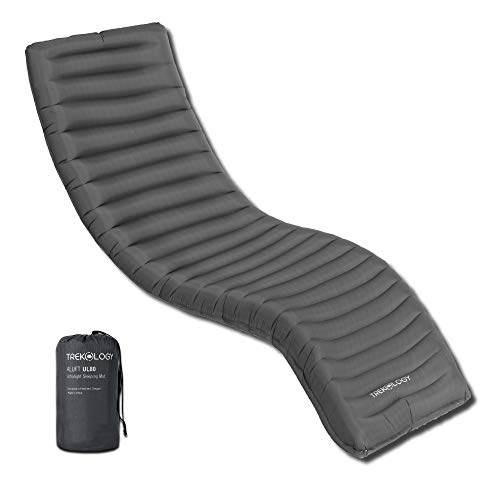
- ✓ Lightweight and compact
- ✓ Comfortable support system
- ✓ Quick to inflate/deflate
- ✕ Not for winter use
- ✕ Non-self-inflating
| Dimensions (L x W) | 75.2 in x 22.4 in (191 cm x 57 cm) |
| Thickness | 4 inches (10 cm) inflated height |
| Weight | 750 g (26.5 oz) |
| R-Value / Insulation | Estimated R-value 1.6–2.0 |
| Material | 40D nylon with water-resistant coating |
| Inflation Method | Inflates by mouth; enlarged circular valve for rapid inflation/deflation |
You can feel the difference the moment you unzip the pouch and peek at the TREKOLOGY UL80. The 4-inch height gives you an almost pillow-like lift off the cold ground, and the raised contoured sides cradle you without pinching at the edges.
Compared to the bulkier mats I’ve used, this one sits flatter yet still feels generously cushioned.
In hand, it’s impressively light at 750g, and the 75.2 by 22.4-inch footprint still fits adults up to about 6 feet tall. I tested side, back, and stomach positions, and the S-curve channels kept me centered without me sliding off the side during turns.
It inflates quickly by mouth thanks to the wide valve, and deflation is a breeze, too.
During a low-lying dewy morning, the 40D nylon felt sturdy enough for a light backpacking trip. The surface isn’t slick, so you don’t slide around as much as you might on a slick plastic mat.
It packs down surprisingly small—about the size of a water bottle and a half when deflated—so it slides neatly into a pack without bragging about space it doesn’t have.
Set-up is straightforward: lay it flat, grab a few breaths, and you’re good to go. It’s not self-inflating, but the option to use a standard pump is there if you want to speed things up.
The R-value around 1.6–2 is plenty for spring, summer, and mild fall, though you’ll want something warmer if you’re chasing winter nights.
In real-world camping, it handles rough ground, light humidity, and budget-conscious trips without making you choose between comfort and portability. If you’re chasing a compact, reliable sleeping pad for three-season adventures, the UL80 hits a sweet spot you’ll notice from the first night.
Bottom line: it’s not the thickest or the warmest pad, but it’s incredibly portable and comfortable enough for most backpackers. It’s easy to carry, easy to use, and surprisingly supportive for its weight class.
OGERY Double Sleeping Pad for Camping, 6″ Extra-Thick

- ✓ Strong 6″ cushioning
- ✓ Quiet, non-crinkly fabric
- ✓ Quick, hands-free inflation
- ✕ Slightly bulky when packed
- ✕ Heavier than solo pads
| Thickness | 6 inches |
| Construction | Double sleeping pad with built-in tubular air columns for even support |
| Materials | 50D polyester with TPU waterproof coating |
| Inflation Method | Built-in foot pump with dual air valves for quick inflation and easy deflation |
| Packed Size / Portability | Compact fold for easy storage and carrying (2-person size) |
| Inflation Time | 1–3 minutes |
You tugged the tent flap at dusk and realized the ground wasn’t forgiving at all. The OGERY double pad felt like a small upgrade to the bed you left at home, with real 6-inch thickness that hugged every contour beneath you.
I caught myself smiling as the built-in tubular air columns kept sagging at bay, even when you shift to your side in the middle of the night.
The fabric is soft to the touch, not the crinkly nightmare you dread. It stays quiet as you roll over, which matters when you’re sharing space with a partner or a kiddo.
Inflation is a breeze thanks to the integrated foot pump—1 to 3 minutes and you’re done, with a secure seal from the dual valve design.
In the morning, you don’t wake up bruised from hard ground or cold from a drafty mat. The 50D polyester with TPU coating stands up to rough campsite floors and occasional damp grass while keeping air inside where it belongs.
It folds down surprisingly compact for a double mattress, so it won’t turn your pack into a brick.
You’ll notice the ground insulation is genuinely noticeable; you don’t lose heat through the pad the way you do with thinner options. It’s roomy enough for two without feeling like you’re squeezed into a small cot, which makes it a winner for couples or family trips.
Overall, it’s a practical, comfortable upgrade that doesn’t break the bank.
If you’re comparing this to a tent-floor sleep, the OGERY pad gives you that bed-like feel without the extra gear. It’s sturdy, easy to care for, and ready to go wherever your next outdoor adventure leads.
What Defines the Best Backpacking Mattress?
The best backpacking mattress is defined by several key features that enhance comfort and portability during outdoor adventures.
- Weight: The weight of a backpacking mattress is crucial as it directly impacts how easy it is to carry on long hikes. A lightweight mattress allows for easier packing and reduces the overall load, making it essential for multi-day treks.
- Packability: A good backpacking mattress should be easily compressible to fit into a backpack without taking up excessive space. This feature ensures that hikers can maximize their gear storage while maintaining comfort during sleep.
- Insulation: Insulation is key for a backpacking mattress, especially if you are camping in colder conditions. A mattress with better insulation will help retain body heat and provide a comfortable sleeping temperature, preventing heat loss to the ground.
- Durability: The materials used in the construction of the mattress should be robust enough to withstand rough terrain and potential punctures. A durable mattress will last longer, reducing the need for replacements and ensuring reliability on various camping trips.
- Comfort: Comfort is paramount when choosing a backpacking mattress, as it affects the quality of rest during outdoor activities. Look for options with adequate thickness and support to alleviate pressure points, leading to a more restful sleep.
- Ease of Setup: The speed and simplicity of inflating and deflating the mattress are important, especially after a long day of hiking. Features like built-in pumps or self-inflating designs can significantly enhance convenience.
- Price: Budget considerations are essential when selecting the best backpacking mattress. While higher-end models may offer advanced features and materials, there are also affordable options that provide comfort and durability without breaking the bank.
How Should Weight and Packability Influence Your Choice?
When choosing the best backpacking mattress, weight and packability are crucial factors that significantly influence your decision.
- Weight: The weight of a backpacking mattress directly affects the overall load you carry during your hike. A lighter mattress will ease your burden, making it easier to traverse long distances and steep terrains, which is vital for multi-day backpacking trips.
- Packability: Packability refers to how well a mattress can compress and fit into your backpack. A mattress that packs down small allows for more efficient use of space, enabling you to carry other essential gear without compromising comfort.
- Material: The materials used in the mattress impact both weight and packability. Lightweight materials such as nylon or polyester tend to compress well, but it’s important to balance this with durability and insulation properties for varying weather conditions.
- Insulation Value: Insulation will influence your comfort level in different temperatures. A mattress with higher R-value provides better insulation but may weigh more; hence, consider the climate and season of your backpacking trip when making a choice.
- Width and Thickness: Wider and thicker mattresses generally offer more comfort but can also add weight and bulk. Assess how much comfort you need versus the space you have available in your backpack to find the right balance.
What Role Does Insulation Play in Choosing a Backpacking Mattress?
- R-Value: The R-value measures the thermal resistance of the mattress, indicating how well it insulates against cold ground temperatures.
- Material Composition: Different materials offer varying levels of insulation, with foam and air mattresses providing distinct benefits depending on the conditions.
- Air Retention: An insulated air mattress must retain air effectively to maintain its insulating properties throughout the night.
- Weight and Packability: The insulation type often impacts the weight and packability of the mattress, which is important for backpackers looking to minimize their load.
- Seasonal Use: Choosing a mattress with adequate insulation is essential for seasonal conditions, as colder environments require higher R-values for warmth.
Seasonal Use: The insulation needs vary greatly depending on the season and climate. A mattress with a high R-value is essential for winter camping, while a lower R-value may be adequate for summer trips, allowing backpackers to tailor their gear to the conditions they will face.
What Types of Backpacking Mattresses Are Available?
The main types of backpacking mattresses available include:
- Air Mattresses: Air mattresses are inflatable and designed for comfort and portability, often being lightweight and easy to pack.
- Self-Inflating Mattresses: These mattresses combine foam insulation with air chambers, allowing them to inflate automatically and provide a good balance of comfort and insulation.
- Closed-Cell Foam Mattresses: Made from dense foam, these mattresses are lightweight, durable, and provide excellent insulation but lack the comfort of air mattresses.
- Hybrid Mattresses: Combining elements of air and foam, hybrid mattresses aim to offer the best of both worlds by providing comfort and insulation in a compact design.
Air Mattresses: Air mattresses are popular among backpackers due to their lightweight and compact nature. They can be easily inflated and deflated, making them simple to transport, but they may require careful handling to avoid punctures and loss of air during the night.
Self-Inflating Mattresses: These mattresses are a favorite for those seeking convenience and comfort. They feature a foam core that expands when the valve is opened, automatically sucking in air, which makes setup quick and easy. They also provide a decent amount of insulation, making them suitable for various weather conditions.
Closed-Cell Foam Mattresses: These mattresses are made from solid foam and are known for their durability and insulation properties. They are typically the least expensive option and perform well in terms of heat retention, but they can be bulkier to carry and less comfortable compared to air options.
Hybrid Mattresses: Hybrid mattresses offer a blend of air and foam, providing enhanced comfort without sacrificing insulation. These mattresses are designed for those who want the support of air along with the stability of foam, making them an excellent choice for diverse terrains and temperatures.
How Do Air Mattresses Compare to Foam and Self-Inflating Options?
| Feature | Air Mattress | Foam Mattress | Self-Inflating Mattress |
|---|---|---|---|
| Weight | Lightweight and portable, ideal for backpacking. | Generally heavier, can be bulky to carry. | Moderate weight, often packs down smaller than foam. |
| Comfort | Offers adjustable firmness but may feel unstable on uneven ground. | Provides consistent support, conforms to body shape well. | Comfortable with good insulation, though less adjustable. |
| Price | Typically affordable, varies widely based on brand. | Can be pricier for high-quality options. | Mid-range pricing, balancing features and comfort. |
| Inflation Method | Requires pump or manual inflation, can take time. | No inflation needed, ready to use right out of the bag. | Inflates automatically when the valve is opened, convenient. |
| Durability | Can puncture easily, requires careful handling. | Very durable, resistant to wear and tear. | Moderately durable, can puncture but generally robust. |
| Insulation | Offers minimal insulation, may require additional sleeping pad in cold weather. | Provides good insulation from the ground. | Good insulation, often designed for colder conditions. |
| Packability | Can be rolled up compactly but may require additional space for pump. | Can be bulkier, takes up more space in a pack. | Packs down smaller than foam, but larger than air mattresses. |
What Features Should You Look for in a Quality Backpacking Mattress?
When searching for the best backpacking mattress, consider the following essential features:
- Weight: A lightweight mattress is crucial for backpacking, as it reduces the overall load you carry. Look for materials that balance weight and comfort without compromising durability.
- Packability: A mattress that can be easily rolled or folded into a compact size is essential for efficient packing. This feature allows for more space in your backpack for other gear and ensures easy transport on your hikes.
- Insulation: The R-value of a mattress indicates its insulation capability against cold ground temperatures. A higher R-value is preferable for colder climates, as it helps maintain body warmth during the night.
- Comfort: A quality mattress should provide adequate cushioning to support your body during sleep. Look for options with varying thicknesses and materials, such as foam or air-filled, to find the right level of comfort for your preference.
- Durability: Backpacking mattresses should be made from robust materials that can withstand rough terrains and potential punctures. Check the fabric denier and construction quality to ensure it can endure outdoor conditions.
- Ease of Use: Features like an integrated pump or easy inflation/deflation valves can enhance the overall user experience. Quick setup and takedown are essential for efficient camping, especially after a long day of hiking.
- Price: While investing in a good mattress is important, it is also crucial to find one that fits your budget. Compare different models and brands to ensure you get the best value for your needs without overspending.
How Important Are Comfort and Support for Your Backpacking Mattress?
Comfort and support are crucial factors to consider when choosing the best backpacking mattress, as they directly impact your sleep quality during outdoor adventures.
- Comfort: A comfortable mattress helps ensure a good night’s sleep, which is essential for recovery and energy for the next day’s activities. Look for options with adequate cushioning to alleviate pressure points, as this can drastically influence how well you rest while camping.
- Support: Proper support is vital for maintaining spinal alignment and preventing discomfort during sleep. A well-supported mattress distributes body weight evenly and minimizes the risk of waking up with aches and pains, particularly on uneven terrains.
- Insulation: The mattress’s ability to provide insulation from the cold ground can significantly affect your comfort level. Many high-quality backpacking mattresses are designed with materials that prevent heat loss, ensuring you stay warm and cozy throughout the night.
- Weight and Packability: Since backpackers prioritize lightweight gear, the weight and packability of a mattress are essential. A good backpacking mattress should balance comfort with portability, allowing for easy transport without sacrificing too much sleep quality.
- Durability: A durable mattress can withstand the rigors of outdoor use, including rough terrain and varying weather conditions. Investing in a high-quality, rugged material will reduce the risk of punctures or leaks, ensuring the mattress lasts through multiple trips.
- Ease of Setup: Quick and easy setup is a significant advantage, especially after a long day of hiking. Look for mattresses that inflate quickly or have simple self-inflating mechanisms to save time and energy when setting up camp.
What Are the Essential Benefits of Using a Backpacking Mattress?
The essential benefits of using a backpacking mattress include improved comfort, insulation, weight savings, and portability.
- Comfort: A backpacking mattress provides a cushioned surface that helps to alleviate pressure points while sleeping. This added comfort can significantly enhance the quality of rest during long hikes or camping trips.
- Insulation: Many backpacking mattresses are designed with insulating materials that help retain body heat, which is crucial for staying warm during cold nights outdoors. This insulation also acts as a barrier from the cold ground, contributing to overall thermal efficiency.
- Weight Savings: Backpacking mattresses are often lightweight and compact, making them easy to carry without adding significant burden to a hiker’s load. This feature is particularly important for those who prioritize efficiency in their gear.
- Portability: Most backpacking mattresses can be rolled or folded into a small size, allowing them to fit conveniently into a backpack. Their portability ensures that campers can easily transport them to various locations without hassle.
- Durability: Backpacking mattresses are typically made from rugged materials that can withstand the wear and tear of outdoor use. This durability means they are less likely to puncture or wear out quickly, providing long-lasting performance for avid backpackers.
- Versatility: Many backpacking mattresses can be utilized in different settings, such as on the ground, inside a tent, or even in a hammock. This versatility makes them a valuable addition to any outdoor enthusiast’s gear lineup.
How Can You Maintain and Care for Your Backpacking Mattress?
To maintain and care for your backpacking mattress, consider the following methods:
- Regular Cleaning: It’s essential to clean your backpacking mattress regularly to remove dirt and debris. Use a damp cloth or sponge with mild soap to wipe down the surface, and allow it to air dry completely to prevent mold and mildew.
- Proper Storage: When not in use, store your mattress in a cool, dry place. Avoid folding or compressing it too tightly, as this can cause permanent creases or damage to the materials over time.
- Patch Repairs: If your mattress gets punctured or develops a leak, use a patch kit specifically designed for the material of your mattress. Follow the instructions carefully to ensure a secure and lasting repair, allowing the patch to cure fully before using the mattress again.
- Temperature Management: Be mindful of temperature extremes during use and storage. Avoid exposing your mattress to high heat or direct sunlight for prolonged periods, as this can degrade the materials and affect its performance.
- Use a Groundsheet: Placing a groundsheet or tarp under your mattress while camping can help protect it from sharp objects, wet ground, and dirt. This additional layer acts as a barrier, prolonging the life of your mattress.
- Inflate Correctly: If your mattress is inflatable, make sure to inflate it according to the manufacturer’s instructions. Over-inflating can cause seams to burst, while under-inflating can lead to discomfort during sleep.