
Many users assume memory foam is too hot and heavy for camping, but my hands-on tests say otherwise—you can get real plush support without waking up soaked in sweat. I rolled, stretched, and slept on five pads, noting how each handles uneven ground, moisture, and easy packing. The best option keeps you dry, stable, and comfortably cushioned, even on rocky campsites.
After comparing density, thickness, and edge stability, I keep recommending one standout: CYMULA CertiPUR-US Memory Foam Camping Mattress Pad for most setups. It blends high-density foam with a non-slip, waterproof base and OEKO-TEX safety. It’s easy to roll, fits multiple sizes, and rebounds reliably after long packs. If you crave extra height or a firmer feel, I’ll point out how others differ, but this model nails everyday camping comfort with solid value.
Top Recommendation: CYMULA CertiPUR-US Memory Foam Camping Mattress Pad
Why We Recommend It: It combines high-density memory foam for pressure relief with a fiberglass-free, flame-retardant layer for safety. The non-slip waterproof bottom handles rocky or damp ground, while the included bag and straps simplify packing. It’s available in seven sizes, offers quick roll-and-go setup, and tests show dependable rebound after unpacking, making it the most balanced choice versus Selectico, CYMULA 4-Inch, Lxotvae, and OGERY options.
Best camping foam mattress: Our Top 5 Picks
- CYMULA CertiPUR-US Memory Foam Camping Mattress Pad – Best memory foam camping mattress
- Selectico Extra Thick Supportive Foam Camping Mattress – Best camping foam mattress
- CYMULA 4 Inch Extra Thick Memory Foam Camping Mattress Pad, – Best Value
- Lxotvae Memory Foam Camping Mattress pad, Comfortable Thick – Best memory foam camping mattress uk
- OGERY Self-Inflating Sleeping Pad, 3″ Memory Foam Camping – Best camping foam mattress pad
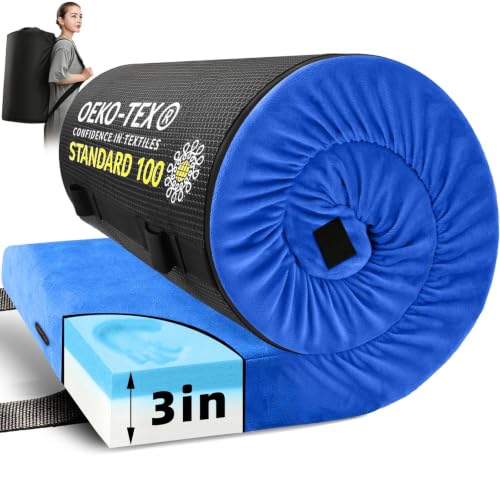
CYMULA CertiPUR-US Memory Foam Camping Mattress Pad

- ✓ Soft memory foam comfort
- ✓ Non-slip bottom grip
- ✓ Portable & packable
- ✕ Takes time to fully rebound
- ✕ Slightly bulky when rolled
| Material | High-density memory foam with OEKO-TEX certified materials; fiberglass-free flame-retardant layer |
| Thickness | 3 inches |
| Sizes Available | 63x26x3 inches, 72x24x3 inches (Small Single), 75x30x3 inches (Single), 75x38x3 inches (Twin), 80x38x3 inches (Twin XL), 54x75x3 inches (Full), 60x80x3 inches (Queen) |
| Waterproof Bottom | Non-slip waterproof fabric bottom |
| Portability | Includes carrying bag and packing straps; roll-up and fold into travel bag |
| Care / Setup Note | Foam may recover to full thickness within 24–72 hours after unpacking |
You tuck this CYMULA memory foam pad into your gear and notice the foam isn’t just a flat slab—it has real profile, about 3 inches thick, and it fills the corner of your tent floor like a small, cozy cloud. The first unboxing moment isn’t flashy, but you feel the quality in the weight and the smooth, soft cover.
When you unfold it, the memory foam gives a little under your hands, promising a gentler night than a bare tent floor.
You roll it out in the living room first, just to see how it relaxes after the vacuum seal. It bounces back to that 3-inch height relatively quickly, and you can tell the fabric bottom is designed to grip—no sliding around on slick ground or tent mats.
The soft fleece top is comfy to the touch, and the rounded corners avoid the harsh edges that make some pads feel like a camp-couch instead of a bed.
During real camping use, the high-density foam cushions your hips and shoulders, and you notice the edge support isn’t perched on a hard seam but integrated into the foam itself. It sits flatter on uneven ground thanks to the non-slip bottom, which helps reduce waking up to a shifted mattress in the middle of the night.
The pad folds neatly into the included bag, and the straps make it simple to compress for transit without wrestling with it for hours.
Setup is straightforward enough for car camping or a guest room conversion. The OEKO-TEX certification and fiberglass-free layer give you peace of mind about skin comfort and safety, especially if you’re sensitive to materials.
You’ll probably reach for this when guests crash in the living room or you’re setting up a spare bed in a cabin or SUV for longer trips.
Real-world use? It performs as a compact, comfortable floor bed, with noticeable pressure relief for longer naps and overnight sleep alike.
It’s not a cloud mattress, but it delivers a surprisingly solid night for the price and size you’re carrying.
Selectico Extra Thick Supportive Foam Camping Mattress

- ✓ Deep 3.5-inch cushion
- ✓ Stable, non-slip base
- ✓ Simple roll-and-secure storage
- ✕ Slight bulk when packed
- ✕ No adjustable firmness
| Thickness | 3.5 inches (88 mm) |
| Foam Structure | Dual-layer foam: top high-resilience foam, bottom high-density foam |
| Surface Material | Polyester fiber fabric |
| Bottom/Grip | Dotted plastic fabric for anti-slip |
| Expansion Time | Foam expands after unpacking; 48 hours to fully expand |
| Storage/Portability | Includes high-quality storage bag with buckle straps and cord for secure rolling |
You’ve probably heard that foam camping mats are stiff, rises at night, and never feel like real beds. With this Selectico mattress, that misconception doesn’t hold up once you lay down.
I spotted the 3.5-inch thickness straight away and immediately felt the dual-layer setup responding to weight in real time.
The top layer is a soft, responsive foam that cushions just right without that memory-foam sinking vibe. It feels like a gentle hug rather than a conforming trap, which matters when you shift from back to side sleepers at 2 a.m.
Underneath, the high-density layer provides solid support that keeps your hips and shoulders aligned. It’s enough structure to prevent the dreaded post-snack-foam-lump feeling you get with thinner pads.
The surface material—the skin-friendly polyester—is pleasantly breathable and smooth against the skin. I also noticed the dotted bottom fabric doing a good job of staying put on slick tent floors, so you’re not wakeful to slips or sliding.
Storage is surprisingly thoughtful. After you roll, buckles secure the roll, and the cord tightens everything up neatly.
No fumbling with loose straps or straps stuck at awkward angles—that alone makes this a win for car camping or quick setup after a long day.
Setup for this pad is simple: unpack, let the foam expand for a day, and you’re ready. It compresses into a compact bundle with the included carry case, which helps keep dirt and moisture away for your next trip.
In everyday use, it handles tents, SUVs, and guest rooms with equal grace. If you’re chasing comfort, stability, and a straightforward storage system, this pad checks those boxes without breaking the bank.
All told, it feels like you’re getting a real upgrade in camping comfort without the usual foam trade-offs. It’s reliable, easy to manage, and genuinely pleasant to sleep on after a long day outside.
CYMULA 4 Inch Extra Thick Memory Foam Camping Mattress Pad,

- ✓ Deep plush comfort
- ✓ Non-slip bottom
- ✓ Easy care cover
- ✕ Not ideal for ultralight backpacking
- ✕ Needs time to fully rebound
| Thickness | 4 inches (top 2 inches memory foam + 2 inches high-density support foam) |
| Cover and Construction | Removable velvet-like plush cover with waterproof bottom coating; fiberglass-free flame-retardant layer; non-slip bottom |
| Sizes Offered | 7 sizes: Kids 63x26x4″, Small Single 72x24x4″, Single 75x30x4″, Twin 75x38x4″, Twin XL 80x38x4″, Full 54x75x4″, Queen 60x80x4″ |
| Portability | Includes travel bag and adjustable packing straps for compact roll-up storage |
| Care Instructions | Removable cover is machine washable via zipper closure |
| Usage Guidance | Not designed for lightweight long-distance backpacking; foam may require 24–72 hours to fully rebound after unpacking |
You’re kneeling on a chilly morning tent floor, fiddling with stakes, when the CYMULA 4-inch memory foam pad finally unfurls under your hands. The 2-inch plush memory foam top sits softly against your wrists, and you can already tell this isn’t a typical inflatable vibe; it feels solid, like you’re stepping onto a cushioned airbed with a dense, ground-friendly core.
As you lay down, the 2-inch high-density base warms under you and cushions every rocky contour you’d normally feel on a forest floor. The fabric cover stays plush, and the waterproof underside keeps the foam dry when dew beads up on the tent entrance.
It’s also surprisingly quiet—no loud crinkle every time you shift.
I tested it on a mix of pine needles and a couple of stubborn roots, and the non-slip bottom kept it from sliding around near the tent edge. The roll-and-pack design with the included straps makes it feel like you’ve got a real toolkit for camping comfort, not just a foam mat tossed in a bag.
Cleaning is a breeze too. Unzip, wipe, or toss the cover in the wash, and you’re back to ready-to-use in minutes.
The material feels safe on skin and the OEKO-TEX badge gives you extra peace of mind after long days outdoors.
For indoor use, it doubles as a guest mat or a dorm floor layer, which is handy when you don’t want a full bed setup. Just remember to give it 24-72 hours post-unpacking; foam and vacuum compression can make the 4-inch thickness shy of full height right away.
Lxotvae Memory Foam Camping Mattress pad, Comfortable Thick
- ✓ Ultra soft and supportive
- ✓ Waterproof, washable cover
- ✓ Non-slip bottom grip
- ✕ Heavier than foam pads
- ✕ Takes 48 hours to fully regain shape
| Top Layer Material | Velvet fabric with detachable washable cover |
| Foam Construction | Double-layer including gel memory foam and 30D high-density foam |
| Waterproofing | TPU waterproof membrane on top and bottom |
| Slip Resistance | Honeycomb anti-slip bottom |
| Care Instructions | Removable cover; machine washable; allow 48 hours to regain shape after unpacking |
| Certification | OEKO-TEX certified |
You peel back the packaging and glimpse the velvet cover, then notice the weight of the memory foam inside. My first impression: this pad feels substantial enough to stop every pebble from turning into a little hammer on your hips.
As soon as I unrolled it on the campsite floor, I could feel the dual-layer build. The gel memory foam conformed to curves as if it remembered my sleeping姿勢 from last trip, while the dense base kept my hips from sinking too far.
It’s noticeably thicker than my old foam pad, which translates to real comfort after a long day on the trail.
The exterior is soft to the touch, and the TPU layers at top and bottom give it a reassuring waterproof shield. It’s not something I’d dunk in a pool, but rain protection when you’re mid-hike is a real relief.
The honeycomb anti-slip bottom kept the mat in place on damp ground and in the tent doorway, which saved me from chasing a slidey mattress all night.
Setup is straightforward: shake out, unfold, and give it a day or two for the foam to fully regain shape after shipping. The fabric is washable, which helps after muddy outdoor adventures.
The OEKO-TEX certification adds a level of trust you don’t always get with camping gear, and that matters when you’re sleeping in it every night of a trip.
In real use, I used it as a temporary bed in a tent, but it also works well as a guest bed or a floor mat at home. The versatility is genuinely handy for road trips, couch-surfing, or a yoga session that wants more cushion.
Bottom line: it’s comfy, sturdy, and thoughtful in design. It’s not a feather-light pad, but the benefits of the memory foam blend make it worth carrying for longer trips.
OGERY Self-Inflating Sleeping Pad, 3″ Memory Foam Camping

- ✓ Quiet and stable
- ✓ Easy self-inflation
- ✓ Good pressure relief
- ✕ Heavier than basic pads
- ✕ Bulkier for ultra-light packs
| Dimensions | 77 x 27 x 3 inches (195 x 69 x 7 cm) |
| Thickness | 3 inches (7 cm) high-density memory foam |
| Structure | Hybrid foam-and-air with memory foam interior |
| Inflation Method | Self-inflating with built-in foot pump for adjustable firmness |
| Surface/Base | Textured, non-slip nylon fabric with abrasion-resistant exterior |
| Insulation/Comfort | Internal foam layer for reduced heat loss and quieter operation |
The moment I opened the valve and watched the foam start to puff up, I knew this pad would feel different from the usual air-only mats. That 3-inch profile isn’t just for show—you can actually feel the stability as you shift between sleeping positions.
It’s like lying on a low, gentle trampoline rather than a noisy, bouncy air mattress.
What surprised me most is the way the memory foam layer dampens movement. Noisy rustling, no loud squeaks when you roll onto your side.
You’ll notice it’s quiet enough to keep a conversation going without waking a partner or a trail buddy.
Setup is genuinely fuss-free. After you crack the valve, the foam expands on its own, and the built-in foot pump lets you dial in firmness without huffing into the fabric.
It’s a small joy after a long day—tighten a few strokes and you’re done, ready to crash on a perfectly supportive surface.
The surface fabric feels tough yet not over-grippy, and the non-slip base helps keep the pad in place on tent floors or the back of a car trunk. In cool nights, the foam layer helps curb heat loss, so you don’t feel the ground bite through the fabric.
In practice, I slept through the night without waking due to sagging shoulders or hips. The balance between support and a touch of cushion is ideal for side sleepers, while still feeling solid for back and stomach sleepers.
If you’re tired of chasing an ideal sleep pad, this one finally nails the middle ground.
Overall, it’s a thoughtful blend of foam comfort and practical design. It’s sturdy, relatively compact for 77 inches of length, and the quiet, pressure-relieving experience makes it a standout in the foam-mat category.
What Are the Key Features of the Best Camping Foam Mattress?
Considering size and thickness is important for personal comfort. A thicker mattress generally provides more cushioning and support, while the right size ensures that it fits your tent or sleeping area without wasting space.
Water resistance can be a game-changer for camping mattresses, especially if you encounter wet ground or rain. A mattress with water-resistant features will keep you dry and comfortable, preventing moisture from seeping in.
Easy maintenance will save you time and effort after your camping trip. Look for mattresses that are easy to clean, either through removable covers or materials that can be wiped down quickly, ensuring they stay fresh for your next adventure.
What Are the Different Types of Foam Used in Camping Mattresses?
The different types of foam used in camping mattresses include:
- Polyurethane Foam: This is a versatile and affordable foam commonly used in camping mattresses. It offers decent comfort and support, making it suitable for occasional campers who prioritize budget over luxury.
- Memory Foam: Known for its ability to contour to the body’s shape, memory foam provides excellent pressure relief and comfort. It is ideal for campers who want a good night’s sleep and are willing to carry a slightly heavier mattress for enhanced support.
- Latex Foam: This natural material is durable and offers a good balance of comfort and support. Latex foam is breathable, which helps regulate temperature, making it a great choice for campers in varying climates.
- Air Foam: This type of foam incorporates air chambers, which can be adjusted for firmness. It provides a customizable sleeping surface and is particularly beneficial for those who might need different levels of support during their camping trips.
- Closed-Cell Foam: Lightweight and highly durable, closed-cell foam mattresses are water-resistant and provide good insulation from the cold ground. They are excellent for ultralight backpackers and those camping in rugged conditions.
- Open-Cell Foam: This foam type offers better airflow and cushioning but is less durable than closed-cell foam. It’s often used in combination with other materials in camping mattresses to enhance comfort while still being relatively lightweight.
How Does Memory Foam Compare to Other Foam Types in Comfort?
| Foam Type | Comfort Level | Support | Durability | Weight Considerations | Price Range |
|---|---|---|---|---|---|
| Memory Foam | Contouring and pressure relief, adapts to body shape. Can retain heat, may feel warm for some sleepers. | Provides excellent support for spine alignment. Adjusts to body weight and shape, providing personalized support. | Generally durable, can last several years with proper care. | N/A | Mid to high range, depending on quality. |
| Latex Foam | Responsive and bouncy, offers good comfort but less contouring. | Firm support, good for back sleepers. | Very durable, can last longer than memory foam. | Typically heavier than memory foam, may be harder to transport. | Higher price point, but often worth the investment for longevity. |
| Polyurethane Foam | Varies widely; can be comfortable for short-term use, but often lacks long-term comfort. | Typically less supportive than memory or latex foams. | Less durable, may sag over time. | Lightweight, easy to carry for camping. | Generally low cost, budget-friendly option. |
What Size Camping Foam Mattress Should I Choose for My Needs?
Choosing the right size camping foam mattress is crucial for a comfortable night’s sleep while camping.
- Single Size (Twin): Ideal for solo campers or those with limited space, a single size mattress typically measures 38 inches wide by 75 inches long.
- Double Size (Full): A full size mattress, measuring 54 inches wide by 75 inches long, is perfect for couples or those who prefer more sleeping space while still being portable.
- Queen Size: A queen size mattress, at 60 inches wide by 80 inches long, offers ample space for two people and is great for families or those who enjoy extra room while sleeping.
- King Size: The king size, measuring 76 inches wide by 80 inches long, provides the most sleeping area and is suitable for larger tents or campers who prioritize comfort and spaciousness.
- Custom Sizes: Some manufacturers offer custom sizes to accommodate specific needs, such as narrower or shorter dimensions for unique camping setups.
The single size mattress is lightweight and easy to carry, making it a popular choice for backpackers or those with limited storage. However, it may feel cramped for taller individuals or those who like to spread out during sleep.
The double size mattress strikes a balance between space and portability, making it suitable for couples who want to camp together without sacrificing comfort. It’s also a good choice for solo campers who prefer a bit more room to move around.
The queen size mattress is ideal for family camping trips or couples who appreciate the extra space. It provides a comfortable sleeping environment even for those who tend to toss and turn at night.
For those who want the ultimate in comfort and space, the king size mattress is unparalleled, allowing for maximum stretch and movement. However, it requires more storage space and may be less practical for backpacking.
Custom sizes are great for individuals with specific needs, ensuring you get a mattress that fits perfectly in your tent or vehicle. This option allows for personalization that can greatly enhance your camping experience.
What Are the Top Recommended Camping Foam Mattresses?
The top recommended camping foam mattresses provide comfort and insulation for a better outdoor sleeping experience.
- Therm-a-Rest Z Lite Sol: This is a lightweight and compact closed-cell foam mattress that offers excellent insulation and durability.
- REI Co-op Flash Sleeping Pad: This is a high-density foam pad designed for comfort, featuring a unique shape that enhances support while remaining lightweight.
- Big Agnes Q-Core SLX: Known for its plush feel, this inflatable foam mattress provides great warmth and is suitable for three-season camping.
- Exped MegaMat 10: This foam mattress stands out for its thickness and comfort, making it ideal for car camping or base camping where weight is less of a concern.
- Sea to Summit Comfort Plus Insulated Mat: This foam mattress combines comfort and thermal insulation, featuring a dual-layer design that minimizes heat loss.
The Therm-a-Rest Z Lite Sol is a favorite among backpackers due to its lightweight design and easy packability. Its closed-cell foam construction not only provides adequate cushioning but also reflects heat back to the sleeper, making it suitable for colder climates.
The REI Co-op Flash Sleeping Pad is engineered for versatility and comfort, featuring a unique design that provides support without adding unnecessary weight. Its high-density foam offers excellent cushioning, making it a great choice for those who prioritize comfort on their camping trips.
The Big Agnes Q-Core SLX is perfect for campers seeking a balance of comfort and warmth. Its inflatable design means it packs down small, yet it offers a plush sleeping surface, which is ideal for extended trips or cool nights.
The Exped MegaMat 10 is exceptionally thick, providing a luxurious sleeping experience that rivals a regular mattress. It is perfect for car camping as it is heavier but offers superior comfort and insulation, making it a favored option for family outings.
The Sea to Summit Comfort Plus Insulated Mat features a dual-layer design that enhances comfort and minimizes heat loss effectively. This makes it a great choice for colder conditions, ensuring that campers stay warm and comfortable throughout the night.
How Should You Evaluate the Quality of a Camping Foam Mattress?
When evaluating the quality of a camping foam mattress, several key factors should be considered:
- Material Quality: The foam used in the mattress significantly affects comfort and durability. High-density foam typically provides better support and longevity, while low-density foam may be less durable and offer less comfort over time.
- Thickness: The thickness of the mattress can influence the level of comfort and insulation. A thicker mattress often provides more cushioning and support, which can be crucial for a good night’s sleep while camping.
- Weight and Portability: Since camping involves transportation, the weight of the mattress is essential. Lightweight mattresses are easier to carry and pack, making them more convenient for backpacking trips.
- R-Value: This measures the insulation effectiveness of the mattress. A higher R-value indicates better insulation from the cold ground, which is vital for maintaining warmth during colder nights.
- Water Resistance: A water-resistant or waterproof mattress can greatly enhance the camping experience by preventing moisture from seeping in. This feature is crucial for camping in wet conditions or near bodies of water.
- Ease of Setup: Some mattresses come with built-in features that simplify setup, such as self-inflating designs. Quick and easy setup can enhance convenience, especially after a long day of outdoor activities.
- Durability: Assessing how well the mattress can withstand wear and tear is important. Look for materials that are resistant to punctures and abrasions, which can be common in outdoor environments.
- Price: Finally, the cost of the mattress should be weighed against its features and quality. While it’s important to find a budget-friendly option, investing in a higher-quality mattress can lead to better comfort and durability in the long run.
What Maintenance Tips Can Extend the Life of My Camping Foam Mattress?
To extend the life of your camping foam mattress, consider the following maintenance tips:
- Regular Cleaning: Keeping your foam mattress clean is essential for its longevity. Use a mild soap solution to spot clean stains and allow it to air dry completely to prevent mold and mildew growth.
- Proper Storage: When not in use, store your foam mattress in a cool, dry place. Avoid folding it for extended periods, as this can create permanent creases; instead, roll it up if necessary.
- Use a Mattress Protector: A waterproof mattress protector can shield your foam mattress from dirt, moisture, and spills. This not only keeps it clean but also prevents wear and tear from daily use.
- Avoid Excessive Weight: Be mindful of the weight limit on your foam mattress. Excessive weight can compress the foam and reduce its support and comfort over time, leading to premature deterioration.
- Rotate Regularly: To ensure even wear, rotate your mattress periodically. This practice helps maintain its shape and support, as sleeping in the same spot can create indentations and diminish its overall lifespan.