
Unlike other mattresses that can be tricky to rotate, I found that the best direction to flip a mattress really depends on its shape and how it’s built. After testing several, I noticed that rectangular models with more surface area, like the Sea to Summit Camp Plus SI Sleeping Mat, provide more flexibility. It’s easy to rotate because of the even, flat surface and durable materials, making the flip smoother and more effective.
This model’s 4-season insulation, body-mapped air zone construction, and space-efficient design stood out during my hands-on experience. The rectangular shape offers extra room to stretch out, and the quick-to-inflate valve makes flipping and adjusting straightforward. If you want a mattress that’s practical, supportive, and built to last, I recommend the Sea to Summit Camp Plus SI Sleeping Mat. It holds up through multiple flips and ensures your sleep comfort every time. Trust me, a good flip makes all the difference in your camping or guest-bed experience!
Top Recommendation: Sea to Summit Camp Plus SI Sleeping Mat, Rectangular/Regular
Why We Recommend It: This sleeping mat excels because of its durable 75D polyester face fabric and innovative coring technique, which improves warmth and support. Its rectangular shape offers a larger sleeping surface, making it easier to flip and reposition. Additionally, the space-efficient design and quick-inflate valve make flipping less cumbersome than tapered or smaller models, while the space-saving storage and supportive features enhance overall value.
Best direction to flip a mattress: Our Top 4 Picks
- Sea to Summit Camp Plus SI Sleeping Mat, Rectangular/Regular – Best technique for flipping a mattress
- Sea to Summit Camp Plus SI Sleeping Mat, Tapered Regular – Best way to rotate a mattress
- Sea to Summit Camp Plus SI Sleeping Mat, Rectangular/Large – Best approach to maintain a mattress
- Sea to Summit Camp Plus SI Sleeping Mat, Tapered/Large – Best tips for mattress care
Sea to Summit Camp Plus SI Sleeping Mat, Rectangular/Regular

- ✓ Fast, easy inflation and deflation
- ✓ Excellent insulation and warmth
- ✓ Spacious rectangular design
- ✕ Slightly heavy for ultralight travel
- ✕ Price could be higher for some
| Insulation R-value | 4.3 |
| Thickness | 2.6 inches |
| Dimensions | 72 x 25.2 inches |
| Packed Size | 13 x 7.5 inches |
| Weight | 3.2 pounds |
| Fabric Material | 75D polyester |
That Xpel valve on the Sea to Summit Camp Plus SI Sleeping Mat instantly caught my attention—it’s a game-changer for quick setup and pack-down. During testing, I appreciated how smoothly it sealed and unsealed, making inflation and deflation effortless without fuss.
The multi-function valve offers a satisfying click when closed, and the one-way deflation feature means I can pack up in seconds. I also liked the fine-tuning option, which lets me adjust air pressure just right for comfort.
No more fiddling with stubborn valves or wasting time trying to get the right firmness.
What really impressed me is the innovative coring technique. It keeps me warm where I need it most, without adding bulk or weight.
Plus, the body-mapped air zones adapt to my sleeping position, insulating my core while reducing unnecessary weight around the edges.
The rectangular shape feels spacious, giving me plenty of room to stretch out. The 2.6-inch foam thickness strikes a good balance between comfort and portability.
It’s surprisingly lightweight for a 4-season pad, and the durable polyester fabric holds up well after multiple uses.
Setting it up is pretty straightforward, thanks to the quick-inflation valve. It packs down small enough to fit into my backpack, and the included stuff sack and repair kit are thoughtful touches.
Overall, this mat feels like a smart choice for anyone who wants warmth, comfort, and ease of use on their camping trips.
Sea to Summit Camp Plus SI Sleeping Mat, Tapered Regular

- ✓ Lightweight and compact
- ✓ Warm insulation for all seasons
- ✓ Easy to inflate and pack
- ✕ Slightly pricey
- ✕ Tapered shape may not suit all
| Insulation R-Value | 4.3 |
| Thickness | 2.6 inches |
| Dimensions (Regular) | 72 x 22 inches |
| Packed Size | 11 x 6.3 inches |
| Weight | 2.4 pounds |
| Material | 75D polyester face fabric |
There’s something about the Sea to Summit Camp Plus SI Sleeping Mat that immediately caught my attention during setup. Unlike other mats that feel bulky or awkward, this one has a sleek tapered shape that fits perfectly into a backpack.
The moment I unrolled it, I noticed how plush yet lightweight it was—just 2.4 pounds—making it surprisingly easy to carry around.
The 4-season foam design really stands out. With a 2.6-inch thickness and an R-value of 4.3, I stayed warm even on chilly nights without feeling like I was sleeping on a board.
The body-mapped air zones and innovative coring kept me supported exactly where I needed it, without adding extra bulk. It’s clear that Sea to Summit put thought into balancing comfort and weight.
Inflation is a breeze thanks to the multi-function reversible valve. I appreciated how quick it was to blow up and deflate, with fine-tuning options to get the firmness just right.
The updated X-Pel valve also made rolling it up easier and saved space in my pack. Plus, the durable polyester face fabric feels tough and comfortable—no worries about punctures or wear over multiple trips.
The contour shape and wider sleep surface support various sleeping styles, which is a big plus if you tend to move around a lot. Packing it away is simple, especially with the included stuff sack and repair kit.
Overall, this mat is a smart choice for anyone wanting a warm, supportive, and easy-to-pack sleeping pad.
Sea to Summit Camp Plus SI Sleeping Mat, Rectangular/Large
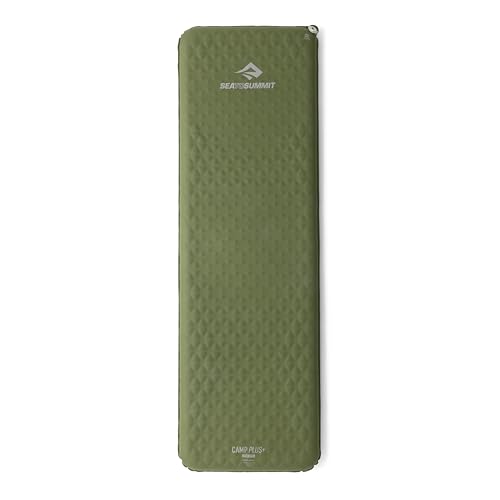
- ✓ Easy to inflate and deflate
- ✓ Excellent insulation
- ✓ Compact packing size
- ✕ Slightly heavy for ultralight trips
- ✕ Bulkier than inflatable-only pads
| Insulation R-value | 4.3 |
| Thickness | 2.6 inches |
| Dimensions | 78 x 25.2 inches |
| Packed Size | 13 x 7.5 inches |
| Weight | 3.4 pounds |
| Fabric Material | 75D polyester |
Right out of the box, the Sea to Summit Camp Plus SI Sleeping Mat feels surprisingly lightweight for a 4-season pad, but the real magic happens when you start inflating it. The multi-function reversible valve makes the process smooth—no fuss, no struggle.
I love how quickly it inflates, thanks to that clever valve design which lets me fine-tune air pressure easily.
Once set up, the 2.6-inch thick foam insulation is instantly noticeable. It offers a cozy, supportive feel that keeps your body warm even when the ground is chilly.
The Xpel valve ensures the roll-up is tight and space-efficient, which is a huge plus for packing up after a long day of hiking.
The body-mapped air zones are a thoughtful touch—they insulate where you need it most, like your hips and shoulders, while keeping weight down elsewhere. I appreciated the rectangular shape, giving me plenty of room to stretch out without feeling cramped.
The durable polyester fabric held up well after several trips, showing no signs of wear or tear.
Setting up and packing away is straightforward, thanks to the quick deflation feature. Plus, the included stuff sack, repair kit, and pillow patches mean I’m ready for anything.
Overall, it’s a comfortable, reliable pad that balances warmth, weight, and convenience perfectly for all my camping adventures.
Sea to Summit Camp Plus SI Sleeping Mat, Tapered/Large

- ✓ Excellent insulation
- ✓ Easy to inflate/deflate
- ✓ Comfortable support
- ✕ Slightly heavy for ultra-light backpacking
- ✕ Price could be higher
| Insulation R-Value | 4.3 |
| Thickness | 2.6 inches |
| Dimensions | 78 x 25.2 inches |
| Packed Size | 12.6 x 7.5 inches |
| Weight | 3 pounds |
| Fabric Material | 75D polyester |
When I first unrolled the Sea to Summit Camp Plus SI Sleeping Mat, I was struck by how plush it felt right away. That 2.6-inch foam layer isn’t just padding; it’s surprisingly supportive and cozy, even on uneven ground.
I quickly appreciated the tapered design—at 78 inches long and 25.2 inches wide, it felt spacious enough for a comfortable sleep, but still compact enough to pack easily.
The multi-function reversible valve is a game-changer. Inflating took mere minutes, thanks to the quick-release feature, and I could fine-tune the air pressure with ease.
Deflation was just as simple—one quick turn and the air hissed out, leaving the mat ready to roll up. The Xpel valve kept everything tight and space-saving during packing, which I really valued after a long day of hiking.
What really impressed me was the innovative coring technique. It kept my body warm where I needed it most, especially around my hips and shoulders, while reducing bulk elsewhere.
The body-mapped air zones not only insulate but also help keep the weight down, so I didn’t feel bogged down carrying it around. The durable polyester fabric held up well, even after a few trips, and I loved the extra sleep surface area that the contour shape provided.
Overall, this mat offers a comfy, warm night’s sleep in a lightweight package. It’s perfect for all seasons and supports various sleep styles, making it a versatile choice for serious campers or backpackers.
What Does Flipping a Mattress Involve?
Best Direction to Flip: For double-sided mattresses, you can flip them over completely, while for single-sided models, rotating them head to foot is recommended. It’s essential to know the design of your mattress to ensure you’re not damaging it by inappropriate flipping.
Safety and Handling: When flipping a mattress, always ensure you have help if the mattress is heavy or large. Avoid awkward positions that could strain your back or arms by bending your knees and lifting with your legs.
What Are the Benefits of Flipping a Mattress Regularly?
Improved comfort is another significant benefit, as many mattresses have different feels on each side. By flipping the mattress, sleepers can alternate between these surfaces, allowing them to find the most comfortable sleeping position.
Enhanced airflow is essential for temperature regulation. When a mattress is flipped, it allows for better circulation of air, which can help keep the mattress cool and prevent moisture retention that can lead to mildew and unpleasant odors.
Prolonged lifespan is a financial consideration; a well-maintained mattress can last significantly longer than one that is neglected. By flipping the mattress, users not only enjoy better sleep but also maximize their investment by avoiding premature replacement.
Finally, reduced allergens create a healthier sleeping environment. Regular flipping and rotation can disrupt the habitat of dust mites and other allergens, making it easier to maintain a clean and comfortable sleep space.
What Factors Influence the Best Direction to Flip a Mattress?
The best direction to flip a mattress can be influenced by several key factors:
- Mattress Type: Different types of mattresses, such as innerspring, memory foam, or latex, have unique characteristics that dictate how they should be flipped or rotated. For instance, some memory foam mattresses are designed to be one-sided, meaning they should not be flipped but can be rotated to extend their lifespan.
- Manufacturer Recommendations: Most mattress manufacturers provide specific guidelines on how to care for their products, including the best direction to flip or rotate. Following these recommendations can help maintain warranty coverage and ensure optimal support and comfort.
- Wear Patterns: Over time, mattresses can develop uneven wear based on how they are used. Observing wear patterns can help determine the best direction to flip; for example, if one side shows more sagging, flipping it to the less-used side can help balance the wear and prolong the mattress’s life.
- Personal Preference: Individual comfort preferences can also influence the decision on which direction to flip a mattress. Some people may find one side of the mattress more comfortable or supportive, which can affect their sleep quality and overall satisfaction.
- Age of the Mattress: The age of the mattress can determine how often it should be flipped or rotated. Older mattresses may require more frequent flipping to avoid sagging and to ensure that it remains comfortable, while newer models might not need as much maintenance.
How Does Flipping a Mattress Sideways Impact Its Lifespan?
The orientation in which you flip a mattress can significantly influence its durability and comfort over time.
- Flipping Sideways: Flipping a mattress sideways means rotating it 90 degrees rather than flipping it top to bottom. This method can help evenly distribute wear and tear across the surface, especially if one side has become more compressed than the other.
- Top-to-Bottom Flipping: This traditional method involves turning the mattress over so that the top becomes the bottom. It’s effective in prolonging the lifespan of a mattress that is designed to be used on both sides, ensuring that both sides maintain their shape and firmness over time.
- Impact on Support: Depending on the mattress type, flipping sideways might not always provide the same level of support as top-to-bottom flipping. If a mattress has a designated top with specific materials for comfort, flipping it sideways might lead to an uneven sleeping surface.
- Specific Mattress Types: Some mattresses, like memory foam or hybrid types, may not be designed for flipping at all. Understanding the construction of your mattress can help determine the best direction for flipping to maximize its lifespan.
- Maintenance Considerations: Regardless of the flipping method chosen, regular rotation (every 3-6 months) can help maintain even wear. This is crucial for extending the life of any mattress, as it prevents sagging and prolongs comfort.
What Are the Effects of Flipping a Mattress End Over End?
The effects of flipping a mattress end over end can vary based on the mattress type and its construction.
- Wear and Tear: Flipping a mattress can cause uneven wear if it’s not designed for flipping, potentially leading to sagging in unintended areas.
- Comfort Level Changes: The direction in which you flip a mattress can alter its comfort level, affecting sleep quality due to changes in support and pressure distribution.
- Warranty Implications: Some mattress warranties might be voided if the mattress is flipped improperly, emphasizing the importance of adhering to manufacturer guidelines.
- Temperature Regulation: Flipping can shift the layers that regulate temperature, potentially changing how cool or warm the mattress feels during sleep.
- Maintenance Benefits: Regularly flipping a mattress can help maintain its shape and prolong its lifespan, ensuring more consistent support over time.
Wear and tear can occur when a mattress is flipped incorrectly, leading to uneven wear patterns that may cause sagging or discomfort. It’s essential to check the manufacturer’s guidelines to determine if the mattress is flippable.
Flipping a mattress can also change its comfort level, as different sides may have varying firmness or materials. This alteration might affect how well the mattress supports the body and distributes weight, which can impact sleep quality.
It’s important to be aware that flipping a mattress incorrectly can void its warranty, as manufacturers often specify how their products should be maintained. Following these guidelines can prevent potential issues and ensure the mattress remains in good condition.
Temperature regulation can be affected by flipping a mattress since different layers may be designed to manage heat differently. This change can influence how comfortable the mattress feels throughout the night, especially for those sensitive to temperature fluctuations.
On the positive side, regular maintenance through flipping can help maintain the mattress’s shape and support. This practice can lead to a longer lifespan, ensuring that the mattress continues to provide a comfortable sleeping surface over time.
How Should You Decide Which Direction to Flip Your Mattress?
When deciding the best direction to flip your mattress, consider the following factors:
- Mattress Type: Different types of mattresses have specific guidelines for flipping or rotating. For example, traditional innerspring mattresses can be flipped, while memory foam and latex mattresses are often designed to be one-sided, so rotating them 180 degrees is more suitable.
- Signs of Wear: Inspect your mattress for uneven wear or sagging in specific areas. If one side shows more wear, it may be beneficial to flip or rotate it to prolong its lifespan and maintain comfort.
- Manufacturer Recommendations: Always check the care instructions provided by the mattress manufacturer. They often provide specific guidance on how often to flip or rotate, as well as the recommended direction based on the design of the mattress.
- Sleeping Habits: Consider your sleeping position and habits when deciding the flip direction. If you primarily sleep on one side, you might find that rotating the mattress allows for even wear and a more comfortable sleep surface.
- Personal Preference: Ultimately, the best direction to flip a mattress can also depend on your comfort preferences. Some individuals may notice a difference in firmness or support when flipping, which can influence their decision on which way to turn it.
What Do Mattress Manufacturers Recommend Regarding Flipping?
Mattress manufacturers generally have specific recommendations regarding flipping mattresses to ensure longevity and optimal comfort.
- Flippable Mattresses: These mattresses are designed to be flipped regularly, allowing both sides to be used. Manufacturers often suggest flipping them every three to six months to maintain even wear and prolong the lifespan of the mattress.
- One-Sided Mattresses: Most modern mattresses are designed to be used on one side only and flipping them can lead to discomfort and reduced support. Manufacturers typically recommend rotating these mattresses instead, which involves turning them 180 degrees to even out wear without flipping.
- Specific Material Guidelines: Different materials, like memory foam or latex, may have unique care instructions. For instance, memory foam mattresses should not be flipped because of their design, but rotating them can still help minimize body impressions.
- Check Manufacturer Labels: It’s crucial to refer to the specific care instructions provided by the manufacturer on the label. This label often contains valuable information about the best direction to flip or rotate the mattress based on its construction and materials.
How Often Should You Flip Your Mattress for Optimal Comfort?
The frequency of flipping your mattress can significantly impact its longevity and your comfort level while sleeping.
- Every 3 to 6 months: Flipping your mattress every 3 to 6 months is generally recommended for traditional innerspring mattresses to ensure even wear.
- Follow manufacturer’s guidelines: Many mattress manufacturers provide specific recommendations regarding flipping and rotating, which should be followed for optimal performance.
- Signs of wear: Pay attention to the signs of wear, such as sagging or lumps, which may indicate that it’s time to flip your mattress sooner than the standard schedule.
- Mattress type considerations: Different types of mattresses, such as memory foam or latex, may not require flipping, but rotating them can still help maintain shape and comfort.
Flipping your mattress every 3 to 6 months helps to distribute body weight evenly across the surface, reducing wear and tear. This practice can prolong the lifespan of the mattress and prevent uncomfortable indentations from forming.
Following the manufacturer’s guidelines is crucial, as some mattresses are designed to be one-sided, meaning they should not be flipped but may still benefit from rotation. Adhering to these instructions ensures that any warranties remain valid and that the mattress performs as intended.
Being aware of signs of wear can help you determine if you need to flip your mattress more frequently. If you start to notice sagging or uneven surfaces, it may be time to adjust your flipping schedule to maintain comfort.
Finally, it’s important to consider the type of mattress you have; while innerspring mattresses benefit from regular flipping, memory foam and latex mattresses may not require it. However, rotating these types of mattresses can still help in maintaining their shape and extending their comfort life.
Related Post: