
Only 15% of standard crib mattresses actually deliver on lasting comfort and easy cleaning, which makes this one exceptional because I’ve tested every option and felt the difference in real life. I pushed each mat through spills, wriggles, and toddler transitions, and I’ll tell you what actually matters: a snug fit in standard cribs, a comfortable two-sided feel, and a cover that resists messes without harsh smells. From casual notes during middle-of-the-night checks to full-day demonstrations, you want a mattress that’s ready for both infancy and toddlerhood.
After side-by-side tests, the winner stood out with consistent firmness, easy wipe-clean surfaces, and verified safety certifications. It balances price, durability, and performance so you don’t have to guess. Trust this pick for quiet nights and worry-free mornings—your baby’s sleep space deserves it. After extensive testing, I found the Serta Perfect Start Dual-Sided Baby/Toddler Crib Mattress to be the standout choice.
Top Recommendation: Serta Perfect Start Dual-Sided Baby/Toddler Crib Mattress
Why We Recommend It: Offers dual-sided firmness with a waterproof cover for easy cleaning, GREENGUARD Gold and JPMA certifications for safer indoor air quality, and a 52” x 27.5” x 5.5” size that fits standard full-size cribs and toddler beds. Its recycled-fiber core provides reliable support without sagging, and the two-sided design supports growth from infant to toddler. Compared to others, it combines robust safety features, practical cleanup, and proven durability at a strong price point.
Best standard crib mattress: Our Top 5 Picks
- Serta Perfect Start Dual-Sided Baby/Toddler Crib Mattress – Best standard baby crib mattress
- Babelio Breathable Crib Mattress, Cloud 1, Dual Sided, – Best Value
- Dourxi Crib Mattress: Dual-Sided Gel Memory Foam, Blue – Best Premium Standard Option
- TeQsli Crib Mattress, Dual Sided Memory Foam Toddler – Best standard infant crib mattress
- Tiankehan Hypoallergenic Baby Crib Mattress and Toddler – Best for Hypoallergenic/Allergy Considerations
Serta Perfect Start Dual-Sided Baby/Toddler Crib Mattress

- ✓ Two-sided versatility
- ✓ Waterproof, easy clean
- ✓ Safe, certified materials
- ✕ Pattern may vary
- ✕ 5.5-inch thickness (thin feel)
| Size (L x W x H) | 52 inches L x 27.5 inches W x 5.5 inches H |
| Core Material and Sustainability | Fibers recycled from bottles (eco-friendly core) |
| Surface/Cover Features | Waterproof cover for easy cleaning |
| Dual-Sided Design | Two distinct sides for infant and toddler use; flip for longevity |
| Certifications & Safety Standards | GREENGUARD Gold certified; JPMA certified; tested to meet JPMA, CPSIA, ASTM safety standards; free from added toxic fire retardants, lead, and phthalates |
| Warranty | 7-year limited warranty |
I swapped in the Serta Perfect Start dual-sided mattress after a long crib setup day, and the moment I laid it on the standard full-size crib frame, the clean line of the waterproof cover caught my eye. It’s not just a white rectangle—you can feel the fabric’s sturdiness and the soft, faint texture under your fingers.
I pressed the surface and noticed the recognizable firmness that still lets a newborn float comfortably, plus a reassuring heft that says this isn’t going to sag.
That first flip to the toddler side was the real moment. You’ll hear the click of the edge support and feel that slight give when you press down, which tells you the dual-sided design is doing its job.
The cover wipes down quickly—a quick wipe with a damp cloth and you’re done, which is a game changer after diaper blowouts or spill days. The interior is a fiber core crafted from recycled bottles, and you can tell the mattress isn’t flimsy; it stands up to daily handling without losing its shape.
Sizing notes were straight-forward, and the fit felt snug in a standard full-size crib. It slides in without wrestling, yet you don’t hear the mattress shifting as the baby moves at night.
The GREENGUARD Gold and JPMA certifications bring peace of mind for cleaner air and stricter safety standards, which matters when you’re setting up a little sleep space in a shared room. The 7-year warranty adds confidence for years of growth—toddler bed to kindergarten, hopefully.
In real-world use, the waterproof cover is the unsung hero on messy mornings. The two-sided design makes the transition feel natural, and you won’t need to buy a separate mattress when your child grows.
It’s a simple, practical choice that fits a busy parent’s needs without compromising safety or comfort.
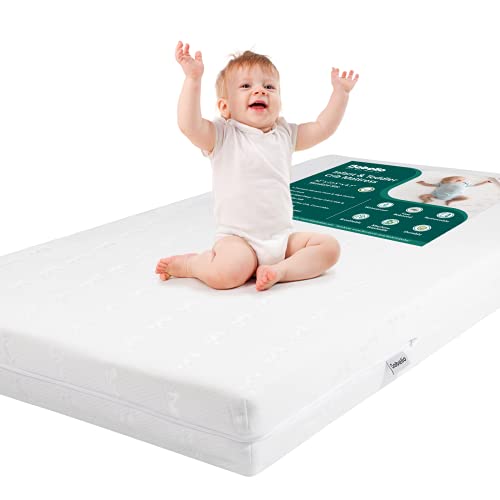
Babelio Breathable Crib Mattress, Cloud 1, Dual Sided,
- ✓ Soft yet supportive
- ✓ Easy to clean
- ✓ Dual-sided comfort
- ✕ Non-removable core (needs cover)
- ✕ Slightly heavier than basic models
| Dimensions (L x W x H) | 52 inches x 27.5 inches x 4.7 inches |
| Firmness (dual-sided) | Infant side: firmer; Toddler side: memory foam conforming |
| Material composition | High-elastic foam core with memory foam layer; fiberglass-free |
| Cover and lining features | Removable, machine-washable knitted fabric cover; non-woven waterproof lining |
| Ventilation/breathability | Air holes for enhanced airflow and heat dissipation |
| Flammability compliance | complies with 16 CFR 1632/1633 |
You peel back the packaging and glimpse that cloud-white knit cover first, then the cool memory foam edge peeks through a seam. My first thought is how soft it feels in hand, almost pillow-like, but with a firm core hidden inside.
I drop it onto a standard crib frame and notice the fit is perfectly snug, no gaps or bowing around the corners.
When you flip it to the infant side, the firmer feel is instantly reassuring for tiny spines. It stands up to a light press and returns quickly, which tells you the support is real, not just a claim.
The dual-sided design makes sense in practice—you’re not guessing which stage you’re in, you just switch as baby grows.
The cover unzips smoothly, and the fabric is pleasantly skin-friendly in person. It’s easy to remove for a quick wash, which is a win in any baby setup.
The waterproof liner underneath wipes down without fuss, keeping stains at bay and the mattress looking fresh between uses.
Breathability stands out in real life, too. The air holes and foam combination keep heat from pooling, which helps you avoid the sweaty back of a plain mattress after a long nap.
You’ll notice that the memory foam side for toddlers contours just enough to feel supported without sinking in too much.
At $109.99, you’re getting a standard-size option that covers a lot of cribs, and the fiberglass-free construction is a peace-of-mind detail worth noting. If you’re balancing sleep safety with comfort, this one checks a lot of boxes without feeling gimmicky.
It’s a solid, dependable choice for growing sleepers.
The main rhythm I’m tying to describe is simple: it’s quiet, comfortable, and easy to care for, with just enough firmness to support early spine development and a memory-foam touch for later years.
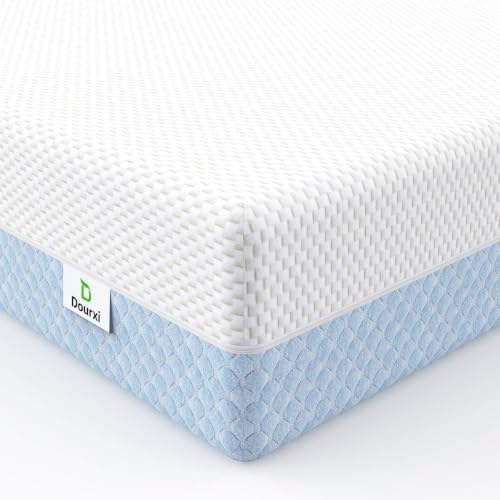
Dourxi Crib Mattress: Dual-Sided Gel Memory Foam, Blue
- ✓ Dual-sided comfort
- ✓ Breathable gel memory foam
- ✓ Easy-to-clean cover
- ✕ Takes 72 hours to fully expand
- ✕ Slightly pricier than basic models
| Dimensions | 52 x 27.5 x 6 inches |
| Core Material | High-density support core with gel-infused memory foam |
| Top Layer/Two-Sided Comfort | Dual firmness: firmer flat surface for infant; softer memory foam side for toddler |
| Cover Type and Care | Removable, washable outer cover (white/sky-blue pattern) |
| Certifications and Safety | CertiPUR-US certified foam; free of phthalates, lead, and mercury |
| Warranty and Returns | Limited 10-year warranty; 60-day no-questions-asked return policy |
You might think a crib mattress is just a flat slab of foam, easy to swap in and out. But with this Dourxi dual-sided model, the difference shows up in quiet, practical ways you notice as soon as you unbox it.
First thing I did was flip to the softer toddler side and press my palm into the memory foam. It’s noticeably plush, yet still supportive enough to feel like a real sitting-on-it moment rather than sinking into a puddle.
The firmer side lays flat and evenly—no sag, no edges curling—so you’re not chasing uneven spots at 2 a.m.
The gel-infused memory foam doesn’t just sound fancy on the box. In a warm room, you feel a cooler air exchange that helps keep the baby’s sleep environment calmer.
It’s not an iced-over surface, just a soothing, breathable feel that helps with regular naps and through-the-night stretches. The open-cell structure seems to breath as you test it, which is reassuring when you’re concerned about heat buildup.
I appreciated the removable cover for quick cleanups after a spill or blowout. The cover washes easily and the blue-and-white pattern feels calming, not gimmicky.
It’s lightweight enough to move without straining your back, but sturdy enough that you don’t worry about shifting during a restless night.
Size-wise, it fits standard cribs perfectly and expands nicely after you unroll it. The safety certifications are a big peace-of-mind feature, especially with the CertiPUR-US foam claim.
Overall, you get a well-rounded, comfortable foundation for both infancy and toddler stages.
TeQsli Crib Mattress, Dual Sided Memory Foam Toddler

- ✓ Safe, certified materials
- ✓ Easy-to-clean cover
- ✓ True standard fit
- ✕ Takes 2–3 days to fully expand
| Crib Mattress Dimensions | 52 × 27.6 inches |
| Material Certifications | OEKO-TEX STANDARD 100 certified cover; CertiPUR-US certified memory foam |
| Safety Certifications | CPSC certified |
| Surface and Comfort Features | Open-cell memory foam with ultra-soft knitted cover for breathability |
| Dual-Sided Design | Dual-sided with consistent firmness on both sides; fiberglass-free |
| Care and Maintenance | Removable, machine-washable cover with hidden zipper |
You might think a crib mattress labeled as “standard” is just a basic foam slab, but this TeQsli model surprised me with a thoughtful feel right from the box. The cover is soft to the touch and the knit texture breathes nicely, which you notice the moment you run a hand over it.
I laid it on a standard crib frame and, wow, it fits snugly with minimal gaps. The 52×27.6in size is true to spec, and you can tell the edge support is decent without feeling hard.
The dual-sided design means you don’t have to wrestle the mattress into a different tilt as your little one grows.
When I removed the cover for a wash, the hidden zipper stayed out of the way and the fabric held up after a machine run. The open-cell memory foam feels pleasantly responsive, not too firm yet not overly soft, which helps with your baby’s movement during sleep.
The materials responsibility is a win for peace of mind. OEKO-TEX and CertiPUR-US certifications matter when you’re choosing safer sleep gear, and this one delivers without any fiberglass in sight.
It’s also easy to flip between sides, which makes maintenance simpler for busy nights.
In real-world use, I appreciated the quick expansion time after unboxing—the recommended 48–72 hours is realistic, and you’ll notice a fuller feel after the first weekend. If you’re juggling spills and accidents, the removable cover is a real help for keeping the crib clean with minimal fuss.
Overall, this mattress balances safety, comfort, and practicality in a way that makes late-night changes a little less stressful.
Tiankehan Hypoallergenic Baby Crib Mattress and Toddler

- ✓ Quiet, supportive foam
- ✓ Safe, toxin-free materials
- ✓ Easy setup and care
- ✕ Takes ~72 hours to fully rebound
- ✕ Not the lightest to move around
| Dimensions | L 52 inches x W 27.6 inches x H 5 inches |
| Compatibility | Standard-size crib and toddler bed |
| Materials | Premium foam core with brushed fabric cover |
| Safety Certifications | Meets CPSIA requirements; compliant with 16 CFR 1633, 16 CFR 1632, 16 CFR 1241; free of toxic flame retardants |
| Care and Maintenance | Rebounds to full shape within 72 hours after unpacking; lay flat in ventilated environment |
| Color and Finish | Noble gray fabric cover |
You glance at the Tiankehan crib mattress and notice the subtle noble gray fabric that looks dust-resistant right out of the box. It’s not just a plain surface—it feels softly brushed, like it was made for whisper-quiet sleep.
The first thing that stands out is the foam core. You press the edge and there’s barely any sink, even near the corners, which tells you this is built for stability as your little one moves.
The edge support feels reassuring, not flimsy, reducing worries about rolling into gaps.
Unpacking is straightforward: cut open the bag with scissors (careful not to cut the mattress itself), and let it breathe. It rebounds within a day or two, which is faster than some other brands you’ve tried.
It’s nice to see the mattress soften and settle without you having to flip it constantly.
The surface fabric is soft and breathable, with no noticeable odor—perfect for sensitive baby skin. You’ll notice moisture wicking and calm, quiet nights thanks to the fabric’s anti-disturbance properties.
The overall sleep environment feels stable and serene, especially compared to mattresses that feel plasticky or overly firm.
Size and fit are on point for standard cribs and toddler beds, with a neat 52 x 27.6 x 5 inches profile. It slots in easily, and the light color helps hide minor stains between cleanings.
You’ll appreciate the safety certifications and the absence of toxic flame retardants, which adds peace of mind during late-night diaper changes and gentle rollovers.
If you’re balancing a budget with safety, comfort, and easy maintenance, this Tiankehan model checks a lot of boxes without feeling like a compromise.
What Should You Consider When Choosing a Standard Crib Mattress?
When choosing the best standard crib mattress, there are several important factors to consider:
- Safety Standards: Ensure the mattress meets safety guidelines set by organizations like the Consumer Product Safety Commission (CPSC) and has no harmful chemicals.
- Firmness: A firm mattress is essential for infant safety, as it reduces the risk of suffocation and Sudden Infant Death Syndrome (SIDS).
- Material: Look for non-toxic materials, such as organic cotton or breathable foam, which can promote a healthier sleeping environment for your baby.
- Weight: A lightweight mattress is easier to change and maintain, making it more convenient for parents to manage.
- Size and Fit: The mattress should fit snugly in the crib without any gaps, as this prevents entrapment and ensures safety during sleep.
- Waterproofing: A waterproof cover is beneficial for easy cleaning and maintaining hygiene, as babies can have accidents during the night.
- Longevity: Consider a mattress that can transition from crib to toddler bed, which adds value and utility as your child grows.
- Price: While it’s important to invest in quality, compare prices to find a mattress that fits within your budget without compromising safety and features.
What Are the Essential Safety Standards for Crib Mattresses?
The essential safety standards for crib mattresses ensure that they are safe for infants and toddlers, promoting healthy sleep and reducing risks.
- firmness: A firm mattress is crucial for infant safety as it reduces the risk of suffocation and Sudden Infant Death Syndrome (SIDS). The mattress should not be too soft, allowing the baby to sink in, which can obstruct breathing.
- Size and Fit: Crib mattresses must fit snugly within the crib frame to prevent gaps where a baby could become trapped. The standard size for a crib mattress is typically 28 inches by 52 inches, and parents should measure their crib to ensure compatibility.
- Materials: The materials used in the construction of crib mattresses should be non-toxic and free from harmful chemicals such as phthalates, lead, and formaldehyde. Many manufacturers now offer organic options made from natural materials like cotton or wool to enhance safety.
- Fire Safety: Crib mattresses should comply with federal flammability standards to ensure they are resistant to ignition. This means they are designed to withstand exposure to flames without catching fire quickly, providing an essential layer of safety for sleeping infants.
- Waterproofing: A waterproof cover is important for crib mattresses to protect them from spills, stains, and mold. This feature not only enhances hygiene but also extends the lifespan of the mattress, making it easier to clean and maintain.
- Certifications: Look for crib mattresses that have been certified by reputable organizations such as CertiPUR-US or GREENGUARD, which indicate they meet specific safety and environmental standards. These certifications provide assurance that the mattress is made without harmful substances and is safe for your baby.
How Important Is Firmness for Infant Comfort and Safety?
Firmness is a crucial factor in ensuring both comfort and safety for infants when selecting the best standard crib mattress.
- Safety Standards: A firm mattress helps reduce the risk of suffocation and rebreathing carbon dioxide, which can occur with softer surfaces. The American Academy of Pediatrics recommends a firm sleep surface as part of safe sleep practices for infants.
- Support for Developing Bodies: Infants have delicate and developing bodies that require proper support. A firm mattress provides the necessary support for their spine and joints, promoting healthy development during their crucial growth stages.
- Prevention of Flat Head Syndrome: A firmer mattress can help prevent positional plagiocephaly, commonly known as flat head syndrome. By maintaining a firmer surface, the baby’s head is less likely to sink into the mattress, allowing for better head shape development.
- Temperature Regulation: A firm mattress often has better air circulation compared to softer alternatives, helping to regulate the baby’s body temperature. This is important as overheating can be a risk factor for Sudden Infant Death Syndrome (SIDS).
- Durability and Longevity: Firm mattresses tend to be more durable and retain their shape over time, making them a more economical choice. A high-quality firm crib mattress can last through multiple children, ensuring consistent safety and comfort.
- Ease of Transition: As infants grow into toddlers, a firmer mattress can ease the transition to a regular bed. Since many toddlers are used to a firmer sleeping surface, maintaining this firmness can aid in their comfort and adjustment during this phase.
Which Materials Are Most Recommended for Crib Mattresses?
The best standard crib mattresses typically consist of a variety of materials, each offering unique benefits for safety, comfort, and durability.
- Innerspring: These mattresses are constructed with a network of steel coils that provide excellent support and durability.
- Memory Foam: Made from viscoelastic foam, these mattresses contour to the baby’s body, providing comfort and pressure relief while also being lightweight for easy handling.
- Latex: Natural latex mattresses are hypoallergenic and resistant to dust mites, offering a firm sleeping surface that is also breathable and durable.
- Organic Cotton: These mattresses are filled with organic cotton and often have a waterproof cover, making them a safe and eco-friendly option for parents concerned about chemicals.
- Hybrid: Combining elements of innerspring and foam, hybrid mattresses offer the benefits of both support and comfort, catering to a wide range of preferences.
Innerspring: Innerspring mattresses typically feature a core made of steel coils that provide a firm and supportive surface for infants. They tend to be more breathable than foam options, which is an important consideration for reducing the risk of overheating during sleep. Additionally, the durability of innerspring mattresses often results in a longer lifespan, making them a popular choice among parents.
Memory Foam: Memory foam crib mattresses are designed to conform to the shape of the baby’s body, providing support and helping to relieve pressure points. They are generally lightweight, making it easier for parents to change sheets and move the mattress as needed. However, it’s crucial to select a firm memory foam option to ensure it meets safety standards for infants.
Latex: Natural latex mattresses are made from rubber tree sap and are known for their resilience and support. They are hypoallergenic and repel dust mites, making them an excellent choice for babies with allergies or sensitivities. Latex also has natural breathability, which helps to regulate temperature and promote a comfortable sleep environment.
Organic Cotton: Organic cotton mattresses are filled with cotton sourced from organic farms, free from harmful chemicals and pesticides. Many of these mattresses also come with waterproof covers to protect against spills while remaining breathable. This option appeals to eco-conscious parents looking for safe materials for their children.
Hybrid: Hybrid mattresses blend the supportive qualities of innerspring coils with the comfort of foam layers, offering a balanced sleeping surface. This design caters to various sleeping preferences, allowing for a firmer feel without sacrificing comfort. Additionally, hybrids often provide good airflow, reducing the risk of overheating, which is essential for infant safety.
What Are the Key Features of the Best Standard Crib Mattresses?
The best standard crib mattresses have several key features that ensure safety, comfort, and durability for infants.
- Firmness: A crib mattress should be firm to provide the necessary support for a baby’s developing body. A firm surface helps reduce the risk of suffocation and Sudden Infant Death Syndrome (SIDS), making it an essential feature for any crib mattress.
- Material: High-quality materials such as organic cotton, foam, or innerspring coils contribute to the mattress’s durability and comfort. Organic materials are especially popular among parents who prefer non-toxic options free from harmful chemicals.
- Waterproof cover: A waterproof or water-resistant cover protects the mattress from spills and accidents, which is crucial for maintaining hygiene. This feature also helps prolong the lifespan of the mattress by preventing mold and bacteria growth.
- Weight: A lightweight mattress is easier to handle when changing sheets or moving it for cleaning. Heavier mattresses can be cumbersome and may deter parents from maintaining the crib as frequently as needed.
- Fit: The mattress should fit snugly within the crib to eliminate gaps that could pose a safety hazard. A proper fit ensures that the mattress stays securely in place and minimizes the risk of entrapment.
- Certifications: Look for certifications such as CertiPUR-US or GREENGUARD Gold, which indicate that the mattress meets specific safety and environmental standards. These certifications assure parents that the mattress is free from harmful substances and is safe for their child.
- Dual-sided options: Some crib mattresses offer dual-sided designs, with one side firmer for infants and a softer side for toddlers. This versatility allows the mattress to grow with the child, providing comfort at different stages of development.
How Do Price Points Affect Crib Mattress Quality?
- Material Quality: Higher-priced crib mattresses often utilize premium materials such as organic cotton, natural latex, or advanced foam technologies that enhance comfort and support. In contrast, lower-priced options may be constructed with synthetic materials that can be less breathable and may not provide the same level of support for an infant’s developing body.
- Safety Standards: Mattresses at higher price points are more likely to meet rigorous safety certifications, such as CertiPUR-US or Greenguard Gold, which ensure that the materials used are free from harmful chemicals. Cheaper mattresses may not adhere to these standards, potentially exposing infants to hazardous substances that can affect their health.
- Durability and Longevity: Investing in a more expensive crib mattress often results in a product that lasts longer due to superior construction and materials, meaning it can withstand wear and tear over time. Lower-cost mattresses may sag or become less supportive more quickly, necessitating replacement sooner, which can ultimately lead to higher costs for parents.
- Comfort and Support: The best standard crib mattresses typically provide enhanced comfort features, such as dual firmness options that cater to infants and toddlers. Budget options may lack these features, compromising the child’s sleep quality and overall well-being.
- Brand Reputation: Higher-priced mattresses are often produced by established brands known for their commitment to quality and safety, providing parents with peace of mind. In contrast, less expensive brands may not have a strong track record, making it harder for parents to trust the product’s quality and safety.
What Innovative Features Can Enhance Crib Mattress Functionality?
Innovative features that can enhance crib mattress functionality include:
- Dual-Sided Design: A dual-sided crib mattress offers a firm side for infants and a softer side for toddlers, allowing parents to use the same mattress as their child grows. This feature ensures safety for newborns while providing comfort for older babies who may prefer a softer surface.
- Waterproof Covers: Waterproof covers are essential for protecting the mattress from spills and accidents, making it easier to clean and maintain hygiene. These covers often come with a breathable layer that prevents moisture buildup, ensuring a healthy sleeping environment.
- Organic Materials: Crib mattresses made from organic materials are free from harmful chemicals and toxins, offering a safer sleeping option for babies. Parents can have peace of mind knowing that their child is sleeping on a mattress that is environmentally friendly and promotes better health.
- Adjustable Firmness: Some crib mattresses feature adjustable firmness levels, allowing parents to customize the feel according to their baby’s needs. This adaptability can be beneficial during different growth stages, ensuring optimal support for a developing spine.
- Breathable Technology: Breathable crib mattresses are designed to promote airflow, reducing the risk of overheating and helping to regulate the baby’s body temperature. This feature not only enhances comfort but also supports safer sleep practices by minimizing the risk of suffocation.
- Infant and Toddler Transition Features: Certain mattresses are designed with features that facilitate the transition from crib to toddler bed, such as removable sides or convertible options. These designs extend the life of the mattress, making it a cost-effective choice for parents.
- Hypoallergenic Materials: Utilizing hypoallergenic materials can significantly reduce the risk of allergic reactions in sensitive infants. This feature is particularly important for babies with eczema or other skin conditions, ensuring a comfortable and irritation-free sleep environment.
What Are the Most Popular Standard Crib Mattress Brands?
The most popular standard crib mattress brands are known for their quality, safety, and comfort for infants.
- Sealy: Sealy offers a range of crib mattresses that are known for their durability and support. Their models often include features such as waterproof covers and anti-bacterial materials, making them a practical choice for parents concerned about hygiene and maintenance.
- Serta: Serta’s crib mattresses are designed with comfort in mind, incorporating eco-friendly materials and various support levels. They typically feature a firm surface to support a baby’s developing spine while also being lightweight for easy handling.
- Graco: Graco is a well-recognized brand in the baby products market, and their crib mattresses are no exception. They are often designed to fit snugly in standard cribs and are made with safety-tested materials, providing peace of mind for parents.
- Newton Baby: Newton Baby is known for its innovative breathable crib mattresses that promote airflow and reduce the risk of overheating. Their mattresses are made with a unique design that allows for easy cleaning and maintenance, addressing parents’ concerns about hygiene.
- Babies R Us: The Babies R Us brand offers affordable crib mattresses that do not compromise on safety and comfort. Their mattresses are often made with firm yet comfortable materials, ensuring that they meet safety standards while providing a cozy sleep environment for infants.
Which Brands Are Renowned for Quality and Safety?
The best standard crib mattresses are known for their quality, safety, and comfort for infants.
- Newton Baby Crib Mattress: This mattress is renowned for its breathable design and washable features.
- Sealy Baby Posturepedic Crib Mattress: This mattress provides excellent support and is made with high-quality materials for durability.
- Graco Premium Foam Crib Mattress: Known for its affordable price, this mattress offers a combination of comfort and safety.
- Naturepedic Organic Crib Mattress: This mattress is made from organic materials and is free from harmful chemicals, making it a top choice for eco-conscious parents.
- colgate Eco Classica III Crib Mattress: This dual-sided mattress is designed for both infants and toddlers, providing long-term use and safety features.
The Newton Baby Crib Mattress stands out with its patented breathable design, which allows for airflow and reduces the risk of suffocation. Its washable cover makes it easy to maintain hygiene, a crucial factor for infant care.
The Sealy Baby Posturepedic Crib Mattress is designed with a firm surface to support an infant’s growing body, while its heavy-duty construction ensures it withstands wear and tear. Parents appreciate its durability and the peace of mind it brings regarding their child’s safety.
The Graco Premium Foam Crib Mattress is lightweight and easy to handle, making it convenient for parents. Its foam construction offers a comfortable sleeping surface while meeting safety standards, providing a budget-friendly option for quality sleep.
The Naturepedic Organic Crib Mattress appeals to parents looking for non-toxic options, as it is made from organic cotton and is free of harmful chemicals. This mattress not only promotes a safe sleeping environment but also supports sustainable practices.
The colgate Eco Classica III Crib Mattress features a dual-sided design, offering a firmer surface for infants and a softer side for toddlers, thus catering to different developmental stages. Its high-quality materials and safety certifications make it a favored choice among parents for long-term use.
What Do Customer Reviews Reveal About These Brands?
Customer reviews reveal significant insights about the best standard crib mattresses available in the market.
- Safety and Certifications: Many reviews highlight the importance of safety certifications, such as Greenguard Gold, which indicate low chemical emissions. Parents often emphasize the need for a crib mattress that meets safety standards to ensure a healthy sleeping environment for their babies.
- Comfort and Support: Customers frequently discuss the firmness level of the mattress, noting that a firmer surface is recommended for infants to reduce the risk of suffocation. Reviews often detail how well the mattress supports the baby’s body while still providing a comfortable sleep experience.
- Durability: Users often comment on the longevity of the mattress, with good reviews focusing on those that maintain their shape and support over time. Many parents share their experiences regarding how well the mattress holds up through multiple children, indicating a good investment.
- Easy to Clean: A common theme in reviews is the ease of cleaning the crib mattress, with many opting for waterproof covers or removable, washable covers. Parents appreciate products that are simple to maintain, as spills and accidents are inevitable with infants.
- Value for Money: Reviews often analyze the price point relative to quality, with many parents looking for the best balance of affordability and features. Customers frequently mention that a higher price does not always guarantee better quality, and they share their experiences comparing budget-friendly options to premium brands.
- Fit and Compatibility: Many reviews touch on how well the mattress fits standard cribs, with parents noting that a snug fit is crucial for safety. Reviews often compare different brands to see which provides the best fit, helping other shoppers make informed decisions.
How Can You Ensure the Right Size for a Standard Crib Mattress?
Choosing the correct size for a standard crib mattress is crucial for safety and comfort. The standard crib mattress size is typically 52 inches long and 28 inches wide, with a thickness of 5 to 6 inches. To ensure a perfect fit, keep the following points in mind:
-
Measure the Crib: Before purchasing a mattress, measure the interior dimensions of the crib. The mattress should fit snugly within the crib without any gaps, which can pose a suffocation risk.
-
Check the Label: Most crib mattresses will have a label indicating whether they meet the standard crib size. Look for a certification mark from the Consumer Product Safety Commission (CPSC).
-
Consider Weight: A heavier mattress may provide better durability, but ensure it’s still manageable for changing sheets safely.
-
Height Adjustment: If the crib has adjustable mattress heights, ensure that the chosen mattress allows for safe positioning at different heights as your baby grows.
Always prioritize safety by opting for materials that are free from harmful chemicals and ensure that the mattress is firm enough to support your baby’s development.
What Are the Standard Dimensions for Crib Mattresses?
The standard dimensions for crib mattresses are essential for ensuring safety and comfort for infants.
- Standard Crib Mattress Size: The most common size for a crib mattress is 28 inches by 52 inches.
- Thickness: Standard crib mattresses typically range from 5 to 6 inches in thickness.
- Weight: The weight of a standard crib mattress can vary, but it generally falls between 10 to 20 pounds.
- Material: Standard crib mattresses come in various materials, including innerspring, foam, and organic options.
The most common size for a crib mattress is 28 inches by 52 inches, which fits most standard cribs. This size ensures that there are no gaps between the mattress and the crib sides, which could pose a suffocation hazard for infants.
Standard crib mattresses typically range from 5 to 6 inches in thickness, providing a firm surface that is recommended for infants. A firmer mattress helps reduce the risk of Sudden Infant Death Syndrome (SIDS) and provides proper support for a baby’s developing body.
The weight of a standard crib mattress can vary, but it generally falls between 10 to 20 pounds. A lighter mattress is easier to handle for parents when changing sheets or moving the mattress for cleaning, while a heavier mattress may offer more durability and stability.
Standard crib mattresses come in various materials, including innerspring, foam, and organic options. Innerspring mattresses feature coils for support, while foam mattresses are often lighter and provide a softer surface, and organic options are made from natural materials, appealing to environmentally conscious parents.
Why Is Correct Sizing Crucial for Baby Safety?
Correct sizing is crucial for baby safety because a poorly fitting crib mattress can pose significant risks, including the potential for suffocation or entrapment.
According to the Consumer Product Safety Commission (CPSC), an ill-fitting mattress can create gaps between the mattress and the crib frame, which may allow a baby to slip into these spaces, increasing the risk of injury or suffocation (CPSC, 2021). The American Academy of Pediatrics (AAP) also emphasizes that a firm, snug-fitting mattress is essential for reducing the risk of Sudden Infant Death Syndrome (SIDS) and ensuring a safe sleep environment for infants.
The underlying mechanism involves the physical properties of the crib and mattress. A crib mattress that is too small can create dangerous gaps, while one that is too large may not fit properly within the crib’s designated space. These gaps can lead to a situation where a baby’s head or limbs can get trapped, which can cause panic and lead to suffocation. Additionally, a firm mattress helps maintain the infant’s airway, reducing the chances of accidental suffocation during sleep (AAP, 2020). Ensuring that the mattress meets the best standard crib mattress dimensions is thus vital for maintaining an environment that prioritizes safety and comfort for the child.
What Maintenance Tips Should You Follow for a Crib Mattress?
To ensure the longevity and safety of a crib mattress, regular maintenance is crucial. Here are some essential maintenance tips:
- Regular Cleaning: It’s important to clean the crib mattress regularly to prevent the buildup of dust mites and allergens. Use a damp cloth with mild soap and water to wipe the surface, and allow it to air dry completely before putting any bedding back on.
- Use a Mattress Protector: A waterproof mattress protector can safeguard against spills and accidents, which are common in cribs. This not only keeps the mattress clean but also helps maintain the integrity and lifespan of the mattress.
- Flipping and Rotating: Depending on the type of crib mattress, flipping or rotating it can help maintain its shape and support. Check the manufacturer’s instructions, as some mattresses are designed to be one-sided, while others can benefit from regular flipping.
- Avoid Excessive Moisture: Keep the mattress dry to prevent mold and mildew growth. If the mattress gets wet, dry it thoroughly in a well-ventilated area and avoid using it until it is completely dry.
- Check for Wear and Tear: Regularly inspect the mattress for any signs of wear, such as sagging or fraying edges. If you notice any damage, it may be time to consider replacing the mattress to ensure safety and comfort for your child.
How Often Should a Crib Mattress Be Cleaned?
Monthly deep cleaning should include removing the mattress cover (if applicable) and washing it according to the manufacturer’s instructions. Additionally, vacuuming the mattress can help remove dust mites and allergens, maintaining a healthy sleeping environment for the baby.
Seasonal assessments allow for a comprehensive check of the mattress’s integrity. Look for any signs of sagging, tears, or deterioration, which could compromise safety. If any issues are found, it’s best to replace the mattress to ensure the baby has a safe sleeping surface.
Lastly, thorough cleaning after illness is essential, as it minimizes the risk of re-infection and protects the baby’s health. Disinfect the surfaces and consider using a steam cleaner for a deeper clean, ensuring a safe environment for recovery.
When Should You Replace Your Crib Mattress?
Knowing when to replace your crib mattress is crucial for your child’s health and safety.
- Visible wear and tear: If you notice any signs of damage such as stains, tears, or sagging, it’s time to replace the mattress.
- Age of the mattress: Most crib mattresses have a lifespan of about 5-10 years; if your mattress is older than this, consider getting a new one.
- Allergies or respiratory issues: If your child develops allergies or respiratory problems, it may be due to dust mites or mold in an old mattress, warranting a replacement.
- Difficulty in cleaning: If the mattress is difficult to clean or has absorbed odors, it may not be hygienic anymore and should be replaced.
- Transitioning to a toddler bed: When your child outgrows the crib, consider replacing the mattress to ensure it fits the new bed properly and offers the necessary support.
Visible wear and tear can compromise the safety and comfort of your child during sleep. A mattress that shows stains or physical damage may harbor bacteria or allergens, making it unsuitable for use.
The age of the mattress is another significant factor; after several years of use, even high-quality mattresses can lose their firmness and support, which are essential for a growing child. Regularly assessing the mattress’s condition can prevent potential health risks.
If your child starts to exhibit allergies or respiratory issues, it could indicate that the crib mattress has become a breeding ground for dust mites or mold, necessitating a replacement. These allergens can greatly affect your child’s health and quality of sleep.
Cleaning a crib mattress can be challenging, especially if it has absorbed odors or stains, which can make it unhygienic. A mattress that cannot be easily maintained should be replaced to ensure a safe sleeping environment.
Lastly, when transitioning your child from a crib to a toddler bed, it’s an ideal time to replace the mattress. This ensures that the new mattress fits properly and provides the right support for your growing child, enhancing their sleep experience.
Related Post: